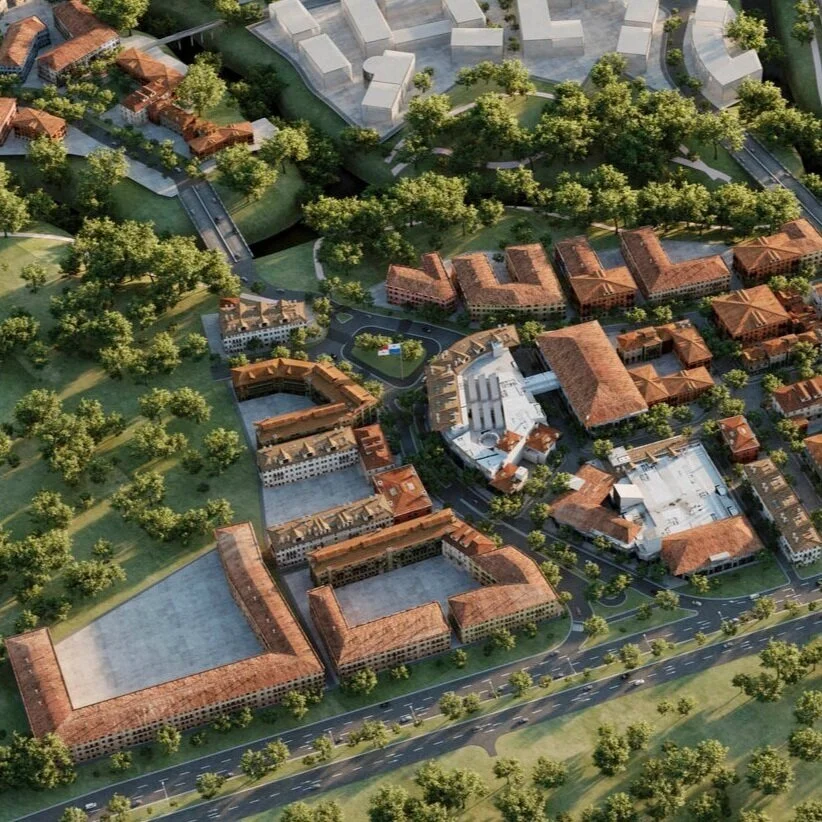
At Porta Norte, we are committed to integrating walkable urban design with nature. That’s why we have pedestrian streets, trees lining every sidewalk, and we connect urban development with natural waterways.
Trees bring many benefits to a community. They generate positive psychological effects, increase biodiversity, provide shade for pedestrians, and protect against vehicles.
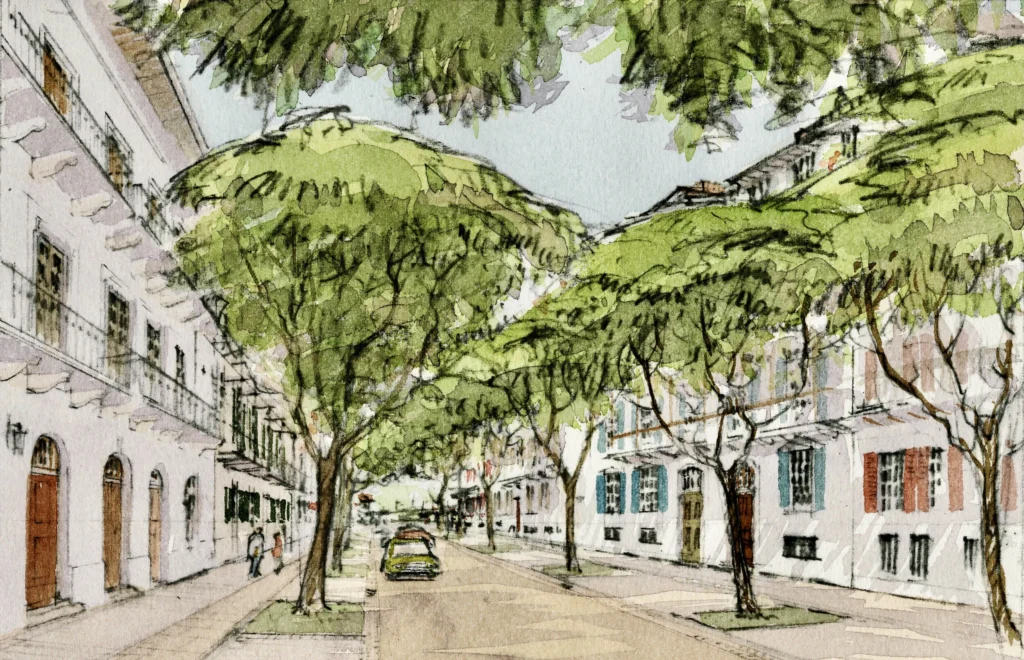
In 2015, Andrés Duany emphasized to us the importance of having lush, leafy trees. He taught me to choose trees shaped like a martini glass or an uppercase Y. In this way, the tree canopy functions as a very tall umbrella. You can see this vision in the renderings DPZ created for the initial Porta Norte concept.
To execute this vision, we have incorporated special considerations into the engineering designs. The water supply, sanitary, stormwater, telecommunications, gas, and irrigation systems do not run beneath the trees, allowing the roots to grow without interruption. We’ve even buried the power lines so that the trees’ canopies can grow enormous.
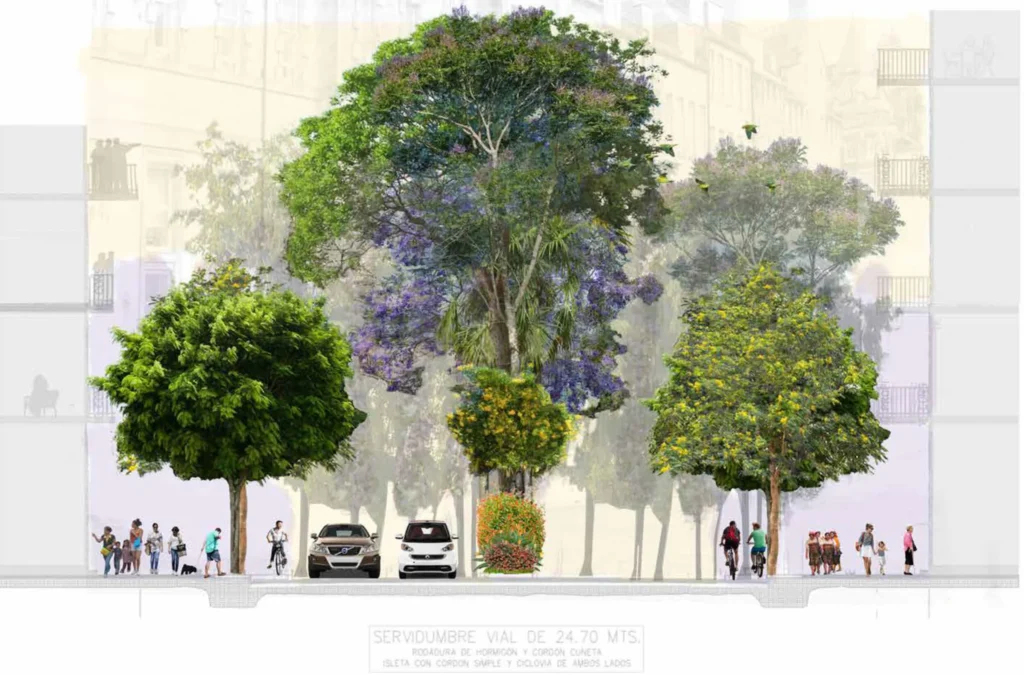
Landscape architect Luis Alfaro designed the project’s tree planting. The most important design principle was to improve pedestrian comfort thru shade. The trees are spaced about 7 meters apart so that their canopies interlock, creating a large green canopy.
Street section of Boulevard Panamá – Design by the Architect Luis Alfaro
Most of the chosen species are native. In this way, we can find all the trees in Panama and increase the survival rate of transplanted trees. We are taking advantage of our great national biodiversity.
The first phase has over 700 trees and 65 species. The reason for planting so many species is to learn which trees grow best. From this wide variety, we will propagate the best ones in a nursery to plant them in later phases.
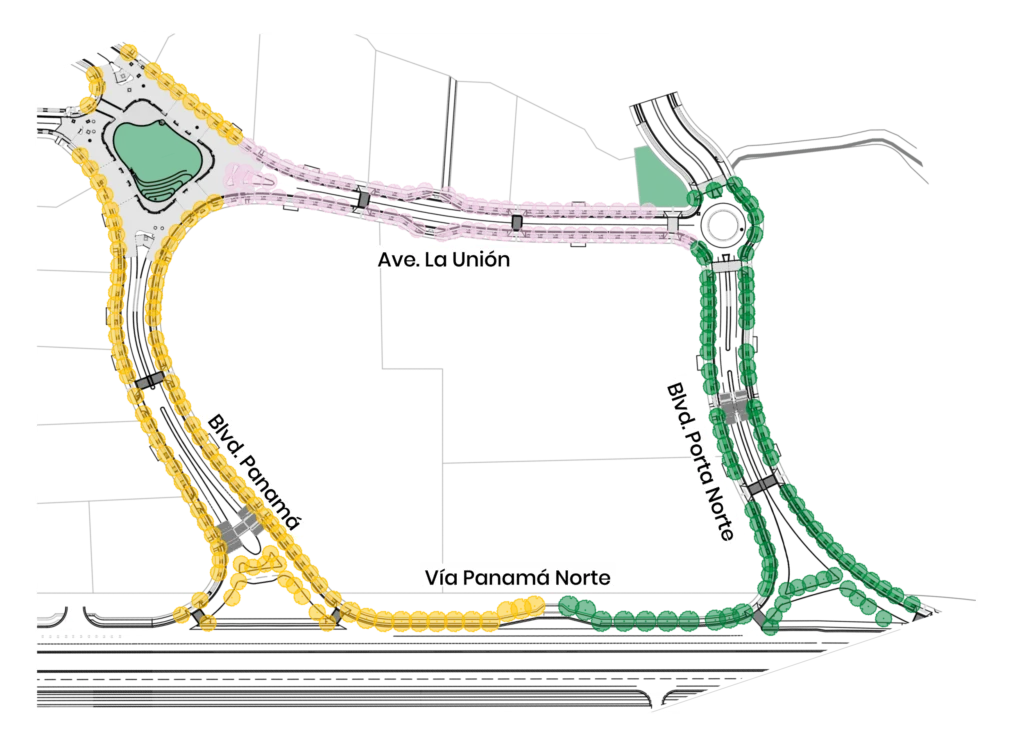
For the sidewalks, we have chosen exclusively evergreen trees—those that don’t lose their leaves. This way, we ensure continuous shade throughout the year. We chose a tree for the sidewalks of each street, improving people’s orientation.
Panama Boulevard: Golden Flame (yellows). La Unión Avenue: Sombreiro (pink). Boulevard Porta Norte: Green parrot.
In the parks and medians, we’re planting colorful trees such as guayacanes (yellow), jacarandas (purple), pride of India (purple), oak (pink), and Belisario Porras (red). Porta Norte will have a chromatic diversity—it will be full of color at all times of the year.
In the design, we included the tallest trees in Panama and almost all the fruit trees that grow in the country. We want to foster a connection with nature thru the “farm-to-table” movement.
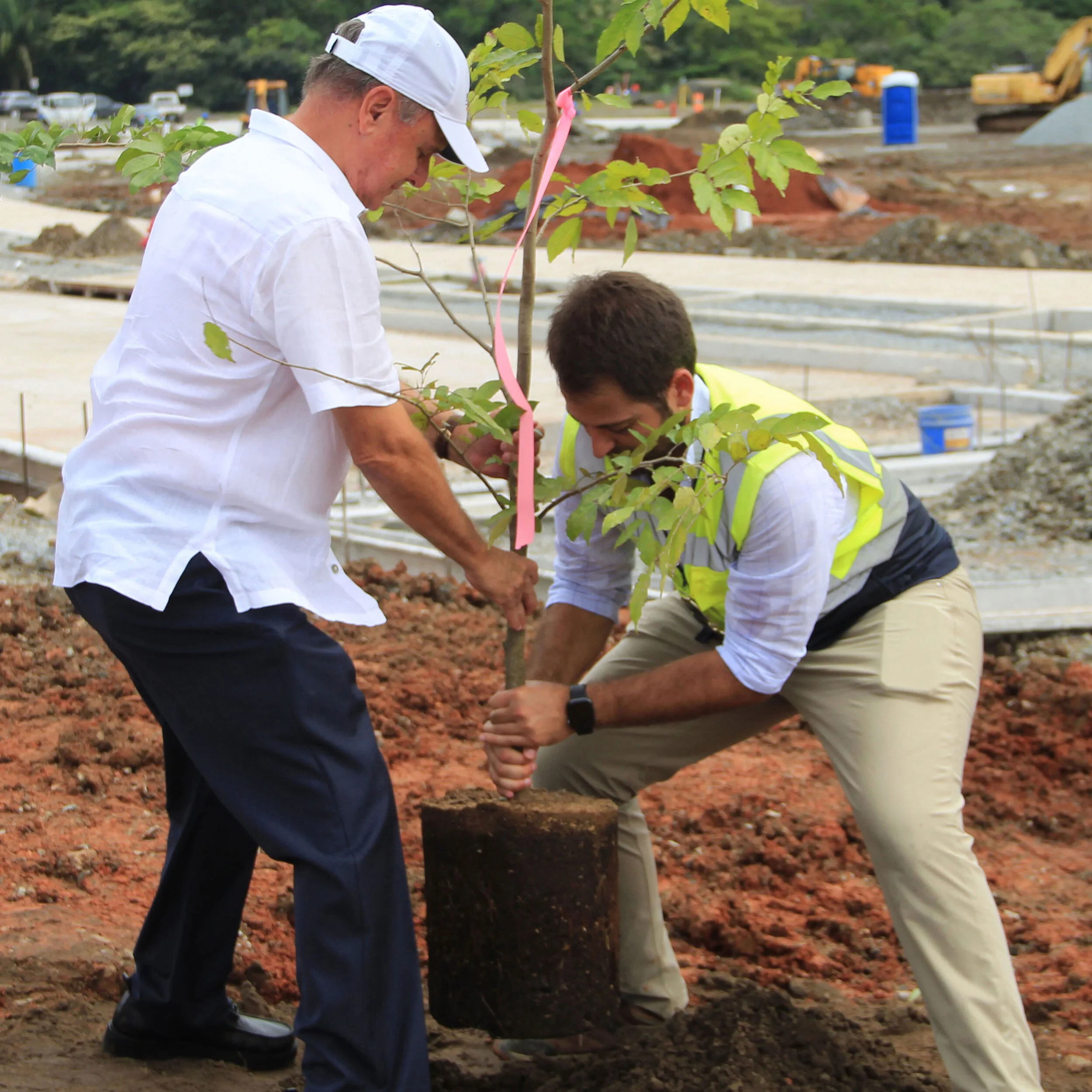
On Tuesday, September 21, 2021, the team gathered at Porta Norte to commemorate this great milestone. Prior to planting, a few words were shared, as detailed below:
First of all, I would like to thank the shareholders, the executive committee, the team, the Rojas Pardini family, and my father, Henry Faarup Mauad, for having the openness and vision to create a development model focused on people and nature. We’ve worked hard and weathered a pandemic to reach this major milestone of planting the first tree. An analogy a friend shared with me is that investing in trees is like investing in children’s education. The benefits of investing in their education are felt in the medium and long term. The same is true of trees. We have to wait a few years for them to provide the shade that will be enjoyed in the medium and long term. To achieve better results in life, we need to invest for the long term.
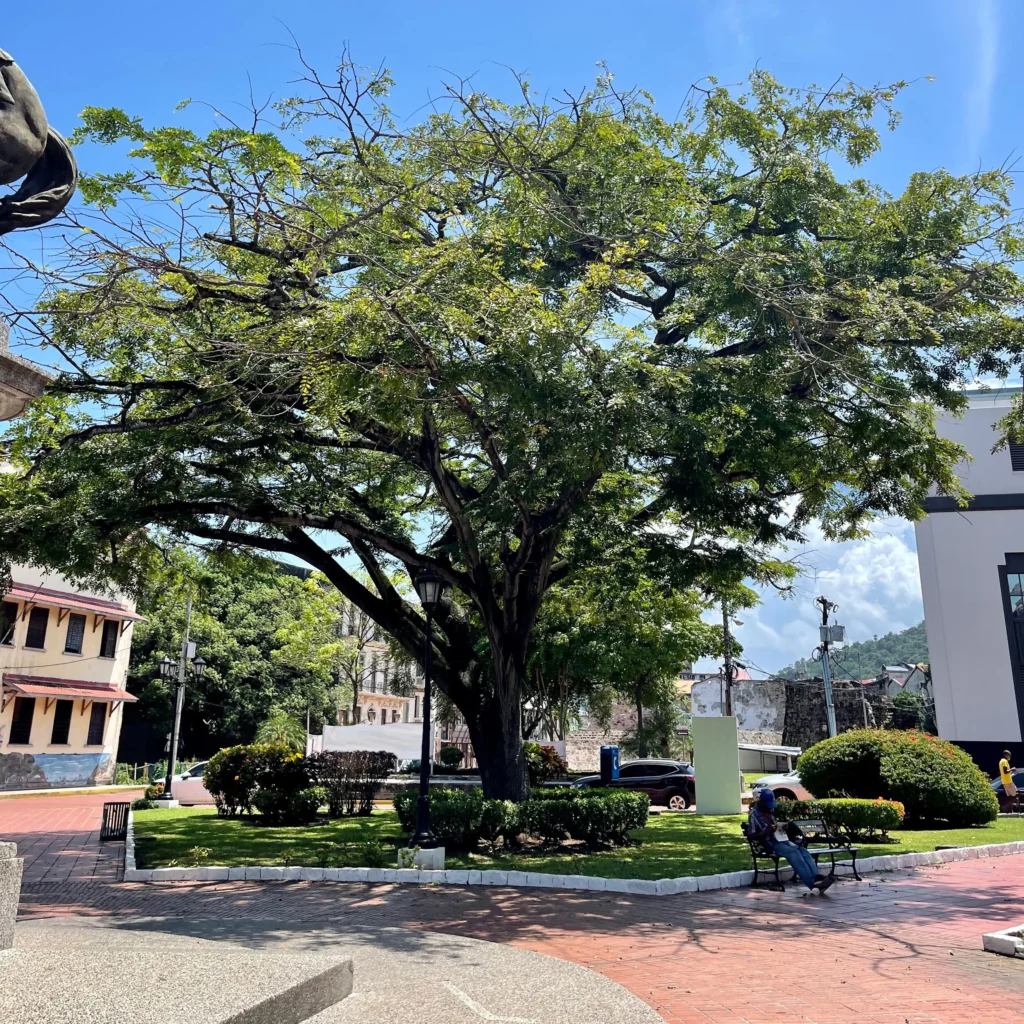
This first tree is called Belisario Porras (Barnebydendron Riedelii), the same species as the one in Plaza Herrera in the Casco Viejo. This tree will have a broad crown that will provide plenty of shade. It produces beautiful red flowers at Christmastime. Trees are being planted to create a cooler microclimate by preventing the sun from heating the concrete (avoiding heat islands), so that pedestrians can be more comfortable in Porta Norte’s public spaces.
This tree also pays homage to former President Belisario Porras, who founded the Exposición neighborhood and recognized the importance of urban planning and architecture in Panama.
I was recently showing our colleague Alfredo Motta a photo of a very famous project just after the earthwork was done. It had newly planted trees. Today, that project boasts a spectacular forest with trees up to 20 meters tall. In that project, today we can walk beneath an extensive green canopy formed by the interlocking treetops. What a great vision!
There is a Chinese proverb that I think about constantly and would like to share with you:
The best time to plant a tree was 20 years ago. The second-best time is today.
Today we are here to plant the first tree of the project, marking the beginning of a new urbanism.

Alfredo Motta, Executive Director of Porta Norte, honored us by offering a prayer in commemoration of the planting of Porta Norte’s first tree:
Give us, Lord, the virtue of trees:
the art of the gentle shade and the generous fruit,
of the branch that endures because it knows how to be flexible,
From the root that delves deep in silence and without ostentation.Grant us the virtue of the trunk,
that knows its firmness is a secret of years,
And may it be that, at the end of each winter,
May the gift of hope encourage new buds.Grant us hospitality to the four winds toward every creature,
Whether pleasant or unpleasant,
Let her come closer to us.
And allow, at last, that, when autumn arrives,
May our leaves know how to fall without a sound,
Slowly and discreetly,
In the anonymous serenity of any sunset.Amen.
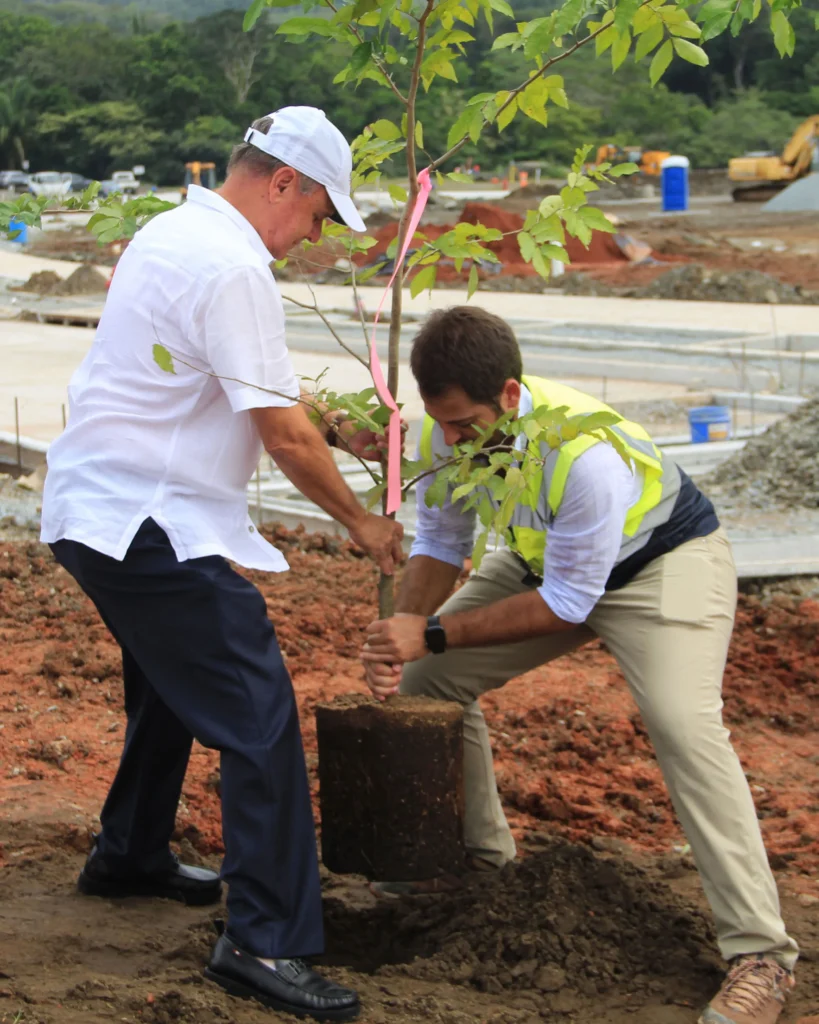
Next, the planting of the first tree began:
Henry Faarup Mauad and Henry Faarup Humbert planting the Belisario Porras tree.
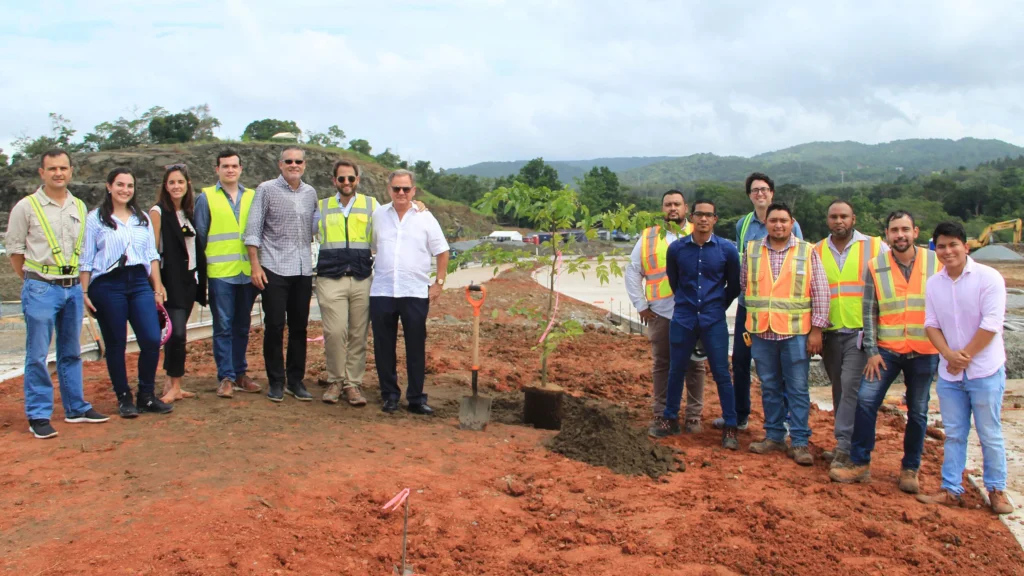
Work team.
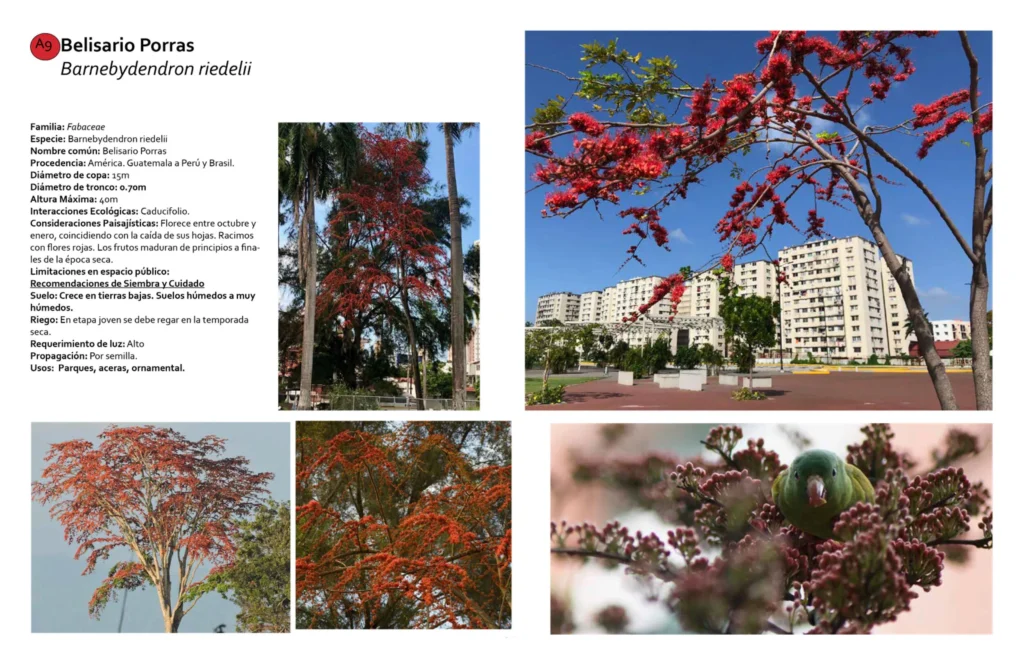
Belisario Porras (Barnebydendron Riedelii) grows up to 35 meters tall and flowers from October to January. It produces a crown diameter of up to 15 meters, which is frequently visited by squirrels, parakeets, iguanas, parrots, and other lovely birds.
Technical sheet prepared by Architect Luis Alfaro.
Belisario Porras tree in Plaza Herrera, Casco Viejo.
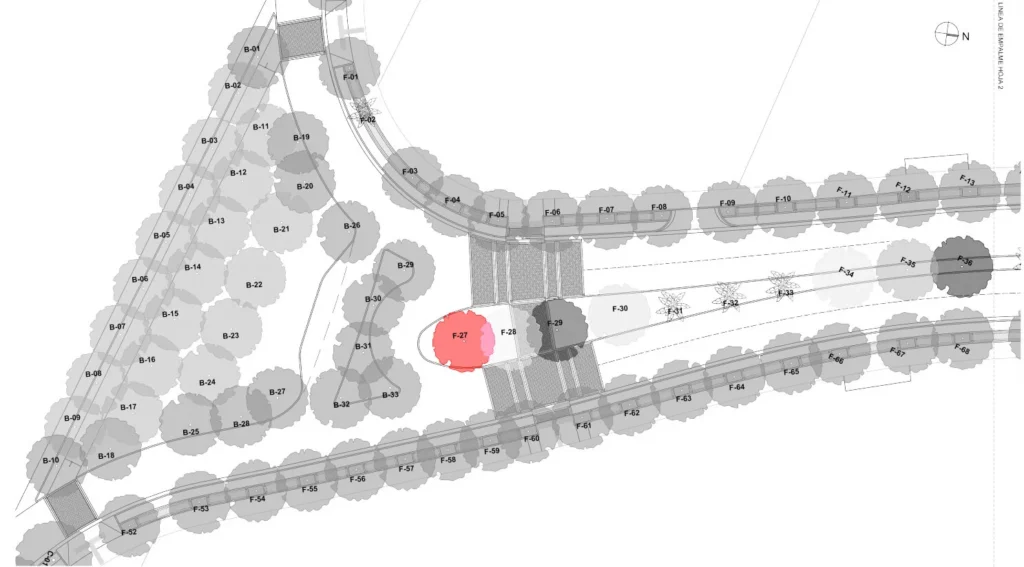
Location of the planted tree
Dr. Belisario Porras served as President of Panama on three occasions. In 1913, he decided to begin construction of the urban plan for the neighborhood we now know as “La Exposición” to host the International Exposition commemorating the 400th anniversary of the discovery of the South Sea.
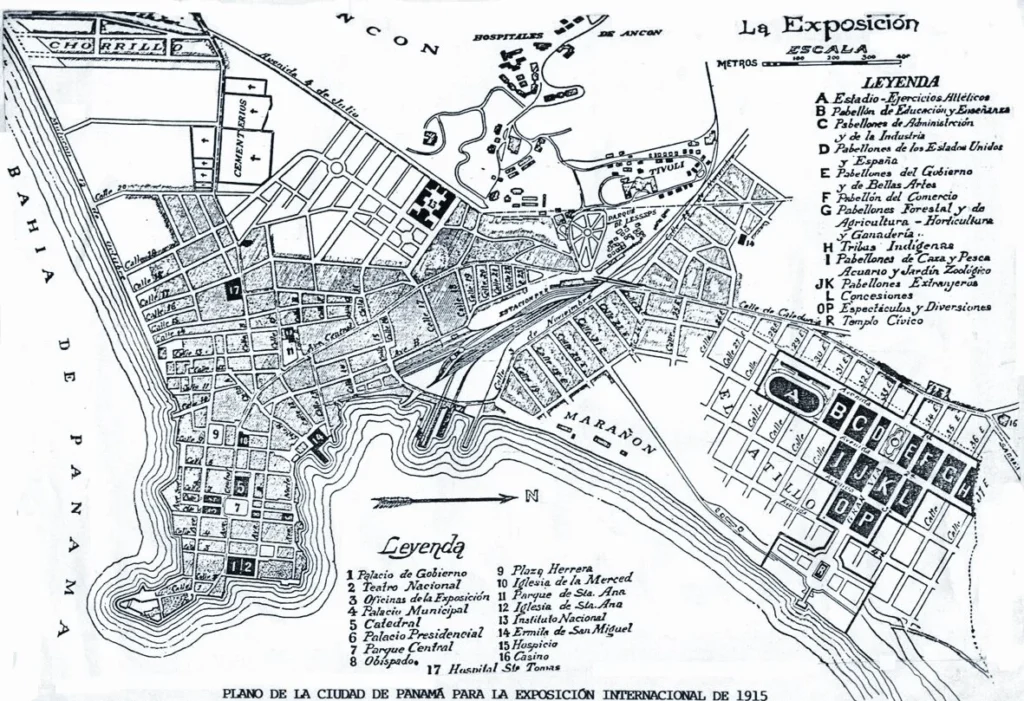
This was the first planned urban development on the city’s “periphery.” At that time, Casco Viejo was the center. The Exposition features perfect city blocks with beautiful colonial buildings, plazas, and trees.
The “La Exposición” neighborhood on the right. The Old Quarter on the left.
The “La Exposición” neighborhood has been absorbed by Panama City but still retains its urban and architectural qualities. The parallel with Porta Norte is very evident: A planned development on the outskirts featuring traditional architecture and ample public spaces that will be absorbed by the city. In honor of this planned urban development and the president who took the initiative to organize the city, we have chosen the Belisario Porras tree to be the first tree.