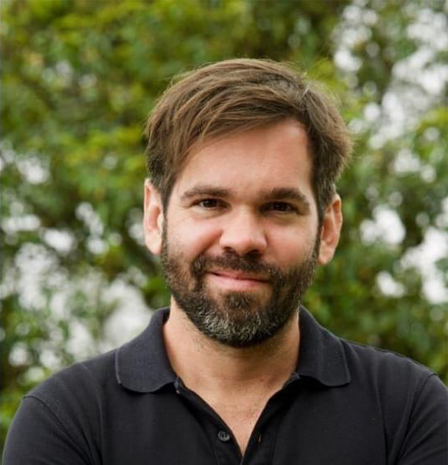

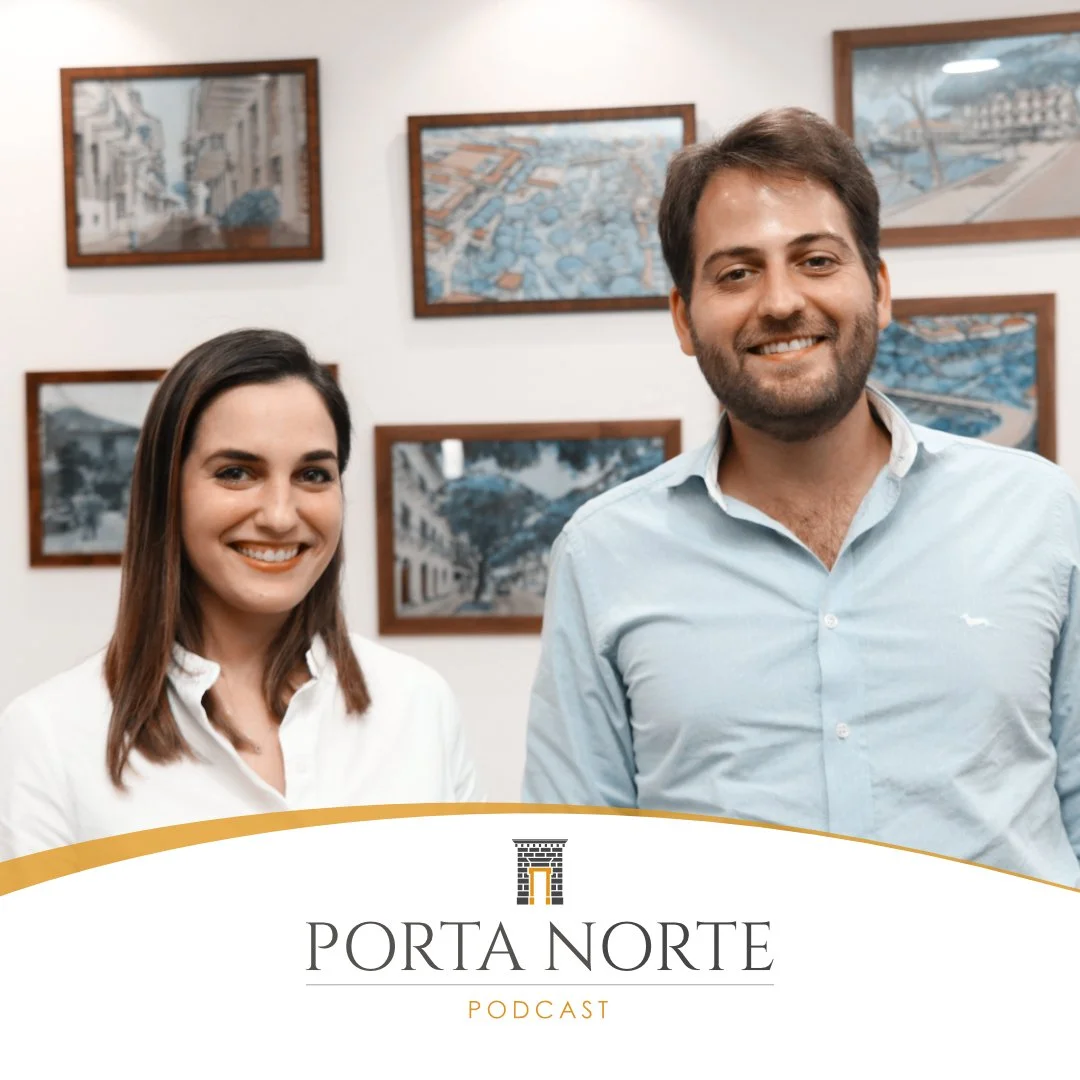
Cristina Oteiza is the Commercial Director of Porta Norte. She studied Marketing with a minor in Psychology at Southern Methodist University in Texas, USA, and Interior Design at Parsons The New School for Design in New York.
He was Marketing Manager at Agencia Feduro S.A. and worked in the interior design department at Mallol Arquitectos.
In this fourth episode, we discuss the commercial development of Porta Norte. We explain our business model, the focus of the project’s initial phases, the types of real estate products you’ll find at Porta Norte, and we answer the most frequently asked questions from those interested in living at Porta Norte.
Connect with Cristina Oteiza:
Porta Norte’s business model.
Phase One’s vocation.
Shopping centers.
Types of housing in Porta Norte.
Lot sizes in Porta Norte.
Preservation of trees in the area.
Project launch to the public.
Henry Faarup Humbert: Welcome to the Porta Norte Podcast. This is episode #4. My name is Henry Faarup, I’m the General Manager of Porta Norte, and here I interview the people who carry out the project and all the hands that help us every day. Today we’re with Cristina Oteiza.
Cristina Oteiza: How are you?
Henry Faarup Humbert: Cristina is the Commercial Director of Porta Norte. So today we’re going to be talking a bit about the commercial department. How we see the project’s commercial vision.
Ultimately, we’re looking to create an active, urban lifestyle—streets filled with people, plenty of residents, and a mix of uses. The commercial department is responsible for communicating this and for making this vision a reality.
So in this episode, we’re going to expand on this. Welcome, Cristina.
Cristina Oteiza: Thank you.
Henry Faarup Humbert: How about you start by telling us a bit about your strengths and what you’ve done in the past?
Cristina Oteiza: Well, the truth is I studied marketing with a minor in psychology.
I started as a Marketing Manager at FEDURO, a distributor. I learned so much—it was like a school. However, I was left with a lingering itch for architecture. I’m fascinated by architecture. While I was there, I had the opportunity to study interior architecture for a year, and I ended up working in Mallol’s interior design department. Then you (Henry) called me to work here. Let’s say this job brings together my two backgrounds: Marketing and Architecture. I’m now marketing an urban development project.
Henry Faarup Humbert: Since then, we’ve been working together on communication, and that’s what we’re doing today.
Cristina Oteiza: Exactly. The truth is, the project is captivating. When you go, you say, “Wow!” Why hasn’t there been anything like this in Panama? Why hasn’t it been done before? I was saying: It shouldn’t be hard to sell this because it’s incredible. A lot of effort has gone into it. I can’t find anyone who’s gone and hasn’t liked it. I can’t find anyone who doesn’t say it’s incredible.
The challenge of communicating the project is that it’s something that didn’t exist in Panama. In Panama, there are no sidewalks to walk on; that’s no secret.
The fact that we’re doing this differently—prioritizing pedestrians and investing resources in burying the cables from the outset—is something unheard of in Panama. That’s the hard part about communicating it. There are a lot of people who don’t believe it. “No, you don’t see that here,” they say.
Henry Faarup Humbert: “Too good to be true,” they also say.
Cristina Oteiza: On the one hand, one says: “Hey! Of course this is super easy to sell, if it’s that good.” But the hard part here is educating people about it.
First, we have to teach them that this exists. What is possible and what can be done. It’s important for people to go and see for themselves. Especially those who haven’t had the opportunity to travel and see countries where this type of urban planning actually exists.
In the end, you’re not just selling a project. We’ve realized that here it’s like selling a city. This project functions more like a city hall or municipal government, because there are different components within the Master Plan.
When Henry and I talked, something that really resonated with us was the idea of a campus-like life. For those who haven’t been able to go to one in the United States: The campus is a place where you have all the resources close by. You can go to the gym, which is on campus. If you want to go to the supermarket, there’s a small market on campus. If you need to go to the health center, there’s one on campus. You can walk to all these places. You have everything within a relatively small area. So that’s what we’re trying to convey, and it’s something you won’t find in Panama. The only place it exists is in the Casco Viejo.
That’s why part of the communication here is that this is “The New Casco Viejo.” It’s what people can most easily associate with it.
Henry Faarup Humbert: “Associate” in the sense that you can walk around and the architecture will remain as it is. In the Casco Viejo, there are almost no sidewalks, ramps for people with limited mobility, or trees. That’s why Porta Norte isn’t exactly the Casco Viejo. Naturally, we are very different.
An important clarification, since the slogan usually doesn’t convey such a complex message, which we are conveying in a podcast like this.
Cristina Oteiza: We only use the slogan so that people have a reference and a starting point. Casco Viejo was built before the car existed. Nowadays, no matter how much we prioritize pedestrians, the car is a reality and will be given its space. What we’re doing differently is that we’re not giving it priority. The pedestrian has priority. There will be parking lots, but they’ll be hidden in the back and all that kind of thing. It’s more like an old town, but with modern urban planning.
…
Henry Faarup Humbert: Tell me about the project’s business model.
Cristina Oteiza: Our business model is that we develop the land and sell fully serviced lots within a master-planned community, so that real estate developers and other investors (healthcare facilities, shopping centers, cultural centers, sports facilities, educational institutions) can build on these serviced lots.
What does “serviced lot” mean? — because this is already developer jargon — A serviced lot is a flat piece of land that already has access to a potable water system, a stormwater drainage system, a sanitary sewer system with a treatment plant, an underground electrical system, a fiber-optic and telecommunications network, and a gas network. Developers call this “plug and play.”
Usually, when a developer buys a lot, they have to start servicing it. We take that headache away from developers.
Henry Faarup Humbert: Part of the headache we’ve taken off your plate is that we’ve already handled the paperwork with all the institutions.
Buying a plot and bringing in all these services, burying them underground, and handling the necessary paperwork is really complicated and expensive.
Cristina Oteiza: In addition to the infrastructure we just mentioned, we built: The sidewalks, bike path, streets, parks, and plazas. All public spaces of the project.
That’s how a developer comes in: they buy a lot from me and develop the housing project, shopping center, institutional or educational facility. That’s our business model.
Henry Faarup Humbert: We’re building out the entire horizontal layer, and soon we’ll be moving into the vertical side thru partnerships with developers and by launching our own products.
We will also develop the buildings adjacent to the plazas. In Panama, when people talk about shopping plazas, what usually comes to mind is a three-story glass building with parking out front, between the street and the building. That’s not what we’re referring to when we say “plazas.”
Cristina Oteiza: Those are the “street malls.”
Henry Faarup Humbert: Yes, those are “street malls.”
When we talk about pedestrian plazas or European-style plazas, we want you to imagine Plaza Catedral, Plaza Herrera, or Plaza Bolívar in Casco Viejo. The only difference between these plazas and those in Porta Norte is that we’re going to make them even more pedestrian-friendly. The plazas in Casco Viejo have cars driving around them. In our squares, the buildings on two sides are right up against the square.
On the ground floor of the buildings in these plazas, there will be chairs and tables from the bars and restaurants that will enliven the plaza. And people will be able to enjoy their beer or coffee in the plaza without fear of being hit by a car.
Cristina Oteiza: We have two types of customers: In marketing, this is called “B2B,” which stands for “Business to Business” and translates to “business-to-business,” or “B2C,” which stands for “Business to Consumer” and translates to “business-to-consumer.” Our primary client is the developer who will buy the lot from me, but we also want the end customer to be interested in the project. Well, it’s the latter who will ultimately buy from the developer and live in Porta Norte.
We are at an important stage of the project. On your LinkedIn, it doesn’t say you’re the General Manager of Porta Norte, but “Town Builder.” You are the builder of a town or city, and we are currently looking for the best tenants for the various lots in this master plan.
There is a planning process similar to populating a shopping mall. Malls have a series of anchor tenants they need to accommodate. After that, they have to figure out where the food court, movie theater, and stores will be located. The same goes for the Master Plan. We have certain areas where it’s better to have residences and others where it’s better to put a hospital because of their proximity to the Vía Panamá Norte. Some lots are better suited for schools, shopping centers, or sports facilities. So we need to find the best locations for them and populate the various elements a city needs.
Henry Faarup Humbert: We seek to create virtuous circles in which residential and commercial developers add value to one another.
So that we can have this campus life, where a resident can pick up bread at the cafeteria downstairs from their residence. At the same time, he can walk his child to the nearby school, and if he has an older child, he can bike or scooter to university. Where his wife also works in an office in Porta Norte, and they can take a lunch break together, pick up their dog, and head down to the river to play. This is about creating a street-life dynamic, and it’s what our country is missing.
Cristina Oteiza: We want the different components to benefit from one another.
That’s what we’re actively looking for. In addition to seeking residential developers, we want all the different components of a city—health centers, shopping centers, cultural centers, sports facilities, and educational institutions—to become the anchors of the project.
Henry Faarup Humbert: That’s right.
Throughout the project’s life, there have been different visions and commercial strategies. We did a lot of earthmoving. We moved more than a million cubic meters of earth, and that set us back about four years.
In the midst of all that, the pandemic hit, and for all those years, when we talked to people and showed them the graphic materials of how the project would look, they were left wondering, “Will it live up to everyone’s expectations?” The beautiful thing is that for the past four months, we’ve been able to bring them to the project and invite them to walk the sidewalks, see the trees, the lighting, and the painted streets.
Cristina Oteiza: The truth is that the project is in a really beautiful stage. It’s very different trying to sell a project that doesn’t exist and that people have to imagine, versus selling one you can already walk thru. And you can feel how super easy and safe it is to walk the wide sidewalks, use the bike path, and watch the trees grow.
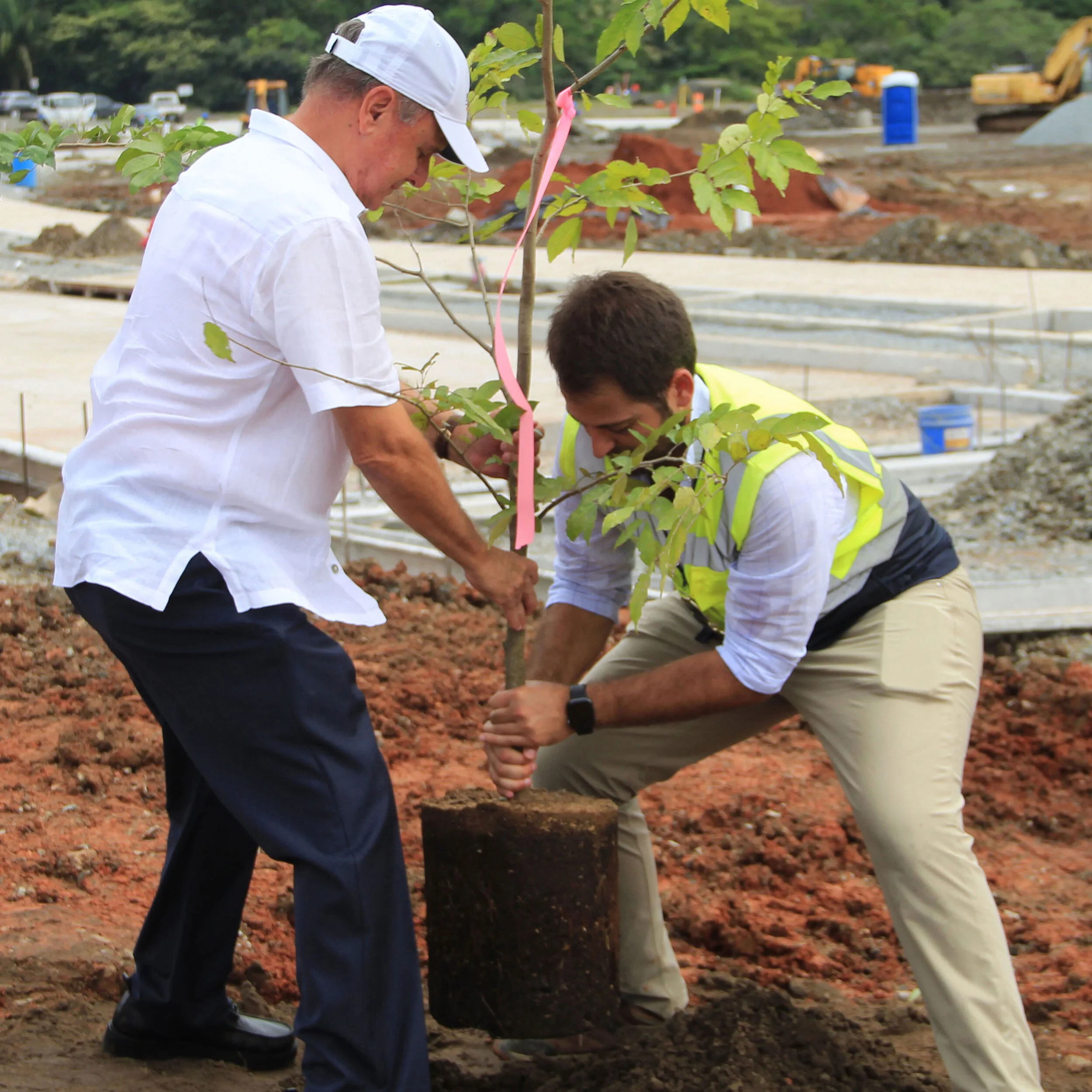
The truth is that when the trees were planted, it was a really beautiful moment in the project. We’re at a very emotional stage, and when people visit the project, they get emotional.
Henry Faarup Humbert: We have two crucial elements for the project: urban planning and nature. Regarding nature: we have the Maria Preta River, which is 2.2 kilometers long, and the Mariposa Creek, which is an additional 1.8 kilometers. When people go to the river and hike the trails, it’s truly spectacular, and we’re keeping them completely intact.
The second part is urban planning, but naturally, people couldn’t feel it. We could show them the renderings and everything. We even did a virtual reality simulation to convey the idea—it turned out spectacular and is exactly what we built—except now it’s actually built. The nature part was already there, and now the urban planning part is what exists and what people can truly experience.
Cristina Oteiza: As you say, in the end you could still see urban planning in virtual reality, but it’s very different to feel it and walk thru it.
The truth is that a great deal of effort has been put into urban planning. Before they were built, we had a prototyping area where a street section was set up and thousands of materials were tested to determine the best options for sidewalks, paving stones, and bike-lane surfaces. So that we could make the best decision. The amount of care that has gone into the final product is incredible.
Henry Faarup Humbert: You can live.
Cristina Oteiza: It’s very, very exciting. As you said, before all the investment was buried and people didn’t see it; now the construction is a really beautiful part of the project that you can walk thru, live in, and feel.
…
Henry Faarup Humbert: We launched some social media polls to answer the project’s most frequently asked questions. We’ll try to answer them at high speed. So, without dragging this out too much. Let’s go one by one:
Will there be individual housing projects?
Yes, there will be individual property projects. Single-family homes. Detached homes are part of what is being planned in the project.
Are you going to have apartments or houses?
Cristina Oteiza: In fact, we’re going to have both. In the end, it depends on what the developer wants to build, but we’re going to have all kinds of housing.
Henry Faarup Humbert: Will phase one include housing or will it be purely commercial?
Cristina Oteiza: Phase one has a more commercial focus, but that doesn’t mean there won’t be any housing there. It’s simply that the ground floors will be more commercially oriented. Since it’s a high-traffic phase due to its access to the Vía Panamá Norte. But that doesn’t mean there aren’t any residences in the first phase.
Henry Faarup Humbert: Are there any developers working on projects?
Yes. We can’t disclose anything right now because they want to remain anonymous, so that when they launch the project it’ll be a surprise, a real hit. We’re going to help them. There are already a couple of people developing the designs and schematic concepts. There are some really good developers, and we hope to be able to reveal and announce them to you soon. We’ll be revealing them to the waitlist first, so sign up.
When does construction of the buildings, residences, or townhomes begin?
Cristina Oteiza: We are, in fact, delivering lots. Last week we delivered. Over the next few months, we will be delivering the Phase One lots, and developers have an 18-month window to begin construction on their lots. So, let’s say, over the next 18 months they’ll be launching housing projects.
Henry Faarup Humbert: Will Porta Norte be open to the public?
Yes, Porta Norte is full of public spaces, and we invite everyone not to come and enjoy them, but to come and have a beer. Have a little coffee. It’s the same concept as Casco Viejo: everyone can come and enjoy it. They’re going to enjoy the rivers, the trails, all the sidewalks, and all the public spaces. So it’s a resounding “Yes.”
Are there bike lanes? How many kilometers are there approximately?
Cristina Oteiza: Yes, there will be bike lanes. In fact, we have 8.2 kilometers of bike lanes in Porta Norte. A dedicated bike lane separated from cars and pedestrians as well.
It is divided as follows: We have a bike lane, then a space for street furniture that acts as a barrier to the free sidewalk. So pedestrians shouldn’t walk in the bike lane, and bicycles shouldn’t ride on the sidewalk. We have 8 kilometers of dedicated bike lane in Porta Norte. Additionally, on side streets where there is no dedicated bike lane, you can also ride a bicycle. So be careful, there’s more. But it’s dedicated: 8 kilometers of bike lane.
Henry Faarup Humbert: The bike path is made of asphalt, which cyclists appreciate because it has no joints. Since you’re on wheels, it’s super smooth and comfortable. You don’t have the “pad.” pad. pad. pad.” What does the concrete have? So that’s going to be super comfortable, not just for bikes but for micromobility in general. Which include scooters, roller skates, skateboards, and every type of mobility that might exist in the future. So it’s going to be super cool.
Did they preserve any trees in the area?
Well, obviously we’ve preserved hundreds of trees in the area. All natural watercourses have been preserved. Yes, we’ve done earthmoving, and naturally, since it’s earthmoving, you have to cut down a couple of trees, and we’ve replanted a bunch of trees in phase one. In our planting plan, we have planted around three hundred and fifty trees to date. Each one is planted according to a specific design to provide shade for all pedestrians, and we’re also planting many more along rivers and natural waterways. In addition to this, we are incorporating a much greater diversity of trees and tree species into the project to increase the area’s biodiversity. What does this mean? There are many native trees, or some non-native ones that have been in Panama for a long time, that weren’t included in the project, and we’ve planted them along the sidewalks, in the median, and around the river. We’re bringing in almost every fruit-bearing species that grows in Panama so that people can pick the fruit from the trees and grow it in their gardens or in one of the parks, and eat what grows right there in the project.
So that way, we want to attract lots of animals to come, and also children to enjoy and eat, and we’ll all fatten them up a little more with the project’s fruits.
Cristina Oteiza: Yes, I mean, there’s going to be a nursery and everything…
Henry Faarup Humbert: There will be a clearing where we will grow and sow the seeds. We’re going to collect the seeds that fall from the trees and grow them in the nursery, so we can also plant them in future phases. Because we’re going to need an infinite number of trees, since we’ll be planting them and we have a massive planting plan. So we want to be self-sufficient in planting trees. So that’s why we’re going to have our own nursery, and that’s why we’re planting around seventy species in this first phase. When the seeds from those trees are ready—and a couple have already appeared—we’ll collect them, propagate them in our nursery, and plant them in the future phase and even in phase one. So, that’s our plan to increase the project’s biodiversity.
How big is the project?
Cristina Oteiza: The project actually covers 262 hectares. We have a northern plot of 100 hectares and a southern plot of 162 hectares. We are focusing on this southern phase, which covers 162 hectares. This is five times the size of Casco Viejo, just to give you an idea. That’s the size of the project.
Henry Faarup Humbert: Only the southern plot is five times as large. Including the hundred hectares mentioned above, it’s eight times the size of Casco Viejo.
What size are the lots?
Cristina Oteiza: The lots really vary a lot in size. So there’s something for every taste and preference. The smallest one, between phase one and phase two, is at least 1,400 square meters. And we sell these hectare-sized plots. So ask, and depending on your ambitions, we have plots for you.
How long have they been building?
Well, the project was acquired in 2014. And we started construction in 2017.
Are all the lots residential?
No, our lots are mixed-use. Mixed uses. So, again, what we want is for there to be all kinds of buildings in Porta Norte: residential, hospitals, schools, universities, shopping centers—everything.
How does the architectural code work?
The architecture code in realities is intended to maintain the project’s walkability ideals. We’re working on simplifying the architectural code a bit more, but basically it’s based on having maximum heights. We have maximum heights of ground floor plus five and some of ground floor plus two, meaning six-story buildings or three-story buildings. It also focuses heavily on ensuring there are no parking bays in front of the buildings, so that one can’t walk comfortably along the sidewalk and the parking spaces are hidden behind the building. It’s more about preserving this colonial architecture, which has actually proven to be a bit more “friendly” for walkable urbanism.
Basically, once the developer buys the property, there are certain steps to follow: before submitting the plans to the municipality, they have to send us certain sheets that we require, so they won’t be doing double work—they just need to send them to us beforehand for our approval. From there, there are several meetings that need to take place. We’re going to have a town architect, who’s the one who regulates this kind of thing. In fact, we have some architects who are, let’s say, already pre-approved. So if you use it, you don’t have to go thru this filter because the project rules are already known and they speak the same language we do.
It’s not difficult. It might sound more intimidating than it is, but basically it’s about guiding them into this new language of new urbanism that doesn’t exist in Panama.
Henry Faarup Humbert: How has the project been affected by the COVID-19 pandemic?
Cristina Oteiza: Well, actually the pandemic affected us in terms of construction, since it was halted for a year. But actually, in terms of demand: Demand for the type of product we offer has increased. Now everyone is outdoors. Now restaurants need a terrace, some space, and basically that’s what we’re going to do.
When the quarantine restrictions were eased and people could finally go to the parks to exercise. So the coastal strip filled up, the causeway filled up. The parks filled up, so people have realized there’s a gap in the market—that there’s no public space in Panama to go and enjoy.
So, all in all, the pandemic has helped us in that sense, making people realize that what we offer is more necessary than they think and that it’s needed in Panama. People have realized that there is a lack of public space in Panama.
Henry Faarup Humbert: I love the project. I want to learn more and visit you. How do I do that?
Cristina Oteiza: Now, as we’ve already mentioned that the project is ready—well, almost ready—for people to visit. We want to activate it, and in fact we’re looking to hold events at Porta Norte: “Sundays at Porta Norte.” We want to hold little markets and fairs, and see if we can set up a dog park so kids can come. So, soon we’ll be announcing some markets and events at Porta Norte on social media and with some really cool partners, so that anyone who wants to come and visit can do so and get to know it.
Well, the other question is: why do they call it Ciudad Porta Norte?
Henry Faarup Humbert: Ciudad Porta Norte is meant to convey the idea that we’re not just a project of little houses, little houses, little houses—100% residential. It’s a project where people will live and carry out their entire lifestyle. Where you can play, work, enjoy yourself, walk, and do everything. Fulfilll all your basic needs within a five-minute walk. We call it Ciudad Porta Norte to convey the idea that this is a complete city.
Cristina Oteiza: One thing to add is that, as you said, it’s not a project of little houses, little houses, little houses, and it doesn’t even have a wall with a guardhouse. It’s open so that everyone can come—not just Porta Norte residents, but also those living in the area and in the city—and freely enjoy the public spaces within the project.
Well, we’ve already answered all the questions, and we’d love to address any doubts you may have.
Henry Faarup Humbert: So if you have any further questions, please don’t hesitate to send them to us via our social media channels. We will be very happy to answer you. You can also email us at info@portanorte.com. You can personally reach me at henryjames@grupocolonias.com.
Cristina Oteiza: And you can write to me at cristinaoteiza@grupocolonias.com.
Henry Faarup Humbert: So welcome to learn more about the project; I hope you can visit again. It’s really important that you come visit, and you’re more than welcome. And if you have dogs, bring them along.