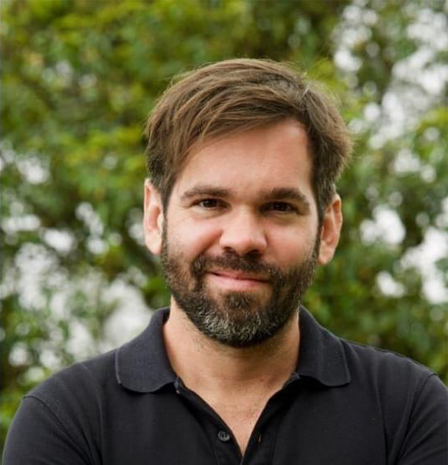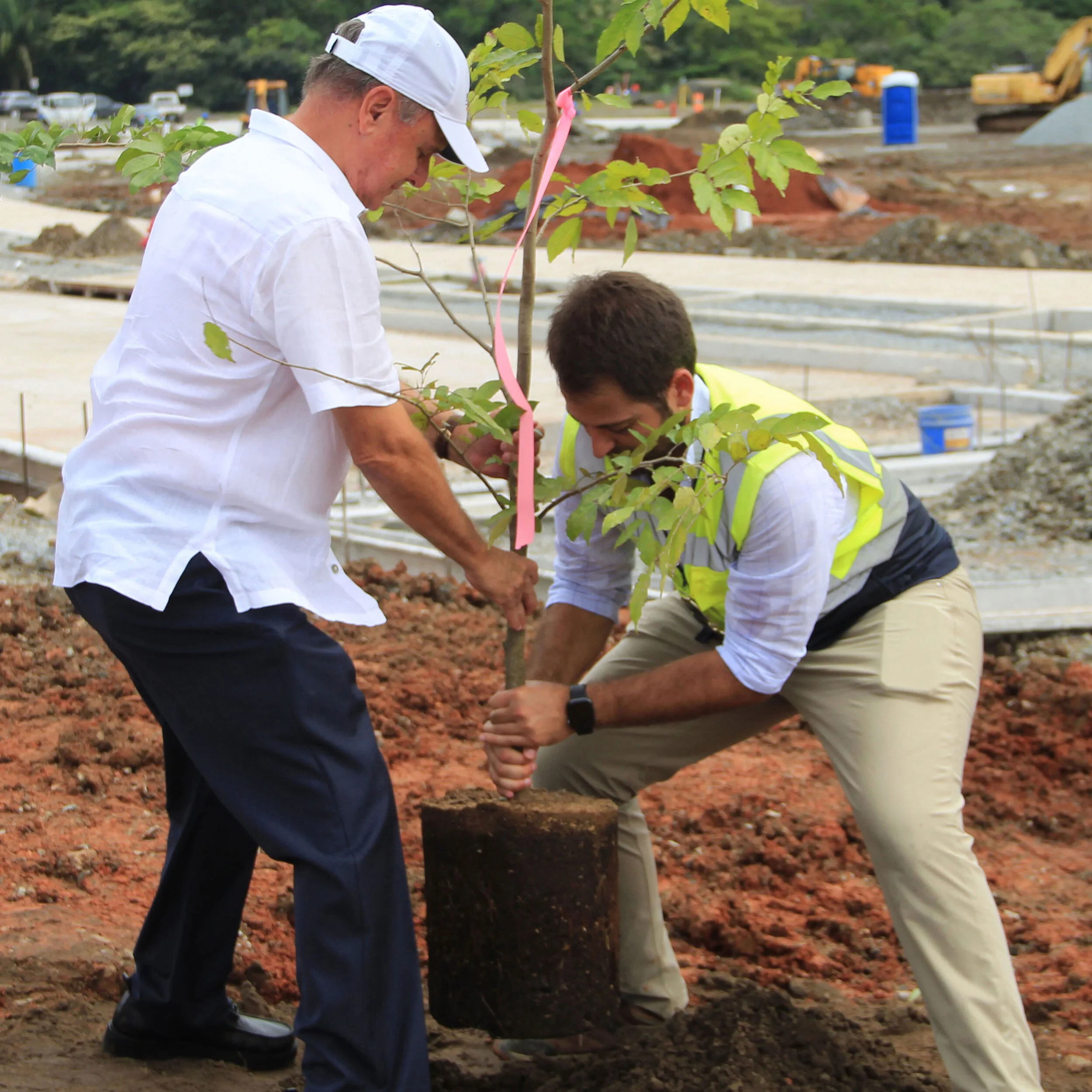

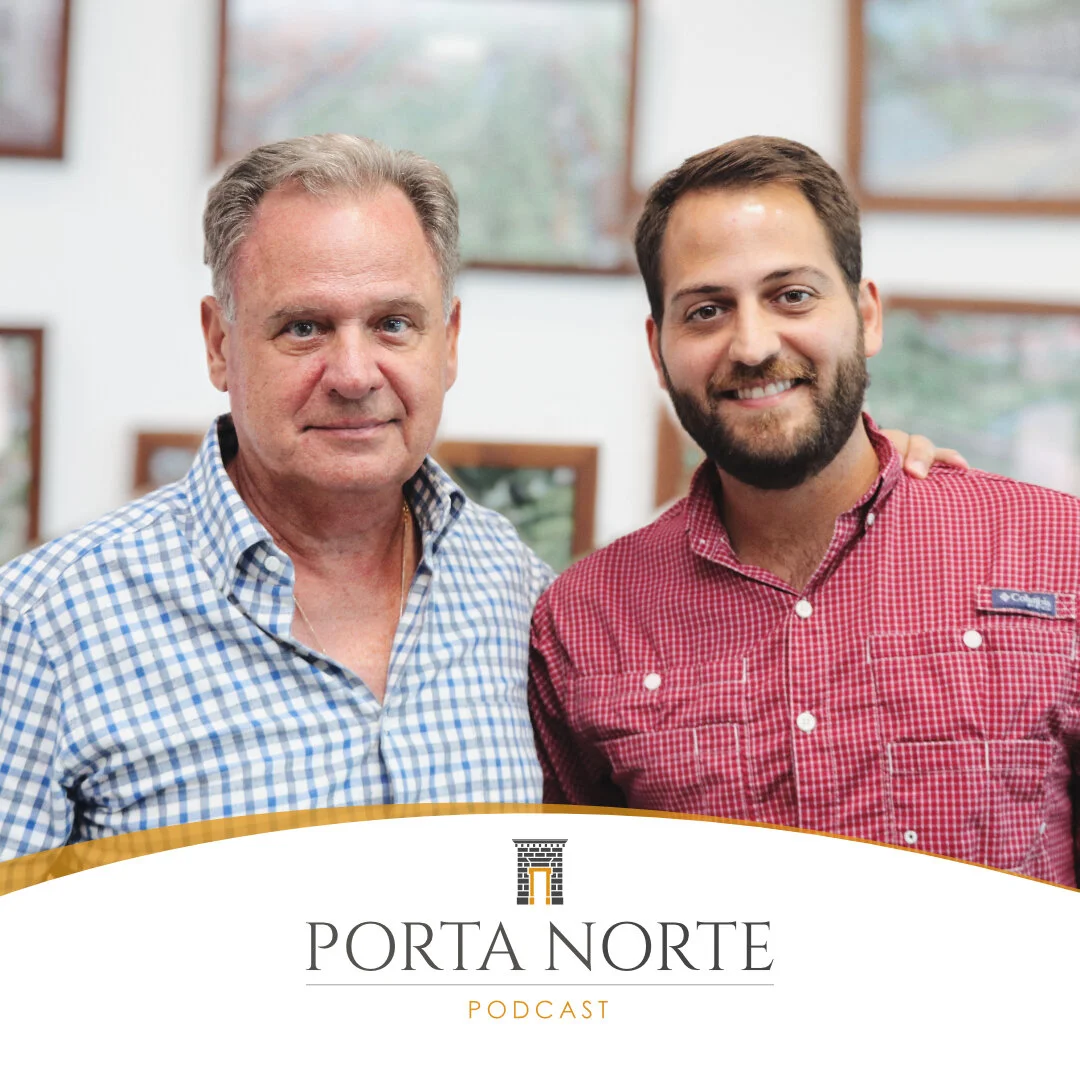
Engineer Henry Faarup Mauad is an entrepreneur and visionary who has founded companies since the age of 30, including Asetecnia, appraiser, Tridex, international insurance adjusters, and Grupo Colonias, a real estate developer that began in 1984. He was Panama’s ambassador to France, and upon completing his term, he returned to Panama and co-founded Ciudad Porta Norte in 2014.
In this first episode, we discuss the beginning of Porta Norte: The essence and values of the project, the architectural details, and the creation of a community life.
Henry Faarup Humbert: Welcome to the Porta Norte podcast! Here, we’re going to start this first episode with Henry Faarup Mauad senior; engineer Henry Faarup Mauad senior, my father, with whom I’ve embarked on a very interesting adventure together, so we’re going to start by getting to know him a little bit. So, welcome first of all.
Henry Faarup Mauad: Welcome son, thank you, you too.
Henry Faarup Humbert: (thank you) Tell us, how about you tell us a little bit about yourself, about your story, a little bit about your life’s background and tell us a little bit.
Henry Faarup Mauad: Okay, well, the truth is that I have had a fairly long journey through life and through different episodes, businesses as well, but for me, the combination of all this has been the creation of the new project called Ciudad Porta Norte, which is a beautiful project where we have put into practice knowledge and many years of experience and battling.
I would like to start a little bit, well, I mean, where I studied, what I studied. I think it’s a good start to see a little bit of the trajectory, both of myself, my family, the companies…
I studied… In September of ’68, I started at the University of Texas at Austin, I studied civil engineering. I remember being a freshman at 17 years old. I graduated from Colegio Javier.
Henry Faarup Humbert: Our alma mater, I mean, me too….
Henry Faarup Mauad: My son also studies there, very proud.
The truth is that it was interesting. Journey of my life. Well, I studied engineering, which was four years, four and a half years. When I finished, I realized that I was missing something, I was missing something and something that I had inside me. Because I have blood from Nordic countries and blood from the interior; and by nature I am a merchant, I have been a businessman, I have business in my veins. So, after finishing my engineering studies, I made the decision to do a postgraduate degree in business administration.
It just so happens that the University of Texas is one of the ones that has one of the best master’s programs in the United States, when we say United States we are talking about the whole world. However, at my young age, it occurred to me, well, I had the idea of going to study for a master’s degree in Europe to learn another culture, another language, and so I did. I was in Europe for two years.
Learning French took about 7 months, it was in a city called Besançon, and then in Paris. Later, the Catholic University of Louvain, which had a program with Cornell that I don’t know if it still maintains, but the program was interesting. Half of the books were in English, the other half were in French, the classes were all in French and the exams were in French. So imagine the mess I had in my head, but well, with youth everything is possible. So I went to do my studies in business administration which totally opened my mind. It opened my mind to the world and I recommend that to any engineer who is studying right now, to do their master’s degree, their postgraduate degree or course in business administration. Because, yes, it’s another line.
Henry Faarup Humbert: a very good complement
Henry Faarup Mauad: Super good complement.
Well from there, I returned to Panama. I started working at the company ASSA. At that time it was called “Administración de Seguros”. For those who don’t know, ASSA means “Asociación de Seguros S.A.” which were three companies: Panameña, General and Interamericana; that joined together to form this group that today is a very important group. I would say that it is the largest insurance group in Panama and in the region as well.
Then I was in a reinsurance company, traveling throughout Latin America and in 1980 I became independent. Between ASSA….
Henry Faarup Humbert: How old? You were…
Henry Faarup Mauad: I was 39 years old
Henry Faarup Humbert: no
Henry Faarup Mauad: no sorry, TWENTY-NINE years old
Henry Faarup Humbert: yes
Henry Faarup Mauad: 29 years old, 29 years old exactly. I became independent and formed the first company “Asetecnia”, exactly. It is a company dedicated to appraisals and inspections that I still maintain. My daughter Liz Marie, who is an architect, manages it very well. She is in charge, she is in charge of that.
Later, I also joined forces to form a company called….
Henry Faarup Humbert: primarily real estate appraisals?
Henry Faarup Mauad: real estate and insurance as well
Henry Faarup Humbert: and insurance.
Henry Faarup Mauad: Yes, a lot of insurance as well. Then TRIDEX, which is now insurance adjustment, and in 1984 I started the real estate development part. And the company “Grupo Colonias de Panamá” or “Colonias de Panamá” was created. Later it was changed to “Grupo Colonias”. From then on, we started building projects. (One, I think several) It should be said that I had a very nice relationship, a very nice partnership with what is now “Grupo Residencial” which was led and is led by José Sosa, we were together almost until 1990. Then, well, the things that came, the invasion… Everything was paralyzed. After the invasion we took different paths and I continued here with “Grupo Colonias” doing projects. We have built buildings, urbanizations, one of the….
Henry Faarup Humbert: Urbanization of hundreds of houses
Henry Faarup Mauad: hundreds of houses of course
One of the most symbolic, iconic urbanization or projects at this time was Bosques del Fresno, a project of a hundred and something houses. No, two hundred and something houses and it was at that time… I was united, I took the idea of doing the “Gated Community”. Gated Community and it was in reality the first gated community that was made in Panama.
Henry Faarup Humbert: and the funny thing is that, well, you have previously told me that you went to Miami to study the “gated community”
Henry Faarup Mauad: exactly
Henry Faarup Humbert: and from there…
Henry Faarup Mauad: Especially in Miami, I was in other places, but especially in Miami
Henry Faarup Humbert: That’s where the idea came from.
Henry Faarup Mauad: I saw many projects, that’s right. And to make the houses have gardens in the back because houses were no longer built… No garden came out in the back; but you had to use the patio, the porch of the house for the social area. Well, my idea was, that came from the mid-80s, that the houses had their gardens to use the back.
That was a very nice project, I remember it was the first, it seems like a lie, it was the first project in Panama that had white windows. White windows did not exist in Panama.
Henry Faarup Humbert: I think they were double, or they weren’t… No, you weren’t. No; and also that you made the first like yellow houses or something like that, the yellow color that you were the first
Henry Faarup Mauad: also. Yes pink/yellow, but more than anything the fact that they had tile roofs and white windows. Because Panama made “Miami Windows” at that time and everything was bronze, that is, solar bronze, they were aluminum, but there were no white windows in Panama. It was the first project that was done like that.
Subsequently, I had the opportunity, the honor of being invited by the one I called Buddy Motta to participate in the “Costa del Este” project. To which I immediately said yes. The “Fuente del Fresno” project was just beginning, and I had invited him to participate. He also participated as a shareholder and was a fabulous guide as well with his good ideas always on the board of directors, well he contributed and well he gave me the opportunity to participate in Costa…
Henry Faarup Humbert: The board of direc… sorry. Was he on the board of directors of Fuente del Fresno?
Henry Faarup Mauad: Yes of course
Henry Faarup Humbert: ah wao
Henry Faarup Mauad: he was a director
Henry Faarup Humbert: ah wao
Henry Faarup Mauad: Yes. So I remember “Costa del Este” at the beginning was a garbage dump.
Henry Faarup Humbert: (laughs)
Henry Faarup Mauad: It was the crematorium of Panama, but not everything. People are wrong, people get confused sometimes. It was a part, it was 60 hectares.
Henry Faarup Humbert: of course, where was the park right now? Or later it was…
Henry Faarup Mauad: where the park is because a landfill was made there, nothing will ever be built there. It is forbidden to build there, but there were 60 hectares, it was reduced to 30. However, Costa del Este is 300 hectares and there are many hectares that were not part of that, but it was a very nice experience. There I participated; as a director as well, and also on the executive committee for several years and I was in charge of the entire foundation/creation of “Costa del Este”, where I learned a lot and well.
Years passed, we took out other projects, and in 2009 I had the opportunity to be Panama’s ambassador to France. In the government of Ricardo Martinelli I went there. My daughter was in charge of another project we had, “Bosque de las Cibeles” and with that we didn’t have any more because I left for 5 years.
Henry Faarup Humbert: that is, when you left, was the “Bosques de la Cibeles” basically delivering, transferring the houses or not?
Henry Faarup Mauad: we were building as well
Henry Faarup Humbert: they were still building
Henry Faarup Mauad: yes we were in the penultimate/last phase
Henry Faarup Humbert: already
Henry Faarup Mauad: yes.
Henry Faarup Humbert: that was when I was in college
Henry Faarup Mauad: you were in college, exactly.
From there well, my daughter Liz Marie, she is an architect so she took charge. What’s more, everyone else was in college, the only one who had graduated was her; and married as well. So well, that project was finished.
When I returned to Panama in 2014. Were you working in a venture capital or something like that?
Henry Faarup Humbert: yes
Henry Faarup Mauad: and I talked to my son and he told me that he wanted to develop some project with me together and well perfect let’s look for where.
I’ll never forget (laughs) the first thing we did was go to Obarrio to see some land to make a (laughs) building or something like that. A land, well five thousand square meters, we saw on other sides….
What I would have least imagined is that we were going to get involved in a project to make a CITY because it is 262 hectares, but well. The truth is that we saw the opportunity, we saw the land, we met the Rojas-Pardini family, the owners, we negotiated the same year in June, and in September we had already signed. To do the project together where we as promoters were going to develop it, of course a cooperation. And well, from there in 2014 we started to develop everything that is needed to make a city.
Honestly, we call Porta Norte a city because it IS a city. That is, it is going to be a city because it has been conceived that way. I don’t know if, before starting a little bit about Porta Norte. That you would give me a little bit of your opinion regarding your transition from working in a venture capital with me either in Porta Norte.
Henry Faarup Humbert: Yes well I worked in that venture capital because I have always been fascinated by the world of entrepreneurship: Startups, companies etc.
So in that venture capital I basically realized that a venture capital in Panama, at least in those dates, was not viable. Because the market, basically, was local and the amount of entrepreneurs that there were, that we had access to talk to; could be counted. There could be fifteen in Panama and probably there were supposedly two promising ones, and well I realized that in truth the market was not there and that’s where I saw that the problem in Panama to create companies is that there are no entrepreneurs, we need more entrepreneurs.
Since the investor part was not going to be viable at that time I said: “Hey, you know what? I want to start a new business” and that’s where we started talking. We were already talking about reviving “Grupo Colonias” and up to a year before/two years before….
I have always been attracted since I was a kid to the subject of projects. I used to go there with you, visiting, and up to two years before, I think, in 2012, I took a course in Miami.
Henry Faarup Mauad: really?
Henry Faarup Humbert: where Duany’s wife signs it supposedly of new urbanism. Like in 2012…
Henry Faarup: really? That’s new to me ah. I didn’t know about that
Henry Faarup Humbert: yes I took an online course, I have it in the office. Now I’ll show it to you. I think 2012/2013 and we bought the project, that is…
Henry Faarup Mauad: 2014
Henry Faarup Humbert: 2014, but it was before….
Henry Faarup Mauad: You came with the idea of urbanism a long time ago
Henry Faarup Mauad: Jr. yes
Henry Faarup Mauad: look at you, interesting. I didn’t know that
Henry Faarup Humbert: yes, basically. So…
Henry Faarup Mauad: that’s good
Henry Faarup Humbert: When he arrived… Well, that’s when you were initially in Paris and I started looking at the land. I went with people to see the land. One of those times, when you came from Paris, we, you and I, went to North Panama and saw that the movement in the area was incredible. They were expanding the northern corridor…
Henry Faarup Mauad: Exactly.
Henry Faarup Humbert: towards the airport. From Brisas del Golf to the airport, and we also saw that there was a rather ugly street, Vía Panamá Norte, which is now completely renovated, and we saw the area; and we saw the incredible potential. It has a similarity to what you saw in Costa del Este, right? In other words, we analyzed the growth of the city and bet on the growth of the city, which is evident today.
Henry Faarup Mauad: It’s evident.
Henry Faarup Humbert: Today, there is no one who goes there who doesn’t say: this is what it is, this is the north. This is where the whole city is coming, but at that time it was far away…
Henry Faarup Mauad: Totally.
Henry Faarup Mauad: Jr. Of being evident. Well, you had a whole life there seeing land, seeing it appreciate, and you’ve done that a couple of times and you’ve already seen it.
Henry Faarup Mauad: Actually, speaking of that too, we were also pioneers there in “Fuente del Fresno”.
Henry Faarup Mauad: Jr.: and they opened that whole area there.
Henry Faarup Mauad: the only project before “Fuente del Fresno” was “Altos de Panamá” and we were the second to do a project there and look what that is there in “Tumba Muerto”, what “Alto de Panamá” is. All that, how it has developed, big time.
Henry Faarup Humbert: Yes.
Henry Faarup Mauad: and now what is Ciudad Porta Norte. Anyone who doesn’t know the new Vía Panamá Norte, I recommend they go.
Henry Faarup Humbert: It’s a new world…
Henry Faarup Mauad: You have to go because it’s something else, it’s a development. It’s a large boulevard with 80 meters of easement width. In other words, two lanes going there, two lanes coming here, a large island. Imagine that the corridors have 60 meters, they have 80 meters in most of their trajectory and I recommend you take a walk. Go on a Sunday, just for a walk with the family and you will see the future it has. For me, it is the new development hub of Panama City.
Henry Faarup Humbert: And well, stay tuned to our networks because we are going to, in the near future, start doing events there and…
Henry Faarup Mauad: Also.
Henry Faarup Humbert: so that people can have picnics and run, etc.
Henry Faarup Mauad: Totally, or we are also going to do little markets.
Henry Faarup Humbert: Yes.
Henry Faarup Mauad: so that people can go and buy their…
Henry Faarup Humbert: Yes.
Henry Faarup Mauad: But yes.
Henry Faarup Humbert: So, we acquired the land after a good bit of negotiating. In other words, we negotiated, we did a “corporate governance”, structure, we did, we raised, we talked to friends/family to raise some funds.
Henry Faarup Mauad: Also.
Henry Faarup Humbert: although primarily it was us and we structured the company and started. It was a small company, we were… I think we were 3 or 4 people at the beginning. At the beginning it’s processing permits, doing studies…
Henry Faarup Mauad: The master plan.
Henry Faarup Humbert: Master plan.
Henry Faarup Mauad: The master plan. I remember when we negotiated with the Rojas Pardini family, there was an architectural firm EDSA, I don’t know what it’s called.
Henry Faarup Humbert: Edward Stone and Associates.
Henry Faarup Mauad: Ok.
Henry Faarup Humbert: who are the ones who have designed quite a few projects here in Panama.
Henry Faarup Mauad: quite a few projects in Panama, exactly. We continue working with them, during that course…
Henry Faarup Humbert: How do we continue working with them?
Henry Faarup Mauad: Let me tell you.
Henry Faarup Humbert: Ah.
Henry Faarup Mauad: At the beginning.
Henry Faarup Humbert Ok.
Henry Faarup Mauad: So those were a few months, I remember I had a trip to China, and well. Everyone knows that China is famous for its virus, right?
Henry Faarup Mauad: well, I caught a virus, I got a virus that gave me a fever for 33 days in a row. I was here in Panama trying, but there was no solution. I went to the Mayo Clinic, which is where I used to go, and that’s Chacho Smith and Floridian’s. I have a doctor there who got me 7/8 doctors there. In the end they found the cure. I think it was with corticosteroids and other things that got rid of the fever, but at that moment…
Henry Faarup Humbert: Let me, I’m going to stop you there for a second to give you my version and then you complement it with your version. In other words, that was already in the middle of the new urbanism process.
Henry Faarup Mauad: Okay.
Henry Faarup Humbert: But when EDSA came; EDSA made a couple of concepts, sketches, we see it together there, we saw it together, we analyzed them, the executive committee was there and there came a time when what EDSA was designing was a new city, but focused on the car. In other words, there was no concept of creating walkable spaces, public squares, this life on the street that we wanted.
Henry Faarup Mauad: Exactly.
Henry Faarup Humbert: and we were kind of telling them that this was what we wanted, but they couldn’t land the concept. So, I remember that I got into that beginning of the project, I still do, with courses on the internet “Coursera”. I grabbed one on city designs and grabbed thousands of YouTube videos, and I found this thing about LEED for neighborhood development, which was LEED what one knows for all structures, but this was for neighborhoods. Basically, I told ESDA, I remember a meeting, a very specific meeting where I told them “no, we want to do this Leed for neighborhood development and that it is walkable” and one of the agents that was in the Leed for neighborhood development was from the Congress of New Urbanism.
Henry Faarup Mauad: Exactly, that I was going to go, but I had to cancel because of the fever, you know? I remember I was going to go.
Henry Faarup Humbert: Yes, yes. But hey, when I told them that that was what we wanted to do. I remember they said “I have to investigate to see what that is”.
Henry Faarup Mauad: laughter Oh my God!
Henry Faarup Humbert: and I said “hmmm” Chuzo..
Henry Faarup Mauad: Yes.
Henry Faarup Mauad jr: These people are not like the right people to land the vision of the project and then we started opening the door to another master planner and that’s where, as an executive committee, we decided to go to the congress of new urbanism.
Henry Faarup Mauad: exactly, I was even registered and everything, but I had to go to the hospital. To Jacksonville.
Henry Faarup Humbert: Yes. And that, in that executive committee, I remember that came up. I don’t know if you remember this part, but there was a person who did a TedTalk called Jeff Speck.
Henry Faarup Mauad: Yes.
Henry Faarup Humbert: and I with Edward McGrath contacted him, we had a conference.
Henry Faarup Mauad: with the architect Edward McGrath?
Henry Faarup Humbert: with the architect Edward McGrath. We had a conference with him. We made the vision of what we wanted, walkable places. In other words, his TedTalks are literally about walking, about how to create walkable places. And when we told him, we showed him the EDSA master plan, he said “Hmmm no, in other words, the people you have to hire are at the Congress of New Urbanism and are these three”. He told us two others that I’ll keep to myself, because we didn’t hire them (laughs). And Duany Plater Zyberk & Company. That he even worked at Duany Plater Zyberk.
Henry Faarup Mauad: Really?
Henry Faarup Humbert: and as an executive committee we made the decision to have a north towards walkability, etc. And that’s where we decided to go to the congress of new urbanism, the executive committee. In other words, everyone on the executive committee went and you were coming. In that executive committee was where you, in the last week, said “I’m bad, I’m not going there” and there I connect it to where you arrived in Panama after we had all that tour.
Henry Faarup Mauad: Exactly.
Henry Faarup Humbert: those interviews, etc.
Henry Faarup Mauad: Exactly.
Henry Faarup Humbert: I remember that at one point I spoke with my dad, with my father here, and I told him. Like I asked him, he was bad/sick, about this new urbanism.
Henry Faarup Mauad: I had lost like 15-17 pounds, I saw everything weak. So, I remember we were all gathered at the house, was Liz Marie my daughter there too?
Henry Faarup Humbert Liz Marie was there.
Henry Faarup Mauad: and he says to me: “well, this architect, Andrés Duany, wanted to hire him”. and I said to him: “well, okay then, but how much is it going to cost?”
When he told me that it was like four times more than what the architect we had before cost, at first. My reaction was like this: “are you crazy”? (laughs), but then I thought about it and I said: “You know what? I’m going to give you a vote of confidence” and I also told my daughter: “Hey, let’s go forward if you think this is the way to go”. I was also convinced, and the money… If we have to go out and look for the money, the money is sought and found; and well, we hired him. The truth is that yes, it was a great thing, I think that is the future. The future not only of Panama, of the region because it is walkable.
Now we are going to talk a little bit about the same project so that they can see it, listen to it because it is worth it, it is worth it. Everything we are doing is worth it.
Henry Faarup Humbert And basically what we went to the congress of new urbanism for is to look for the philosophy of new urbanism, I was explaining to my father what new urbanism was. And what he was telling me was “that’s old urbanism”.
Henry Faarup Mauad: Totally.
Henry Faarup Humbert: because new urbanism is really inspired by the city that existed before the car existed.
Henry Faarup Mauad: That’s right.
Henry Faarup Humbert: so if we go a little bit in chronology about the morphology of the cities, it is that the cities before were 100% walkable until around 1920/1930 when the car was born. When the car is born, the peripheries of the cities begin to be enabled because the cities were very contaminated. There was a lot of density, there were no treatment plants, people…
Henry Faarup Mauad: I mean the factories were inside the cities too.
Henry Faarup Humbert: Like people, yes…
Henry Faarup Mauad: that was poison.
Henry Faarup Humbert: that was poison. So the factories were inside the city because people had to walk to the factory. The factory dumped its waste into the river, contaminated the whole environment, people lived little. But, when the car is born that allows people to go to the outskirts of the cities, this idea of romanticism is sold, which was completely true; where you are going to live in nature, and you get to the city quickly, and when you are in the city you go to your office and then you return to the countryside again and that; was the beginning of suburban growth. But the big difference was that as that became more and more real. In other words, there was more suburban growth, more suburban growth, what ended up happening was that it ended up creating an over-dependence on the car and public spaces began to be lost, and they began to say: “no, here goes only residences and then there goes the mall and here goes the office patio” what ended up creating was an over-dependence on your…
Henry Faarup Mauad: of the car.
Henry Faarup Humbert: of the car. That you needed the car for literally everything you did in the day.
Henry Faarup Mauad: Of course.
Henry Faarup Humbert And the squares were lost, the parks were lost. So when that ended up happening, what began to be created are the gated communities. That you started doing…
Henry Faarup Mauad: Exactly.
Henry Faarup Humbert: Here in Panama. And now what we are doing is basically returning…
Henry Faarup Mauad: the opposite.
Henry Faarup Humbert: or the opposite. As an anti-gated community, but in truth a couple of elements of that nature are still present…
Henry Faarup Mauad: the security elements are present, yes.
Henry Faarup Humbert: the security element is preserved yes, but the concept is let’s give the front to the public spaces and we are not going to make walls around because the walls go against the public space and against walkability. So instead of turning our backs on the streets, we give them the facade.
Henry Faarup Mauad: the front.
Henry Faarup Humbert: we give it the front and that’s how we create the beautiful places that one sees…
Henry Faarup Mauad: the car actually enters from the back of the house. The parking lot is behind the house, not in front. That is important for that, I mean it is the way to do it.
Henry Faarup Humbert: Something that I would like you to relate a little about how your perspective of the project was, what we saw in Panama city, and how your perspective was… In other words, detail us how it was. Do you remember the visit to Panama city?
Henry Faarup Mauad: Of course, totally.
Henry Faarup Humbert: And then the visit to Cayalá.
Henry Faarup Mauad: Yes.
Henry Faarup Humbert: Let’s start with Panama city and then Cayalá.
Henry Faarup Mauad: we went to see why you always have to see, right? I like to see, go there…
Henry Faarup Humbert But… just a small parenthesis. We went to Panama City because DPZ has 3 or more projects in Panama City, so basically we went to visit their project.
Henry Faarup Mauad: Panama City, Florida, just so you know.
Henry Faarup Humbert: Panama City, Florida, yes. We went to visit the projects they had already designed…
Henry Faarup Mauad: we went there and saw them, and they are really beautiful, but I didn’t quite understand. They are new urbanism projects, but they are like places you go on vacation, not cities.
Henry Faarup Humbert: it’s like a beach
Henry Faarup Mauad: they are not cities
Henry Faarup Humbert: It’s a beach, the first one was “Sea Side” that they did.
Henry Faarup Mauad: that’s right
Henry Faarup Humbert: very famous
Henry Faarup Mauad: Very famous!
Henry Faarup Humbert: you know that “Sea Side” was where they made the “TrumanShow”
Henry Faarup Mauad: Really?
Henry Faarup Humbert: Yes! The “Truman Show” is like this man who lived in an ideal walkable world and that’s why the “Truman Show” was made there.
Henry Faarup Mauad: Well, we went there, we saw the idea, the truth is that yes, and we continue working on the master plan, but when we went to Cayalá, which is in Guatemala. That is also a totally new urbanism project that started in 2010/2011, right?
Henry Faarup Humbert: around there. That is, the new urbanism part started on that date.
Henry Faarup Mauad: That is, if you go to the website…
Henry Faarup Humbert: What’s more, they made Gated Communities around Cayalá, on the outside, and they went/made the same migration as “Grupo Colonias” and went on to do new urbanism.
Henry Faarup Mauad: ahhhhh
Henry Faarup Humbert: Now from now on they always say that they are only going to continue with new urbanism from now on, but they also did both…
Henry Faarup Mauad: Oh, look at that.
Henry Faarup Humbert: visions, interesting
Henry Faarup Mauad: The same transition then.
Henry Faarup Humbert: the same transition
Henry Faarup Mauad: The truth is that, I mean, when we went to see it there, I already understood the city. How a city was built with new urbanism. And I urge you to…
Henry Faarup Humbert: because that is in the center of the city of Guatemala. Not in the center, it is on the periphery of the city of Guatemala, but it is completely urban. So it is not a beach, but people reside and work there.
Henry Faarup Mauad: I urge you to see their website www.cayala.com I imagine it is. Because there you will see more or less the idea we have to do here in Panama. This has grown, it started in 20120/2011 and you will see the number of buildings they have; That is, there it is like here. The buildings will be of medium height, we have 5 floors, they in some reach up to 7 if I am not mistaken, but everything is walkable. Everything is walkable, it is a beauty. It is a real beauty, yes.
Henry Faarup Humbert: and with those ideas in mind it was that. Well, after those interviews we hired Andrés Duany, and in the end we did what is called a charrette.
Henry Faarup Mauad: A charrette, yes. That’s also another new word for me
Henry Faarup Humbert: Why?
Henry Faarup Mauad: because I don’t know what a charrette is (laughs). How many people came from outside? About how many came?
Henry Faarup Humbert: About eight
Henry Faarup Mauad: Eight. Between architects, engineers, this…
Henry Faarup Humbert: A charrette is like a design workshop
Henry Faarup Mauad: Design workshop, that they came to. Andrés Duvany himself came. That is, there are two fathers of new urbanism. Andrés Duvany and…
Henry Faarup Humbert: León Krier
Henry Faarup Mauad: León Krier, ok. So Andrés Duvany we have him here next door in Miami. León Krier was like German, something like that, or I don’t know where, Polish.
Henry Faarup Humbert He is like from Liechtenstein, I don’t even know.
Henry Faarup Mauad: ah well, we did this workshop that they call charrette. And they came here for a week, 8 days?
Henry Faarup Humbert: a week
Henry Faarup Mauad: we were all working day and night, day and night. On the master plan of Ciudad Porta Norte.
Henry Faarup Humbert: and they stayed in the old town.
Henry Faarup Mauad: in the American Trade, they stayed.
Henry Faarup Humbert: yes
Henry Faarup Mauad: There to live, because this is based/inspired by the old town. That’s why we call it the new old town. So that people can imagine…
Henry Faarup Humbert: the lifestyle
Henry Faarup Mauad: the lifestyle that Ciudad Porta Norte is going to have, which is the lifestyle of the old town, but in the old town the sidewalks are small. Here the sidewalks, now we are going to talk a little about the sidewalks. The sidewalks are going to be WIDE. It will have a bike path, a bike route, the whole look of Porta Norte. But the nice thing was that they were there and they saw what… they lived what the old town is, the old town then.
Henry Faarup Humbert: yes
Henry Faarup Mauad: the truth is that it was a nice experience.
Henry Faarup Humbert: and in reality we stayed in the old town because there was a conversation with the master planners where they said What was the place? What was the historical center of Panama? What was the most walkable, most admirable place where people want to be, and the answer was obvious, it was the old town. But very few people live in the old town, but why do very few people live there?
First of all, the most expensive price per square meter in Panama. Second of all, it doesn’t have parking, so people say…
Henry Faarup Mauad: yes
Henry Faarup Humbert: It’s uncomfortable. What do I do with the parking lots? What do I do with the supermarket when I arrive? The child and the issue? And also, well, the well-kept goods are sometimes an issue.
Henry Faarup Mauad: you lived there for several years, right?
Henry Faarup Humbert: I lived there for about 6 years, at that time.
Henry Faarup Mauad: you can say what that’s like
Henry Faarup Humbert: but life there is super. The people are very cultured, a very beautiful international group.
So what we are doing in Porta Norte is offering that much cheaper alternative, with modern infrastructure, with parking lots. So when we say inspired by the old town, it is truly inspired.
It’s not “this is the same here” no nono. We are bringing elements that we like and adapting them for today. They are not going to be 100% pedestrian streets but, I mean, there are hardly any in the old town either. We are going to make streets enabled for cars, but also for bike routes, for cyclists with many trees on the sidewalks. That in the old town there are no trees, so those are elements that…
Henry Faarup Mauad: Tell them about the trees. Because I know that you have consulted with specialist people, right?
Henry Faarup Humbert: yes
Henry Faarup Mauad: tell me, explain to me a little more how the trees are going to be. I don’t know anything about that topic. He is the one who has taken care of all that.
Henry Faarup Humbert: yes, basically for a place to be comfortable to walk it has to have shade.
Henry Faarup Mauad: totally
Henry Faarup Humbert: if not, the sun hits you, it gives you a lot of heat, etc. So the shade drastically changes the temperature of a place. That’s why when you go to a square in the old town everyone is under the shade.
Henry Faarup Mauad: aha
Henry Faarup Humbert: it’s impressive. So we decided to put trees on all the sidewalks, every 7 meters and in the medians so that basically it forms a green roof. When the crown of the trees grows, the crowns basically join together, and create a shade along the project. As happens in some streets of Miami….
Henry Faarup Mauad: Miami, of course!
Henry Faarup Humbert: that are formed very nicely in (unintelligible). So there we hired the architect Luis Alfaro where we made a design together and we chose 60 different types of very large and very leafy tree species so that there are also flowers of all types of colors, all year round. We also chose each street is a type of tree and a type of tree with a certain color, not all year round, but the vast majority of the year it has a certain color.
So on one street we have one called “El Lorito” whose scientific name is Cojoba arborea. In the other we have the Sombreiro Clitoria fairchildiana, in others we have the golden flame, we have the Belisario porras and in the first phase we only have up to 70 different types of species.
Henry Faarup Mauad: wow.
Henry Faarup Humbert: so that is going to bring a lot of biodiversity of animals: of squirrels, of birds, of all this stuff. But yes, with that I can go on to infinity with the topic of trees.
Henry Faarup Mauad: Henry likes it a lot.
Henry Faarup Humbert: Yes, and an important issue is that in Panama in most of the sidewalks there are no trees, but that is not because people do not like it or have not wanted to do it. It is because the electrical wiring basically inhibits trees from being on the sidewalks because the electric company comes and cuts the trees; but in Porta Norte all those cables are buried.
Henry Faarup Mauad: of course of course
Henry Faarup Humbert: so the trees are going to be able to have a leafy crown without having to cut it due to the electrical cables, which is super important.
Henry Faarup Mauad: ok, talk a little about the sidewalks. Because we are already at a stage. In the first stage we have basically finished all the streets, avenues, boulevards and we are starting the sidewalks, building the sidewalks. But to build the sidewalks we also had to study and visit, as he said, several projects in the United States, in Europe as well. How sidewalks are made, how sidewalks are built; and here we are talking about very wide sidewalks. Almost how much? A meter more or less wide?
Henry Faarup Humbert: Yes
Henry Faarup Mauad: and they have a part of a cycle route, a part of cobblestones where the benches are going to be; then comes more sidewalks to walk on. There is a way to build the sidewalk, it is not just cement and that’s it, no. We have studied, tests, samples…
Henry Faarup Humbert: I think we have done like 20-something samples to get to the sample we have today that is on another level.
Henry Faarup Mauad: on another level.
Henry Faarup Humbert: That has been primarily pushed by you. The issue of washed concrete, the stones…they are brown stones. Do you know something I realized?
Henry Faarup Mauad: what?
Henry Faarup Mauad: last week, now that we have already built the first one and we chose the stone, they are the same tone as the watercolors from the Porta Norte charrette. Exactly the same tone.
Henry Faarup Mauad: really? look at that
Henry Faarup Humbert: the same tone. That is, I put one next to the other and it is the same thing.
Henry Faarup Mauad: I hadn’t noticed that, that’s good.
Henry Faarup Humbert: now I’ll show you one next to the other. So, basically it is a washed concrete, in other countries it is quite common, but in Panama it is not done. That is, this construction system is not done,
Henry Faarup Mauad: it is not done
Henry Faarup Humbert: so that is why we have had to polish it quite a bit. The contractor didn’t know how to do it.
Henry Faarup Mauad: either
Henry Faarup Humbert: but we have been working on it, working on it and after the twentieth we already said this is the one that is…
Henry Faarup Mauad: this is it and the sidewalks have already started to be made.
Henry Faarup Humbert: And we have already started to make the sidewalks.
Henry Faarup Mauad. How interesting
Henry Faarup Humbert: also a curious anecdote there. I remember that you were pushing for this issue of the red bike routes.
Henry Faarup Mauad: Red, of course, of course
Henry Faarup Humbert: And why red? I started watching a tweet from the former Dutch ambassador, Dirk Janssen, where he talks about the sidewalks of Amsterdam.
Before there weren’t any and now everything, with bike routes, walkable. He showed that they wanted to make a similarity as if it were Hollywood, that they wanted to put a red carpet for cyclists so that they resembled a red carpet, the red carpet to give it this highlight. First they put up a tent, literally a carpet, and then they changed the pavement of Amsterdam and put red asphalt with a red tent and curiously in Panama too, on the coastal strip.
Henry Faarup Mauad: yes and it is very beautiful
Henry Faarup Humbert: and it is also a red cycle route.
Henry Faarup Mauad: very beautiful, also along the causeway. The causeway above all, a beauty
Henry Faarup Humbert: it is red, so we also wanted to join what already exists in Panama and create those cycle routes that are going to be on another level. Because the vision of the project is to accommodate the car, but to discourage its use by making walking, the bus, the trolley that we have there, through cycle routes.
Henry Faarup Mauad: there is going to be a trolley that is going to go around, I mean later on, that is going to go around. That people use the car to go to work if they are not going to work in Ciudad Porta Norte and come back, but when they come back, they no longer use the car. They walk, use the trolley, but have all the amenities there. All the amenities. The nice thing is that you can go to the plazas, go to the supermarket, to the little market… I never forget that, when I lived in Paris. My wife Liz is now in Madrid, over there, she must be having the time of her life.
While I went to work, she went to the little market here to buy, to the seafood market to buy seafood or to the one here, but each thing has its butcher, its, the salcuterie as they call it there.
Henry Faarup Humbert: butcher is the butcher.
Henry Faarup Mauad: one goes to buy the defined things in a certain place and each place has its specialty, that’s nice. On each block there were different things.
Henry Faarup Humbert: and that really is the type of life that we are replicating here. In other words, when we travel, I always say jokingly but seriously. That we do research and development when we travel because really
Henry Faarup Mauad: totally.
Henry Faarup Humbert: when I summarize the project. I have to say it in 5 words, I say (I don’t know if it will be 5): Porta Norte is a small Spanish town in Panama, a little more than 5 words laughs. So because basically what we want to create is also what you lived in Paris. You also resonated a lot with this whole issue of new urbanism because it was what you lived. You came from Paris and really when you arrive after Europe you say but why can’t our urbanism be like that? Why can’t we have walkable places? Why can’t we have a beer in the square? The restaurant with the benches in the square.
Henry Faarup Mauad: what we called the famous neighborhood life that was lived before and then lost, well we are recovering the neighborhood life
Henry Faarup Humbert: when you were a kid, what was the bandstand of the cathedral house like when you were a kid, because your dad was…
Henry Faarup Mauad: my dad and my mom, of course. The bandstand, a cleaning, the bandstand…
Henry Faarup Humbert: the bandstand is the one in the center where there are sometimes concerts
Henry Faarup Mauad: now they do concerts, before sometimes they did concerts of course they played music and people gathered there then. And that is what we want, that this returns to this time, to return to that time of fully living the neighborhood life. Because I remember perfectly when I was a kid that I played tag, little buddy pio pio, he’s it, I mean everything everything
Henry Faarup Humbert: laughs.
Henry Faarup Mauad: are things that I think should come back because it is a healthy development. Today everyone is with the screens, especially the children, my grandchildren.
Henry Faarup Humbert: addicted to screens
Henry Faarup Mauad: go out to walk in nature
Henry Faarup Humbert: we all live unintelligible to the screens
Henry Faarup Mauad: you know, Ciudad Porta Norte has a river that passes naturally, it has a Quebrada Mariposa, that passes through the middle.
Henry Faarup Humbert: and the María Prieta river
Henry Faarup Mauad. The María Prieta river will have a lot of vegetation. It will be an almost perfect combination between the city part and the vegetation. Where one sees today a project where you can go and have a BBQ in the river, I explained. Moreover, even my grandchildren have bathed in the river in the summer. We went there to have a picnic and they bathed there, there are photographs and everything, and they bathed there
Henry Faarup Humbert: it was on my birthday
Henry Faarup Mauad: on your birthday
Henry Faarup Humbert: that we celebrated my birthday there
Henry Faarup Mauad: The river is born there. So it has no garbage, it has nothing, it is clean, clean. I remember when I was little one of the Sunday walks was to go to a river to bathe and all that stuff can now return here no.
Henry Faarup Humbert: so summarizing, Porta Norte is life in the streets, public life from door to door as they say in Andalusia that people are in the square and with a lot of nature both in the street and in the river. The river has 2.8 km María Prieta 2.8, the Quebrada Mariposa also has 2.8 km. There will be hiking, giant trees that give an incredible shade and then the essence of the project is that, living with the neighborhood, living with nature is connecting is having hybrid. Where you are in your house and you can go to have, to buy bread, the baguette in the morning, in the square
Henry Faarup Mauad: that’s nice, the bread for breakfast
Henry Faarup Humbert: I remember when I went to visit them there in France I pap went down in the morning to look for the fresh baguette
Henry Faarup Mauad: that’s delicious
Henry Faarup Humbert: and there basically it is about celebrating the small and beautiful things in life. Take a walk, go holding hands, take a bike ride, that children can run
Henry Faarup Mauad: don’t forget that Ciudad Porta Norte is also very focused on the elderly
Henry Faarup Humbert: to people with disabilities
Henry Faarup Mauad: not the normal elderly and also the disabled. Both
Henry Faarup Humbert: yes
Henry Faarup Mauad: we also plan to do assisted living. I don’t know how that is said in Spanish. All this because this lends itself to older people leaving their house/apartment, going to the square, talking to their neighbors, buying bread, having a coffee.
Henry Faarup Humbert: all the intersections are enabled for wheelchairs, that it is comfortable to go from one place to another at the level of the sidewalk and when you go to Spain you see children who have from 9 years old can already or seven years old already go walking alone to school you see the elderly playing in the squares with that ball that they throw
Henry Faarup Mauad: yes yes, that’s right.
Henry Faarup Humbert: that’s what’s going to end up happening in Panama that if you think about it in almost the entire city that doesn’t happen because it’s not enabled
Henry Faarup Mauad: Our office is on Calle 50 and Calle 68, that if you put yourself to walk to a restaurant that there is, but each time the sidewalks are so broken or if not I have to cross the street to take another sidewalk.
Henry Faarup Humbert: an electric pole
Henry Faarup Mauad: electric pole, garbage, is another thing. Most of our city is like that
Henry Faarup Humbert: garbage, the smoke from the car passes you, the car almost crashing you is that it is quite
Both in unison: tedious.
Henry Faarup Humbert: So the vision, another component that we are betting hard on in the project is the issue of having an educated community. We have the benefit that around the project there are 14 schools and additionally we are talking with many universities
Henry Faarup Mauad: that’s important, yes
Henry Faarup Humbert: we are about to, well we are well advanced with a university and that is so that when someone does a project in Porta Norte the rest of Porta Norte is the campus. It is a campus because you do not buy a meter 2 you buy a meter 2 in a neighborhood where you can enjoy because it is the living room of your house. The external room of your house is the public space and that basically in the vision of the project. We have space even for a large sports center, because what we are looking for is health.
Physical health, mental health, education, culture community is what we are looking for
Henry Faarup Mauad: Something important that will help us to maintain all those areas that we are talking about is that in Ciudad Porta Norte we are doing an original PH. All of Porta Norte will be under the umbrella of an original horizontal property system. Of course then there will be smaller PH, each project, each building but to create and preserve all these amenities that will be built. That is very important
Henry Faarup Humbert: how do you visualize that Porta Norte will end up. What is the long-term vision as it is directed. I say it is very directed to what we were talking about but like…
Henry Faarup Mauad. First with the location of Ciudad, there are several projects being done there. There is “Paseo del Norte” which is a tremendous project that has given a lot of value, last week I took a walk around there it is beautiful. There is “Green Valley/Green city”, there are several projects. However, I visualize that “Ciudad Porta Norte” in addition to being in the heart of all these projects will be the heart of all that area the area where all people will want to go to live together. Not only from Porta but from the other projects if not from the other city or projects that are built like that I see it. The heart of all that development pole that is being done there
Henry Faarup Humbert: When I try to transmit that I see it a little further. I think that the city will be polycentric, it will have many centers. Because that is what ends up happening when cities grow a lot
Henry Faarup Mauad: yes of course
Henry Faarup Mauad then you have obviously the center, the banking center, I don’t know what things but what ends up happening is that everyone who lives for example by Brisas del Golf ends up going every weekend grabbing their car and going to the coastal strip for example.
We already Porta Norte and the public spaces that are created around basically instead of crossing all the way there they will come to Porta Norte and also many people from the city will end up coming to Porta Norte
Henry Faarup Mauad: Exactly, totally.
Henry Faarup Humbert: we are going to have large spaces for concerts hiking for mountain biking. We are going to have an offer that right now does not exist in the city and a nature that has also been lost
Henry Faarup Mauad: clear
Henry Faarup Humbert: right now people have to go to Gamboa. The amount of offer that we are going to have in the project, the attraction that we are going to have with all the infrastructure that is being done I think that today we have advanced a world since 2014 that was when we made the purchase of the land.
Henry Faarup Mauad: yes
Henry Faarup Humbert: We have had to do a lot of earth movement. We have improved because we have done a couple of transactions with the neighbors to consolidate our land and we already have the streets of the project, we can basically drive around. The concrete has not finished drying to set it takes two weeks for us to transit everywhere. We are building the sidewalks, we are going to plant the trees in a month. And this when people hear it in the future, they will hear it and say: “ah no, all that happened, look at everything that is there, the active life there and all this” and this happened from an idea, from talking philosophically about what we wanted
Henry Faarup Mauad: it is already a fact
Henry Faarup Humbert: master planners but it is already in concrete it is completely real and we have had a very nice journey a synergy or complement you and I between us
Henry Faarup Mauad: First of all we have had a good synergy, from generation to generation and we complement each other a lot really yes. We also have to emphasize something important, there was a huge rock boulder there that we started to dynamite it and dynamite it. A large part was used to make the new Panama Norte route, with the contractor MECO we made a kind of arrangement where he dynamited and we shared certain costs and I remember that one day we were walking there and I am with my son and I tell him you know what we are going to leave that rock there, let’s not cut more let’s leave it and it is a boulder that is going to be a beauty. Today we were there this morning.
Henry Faarup Humbert: it is one of the best views that exist. Some views of Panama Norte of the city.
Henry Faarup Mauad: we are going to make like a big square up there, something for events, but it is a beauty. That is about 20-25 meters high and there one can go there, it is a beauty you can see even the city of Panama, even the sea looks very beautiful
Henry Faarup Humbert: and we are going to go forward with phase two we are going to start building and we have acquired. It is coming a moment because right now they have just finished they have not formally inaugurated the Panama Norte road, but it is already completely done.
Henry Faarup Mauad: it has incredible traffic
Henry Faarup Humbert: that is mounted to the side of that we also have our streets. That is, the access that is the most important thing of any project is already there. There is no need to project it or say that it is coming, no it is already there we already built it the part of the state already did it the state the part of us we already did it. And really it is much easier to sell Porta Norte, the idea when the street is ready than when there is only earth movement and buried pipe. As if people do not see the investment until they see the streets.
Henry Faarup Mauad: now it will be seen, they are already being seen
Henry Faarup Humbert: it is already seen! there is an incredible moment and I think that from here on it is to continue working and stay focused on following the vision of the project and making it happen
Henry Faarup Mauad: totally
Henry Faarup Humbert: I take advantage, in the following episode to do something of this nature you need strengths of many disciplines you have to know a little of everything you have to know about engineering, trees, architecture, horizontal development, building development, earth movement permit and too many elements that too many elements, that in future episodes we will be seeing with other members to create a project of this nature you need hundreds of people working in a single north that is the amount of people involved in this project are hundreds of people…
Henry Faarup Mauad: that’s right
Henry Faarup Humbert: working. From pouring concrete to shareholders; to all the material suppliers, all the service providers, and to create what was also “Costa del Este.” It also required a titanic effort from many people, and basically it is a pride to be part of a city growth model, well.
Because this is like Spain, the new part of Barcelona, it was called the pig plan, it was the expansion of Barcelona, and I say that Porta Norte is the expansion of the city of Panama, it is a new model to follow.
Henry Faarup Mauad: before finishing, I would like to thank several people and companies that come to mind. The first definitely goes to the Rojas-Pardini family, with whom we have made a special bonding and we already consider them part of our family, and we have been working together for 7 years and we all collaborate with each other. It has been a very beautiful relationship
Second, I also wanted to thank the family of “Banco General” who have supported us even now in the pandemic, they continue to support us, the truth is, as always, their good neighbors and we are also going to have good neighbors here
Third, also thank the magazine Mundo Social that went to the first shovel of concrete of “Ciudad Porta Norte” that was done, which was exactly two weeks before the pandemic that we had the honor of having the president of the republic Nito Cortizo and the truth was a very, very beautiful event, the truth is that you can see it in the March 2020 edition of the magazine “Mundo Social”, I think it can be seen digitally.
Also to Rolando Domingo who supported us and continues to support us, a person with many ideas and basically to everyone else who has collaborated with us, that we are in an initial stage.
Henry Faarup Humbert: to the work team?
Henry Faarup Mauad: to the work team off course. (laughs) It’s your turn too, not just to thank me, it’s my turn (laughs).
The work team that is very good, we have all worked in that north, in northern Panama. It is our north and your north too. The truth is that we form a super super complete team. We are not many, we are few worse we have done a good good job each one in his line.
Henry Faarup Humbert I thank everyone who has supported us. to the work team basically here I live together every day, and we work in a north we share. here I always say that every day we put a block but that in the end we are building instead of a wall it is a cathedral symbolically obviously. Every day we are putting the blocks building this work of art this model this place where in decades maybe 100 200 years people will look back and say chuchi who thought all this and the truth is that it was a large team. I always say that it is my turn to see everyone’s points of view and my job is to channel the ideas and implement the ideas of multiple people and try to make them real I invite everyone to share different ideas that they see from all parts of the world because here we are really doing an international project with a very large international attraction so I also make a call….
Henry Faarup Mauad: also I pass… when one gives thanks it passes, but also to the architect Andrés Duany and his work team who have been a very important pillar in everything that is Ciudad Porta Norte, very important. Very important
Henry Faarup Humbert Of course. To Débora, to Ricardo to the architects…
Henry Faarup Mauad: Ricardo Arosemena?
Henry Faarup Humbert: Ricardo Arosemena
Henry Faarup Mauad: and I make a call to the future community leaders because here in the project we are going to need many strengths and many initiatives and people who lead initiatives to be a project that grows its own food with the trees with the orchards people who push recycling people who push the sustainable development of buildings whether with certification or without certification that pushes the cycle route that pushes sports, also that they children are active and very curious people who put museums libraries. So if you have some expertise some experience in these aspects or know people, well here all this is needed to create a real city and create this model of culture, this model of city and this model of development not only for porta norte but for everything, that this be a model for the future development of the city.
So with this we culminate thank you very much dad a pleasure to work with you
Henry Faarup Mauad: Likewise
Henry Faarup Humbert: With a lot of learning, this is an apprenticeship
Henry Faarup Mauad: This is learning from both sides, don’t think it’s not. On his side too
Henry Faarup Humbert: so thank you dad, see you later bye!
Henry Faarup Mauad: see you later, bye.