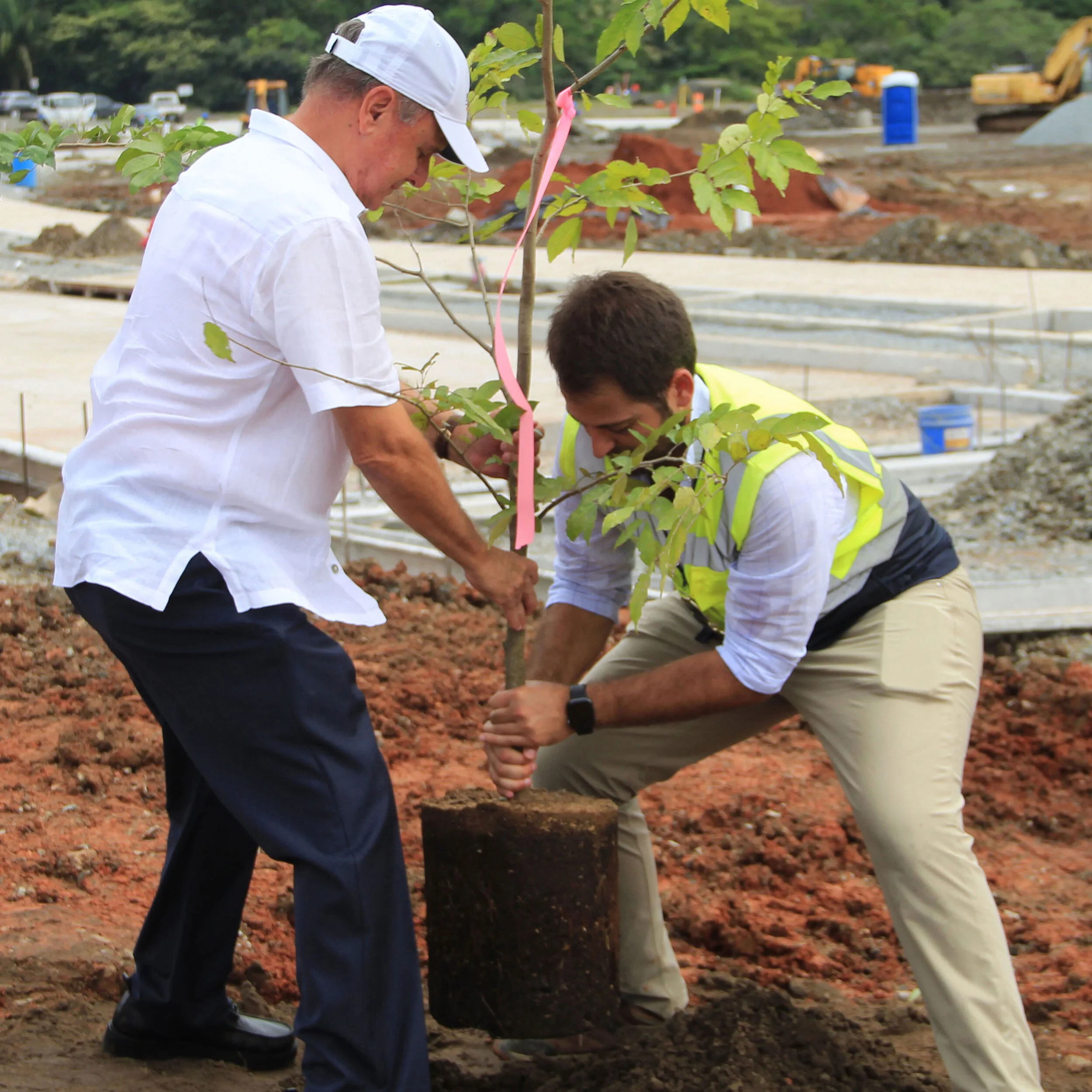


Panama is a country in constant evolution, with a capital that reinvents itself to meet the needs of our society. In this context, North Panama has emerged as one of the areas with the greatest potential for urban, ecological, and social development in the country. This region, recently recognized as the country’s 80th district, will become the epicenter of a new way of living in Panama City.
In this article, we present its recent history, mobility features, sustainable potential, educational, employment, and recreational options, and current real estate projects.
Panama North was created as a result of the segmentation of the Panama District. It is composed of the corregimientos of Chilibre, Las Cumbres, Ernesto Córdoba Campos, and Alcalde Díaz. It is bordered to the north by the province of Colón and to the south by San Miguelito and the capital. This privileged location makes it a transitional zone between the urban and the natural.
Beyond its geographical boundaries, the most outstanding feature of northern Panama is its ecological richness. Within its boundaries lie natural reserves of great environmental importance, such as Chagres National Park, Lake Alajuela, the Chagres River, Cerro Peñón, and the lakes of Las Cumbres and Cerro Azul. This abundance of natural resources positions the region as one of the most environmentally valuable, making it ideal for those seeking a lifestyle away from the chaos of the city.
One of the pillars of growth in North Panama is its mobility. The Vía Panamá Norte is a 9-kilometer road artery designed to facilitate urban mobility with an approach known as “complete streets,” which prioritizes public transportation, cycling, and pedestrian access. It features wide sidewalks, bike lanes, exclusive bus lanes, and elevated bridges. This road integrates with the North Corridor and improves access to developments such as Porta Norte.
In addition, there is a plan to build Line 8 of the Panama Metro, which would help connect this developing area with the rest of the capital. Similarly, the construction of a cable car system is also being proposed.

North Panama not only grows, but does so with environmental awareness. Many of its areas have been declared of ecological interest, and projects developed in this zone must comply with rigorous environmental impact assessments. Therefore, projects such as Porta Norte are examples of communities planned according to principles of sustainability and harmony with the environment.
The so-called Cinta Norteña will feature 3.4 kilometers of trails, bike paths, and recreational areas. This is another example of promoting an active, healthy, and eco-friendly lifestyle. On the other hand, there’s the North Municipal Park, which is still under construction and will include an agro-laboratory, sports areas, and educational spaces. All of this promotes outdoor activities and ecological awareness among all residents.
The educational offerings in North Panama are of a high standard; we can mention renowned institutions such as the Metropolitan School of Panama, Oxford International School, and St. Peter’s Academy (SPAC), an institution founded in 2018 that stands out for its inclusion policies and world-class educational program, among other highly regarded schools. Similarly, the Consejo Regional de Directores was established as a demonstration of local authorities’ commitment to providing quality education for the region’s youngest residents.
On the other hand, in terms of employment and commerce, the area is projected as a new mixed-use urban center. This means that residents will be able to live, work, study, and entertain themselves in the same environment, all of which will generate direct and indirect jobs across various productive sectors.
North Panama already offers a variety of recreational activities. La
The dynamism of North Panama is evident in the area’s new housing projects. We can mention these as the most recognized:
Porta Norte: a project designed to prioritize personal mobility.
Other notable projects include Ciudad Atenas, Green City, Green Valley, Ciudad del Lago, and Paseo del Norte.
There are also major infrastructure development efforts. An example of this is the inauguration of the North Panama Hydraulic Ring, which will improve the distribution of drinking water to more than 200,000 people. Another example is the new Dr. Edilberto Culiolis Polyclinic, which will provide medical care to residents throughout the area. Digital libraries, parks, pedestrian bridges, and senior centers are also planned.
Panama North is already establishing itself as a model of sustainable urban development, with world-class infrastructure, a connection to nature, and a vision of comprehensive progress. Among the projects being developed, Porta Norte represents a unique opportunity for those who wish to be part of the capital’s future.
So if you’re looking for your new home in a model, connected, and vibrant environment, Porta Norte is the best choice to start a new chapter in your life.