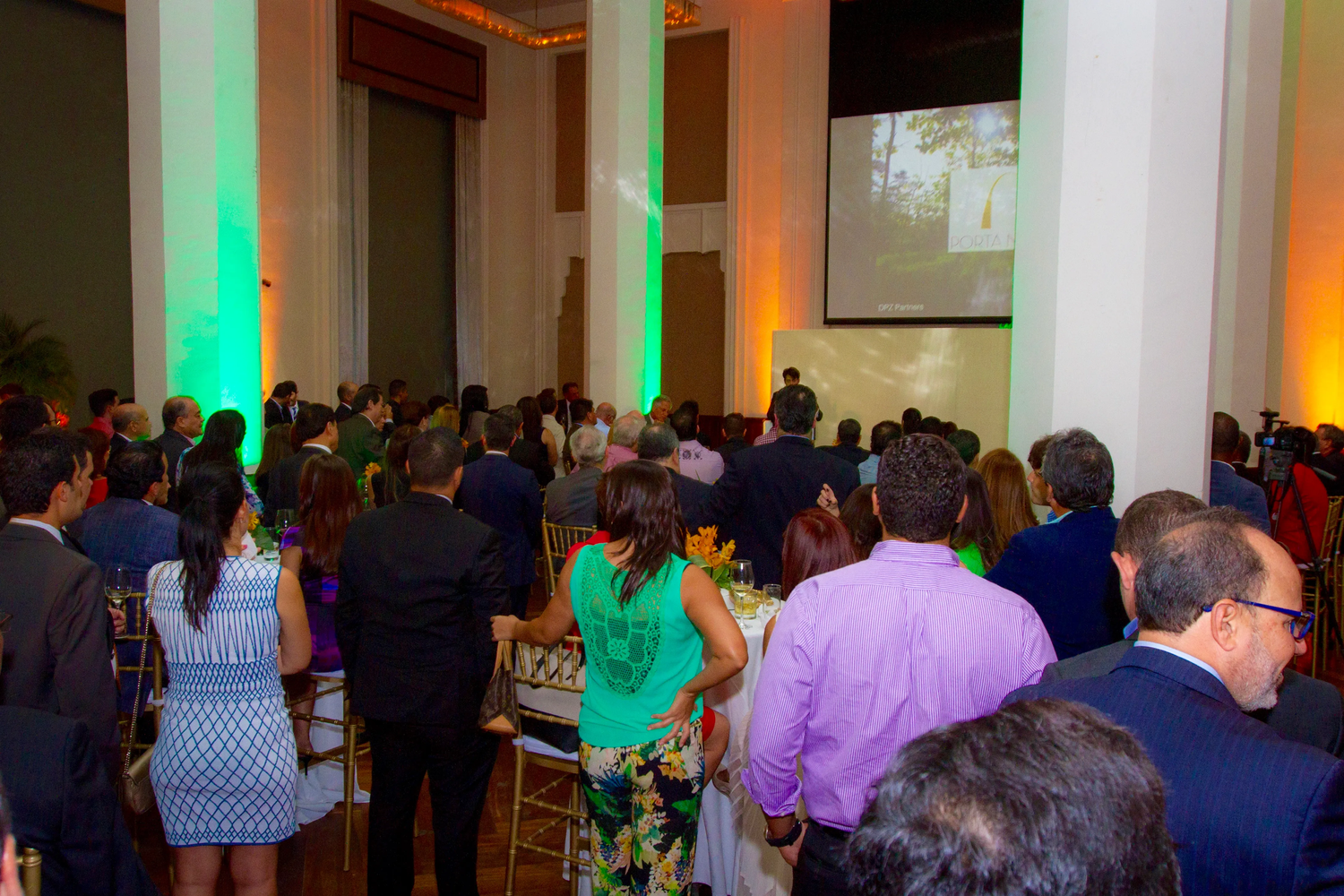
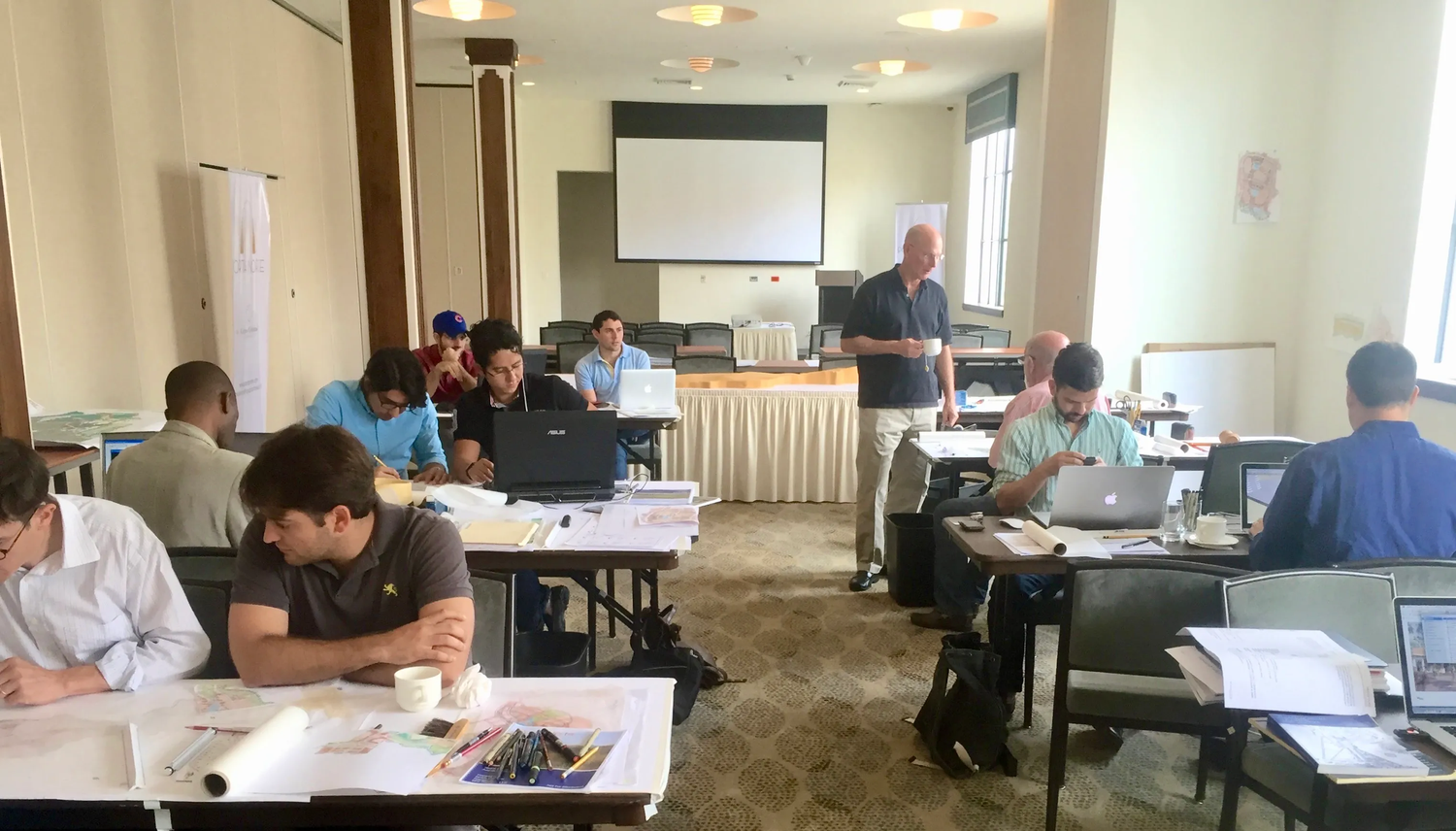
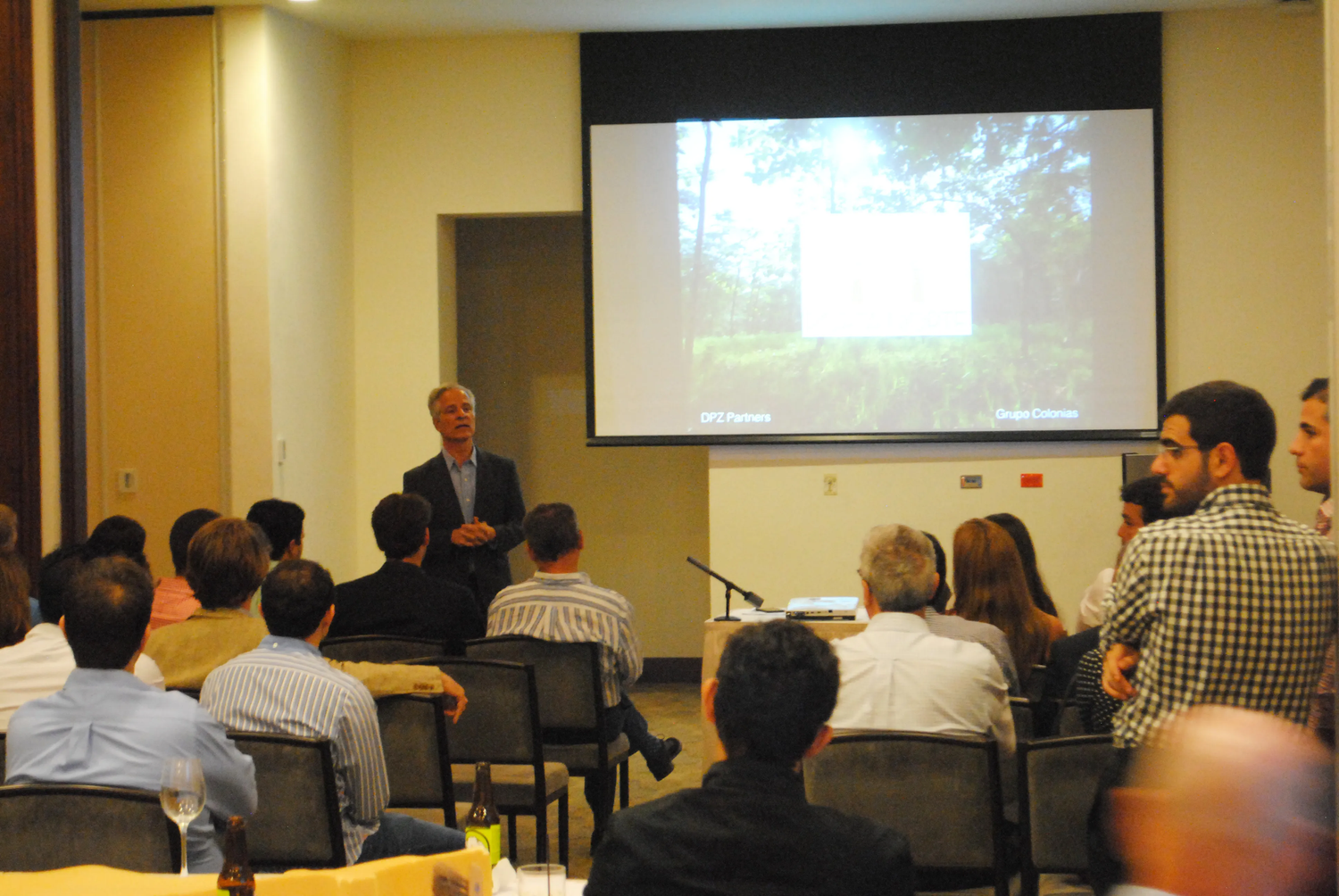
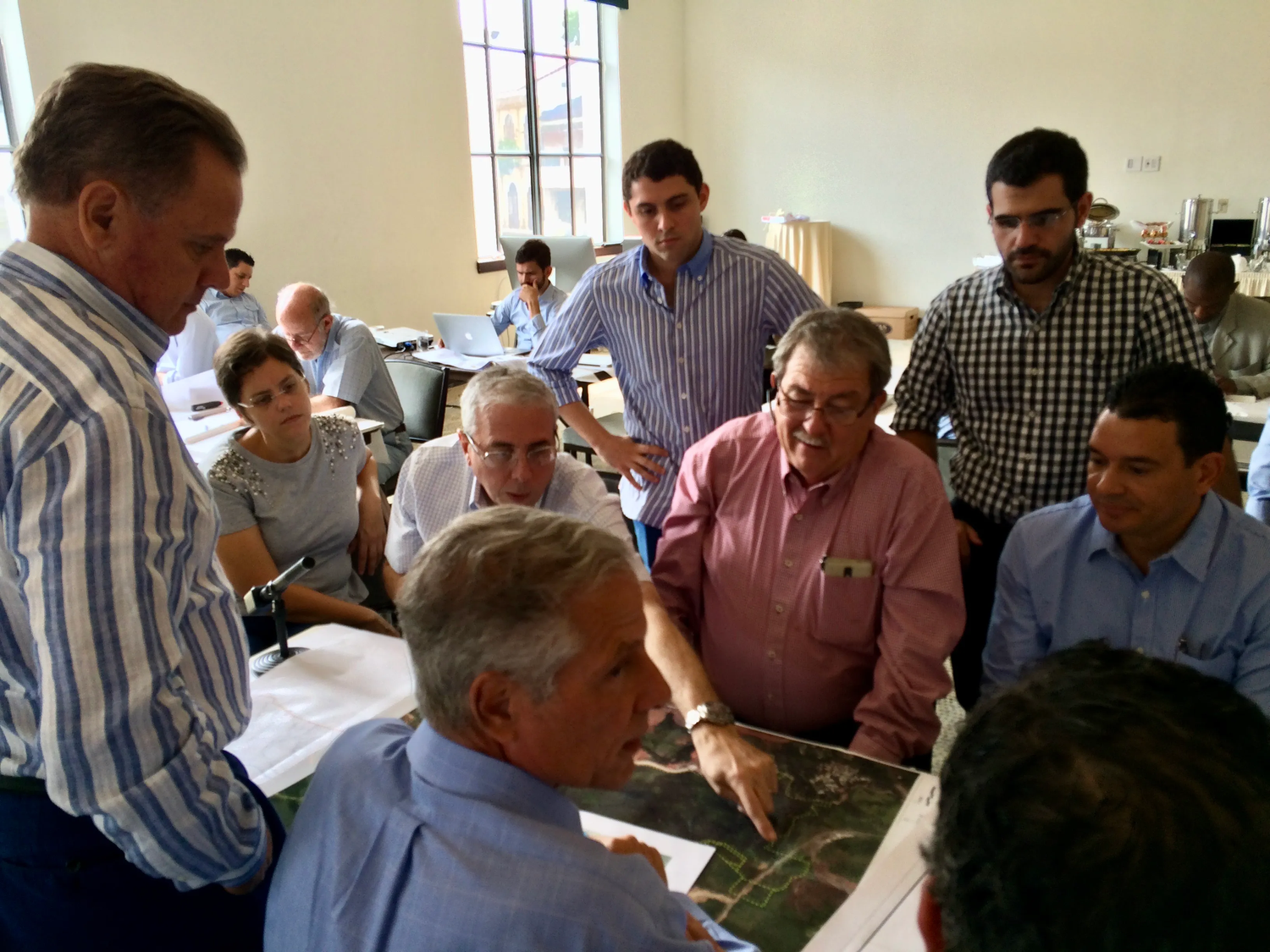
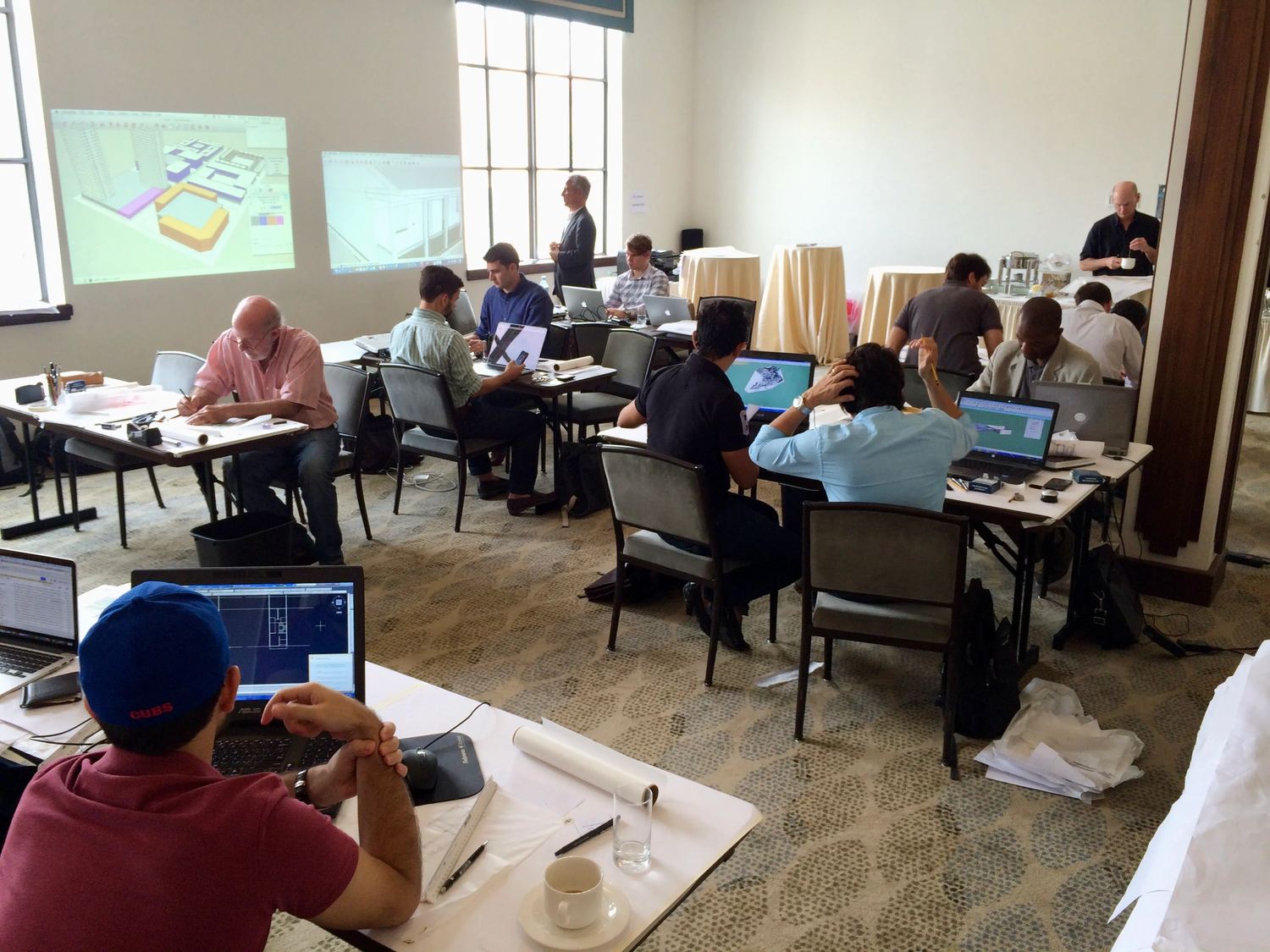
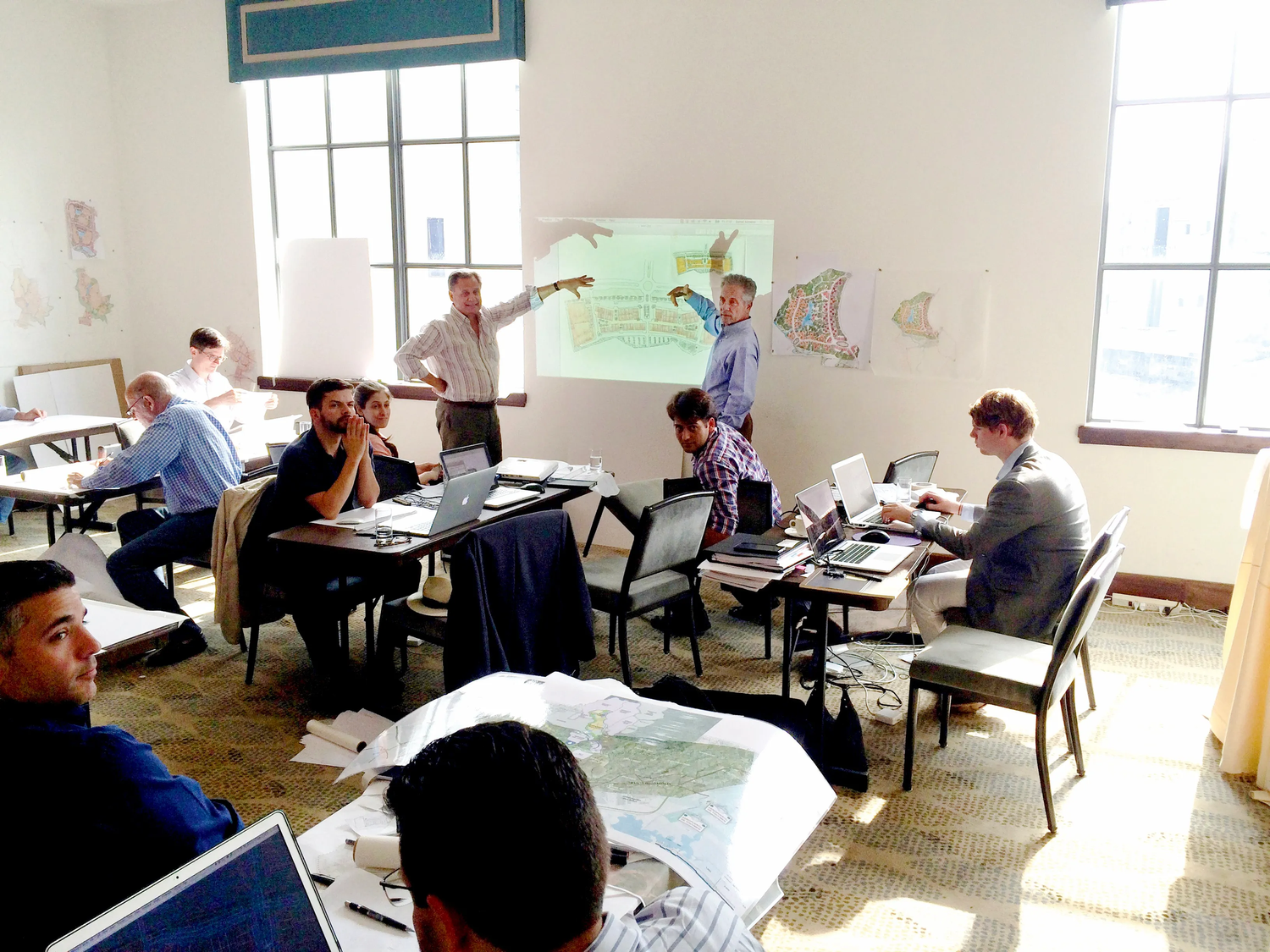


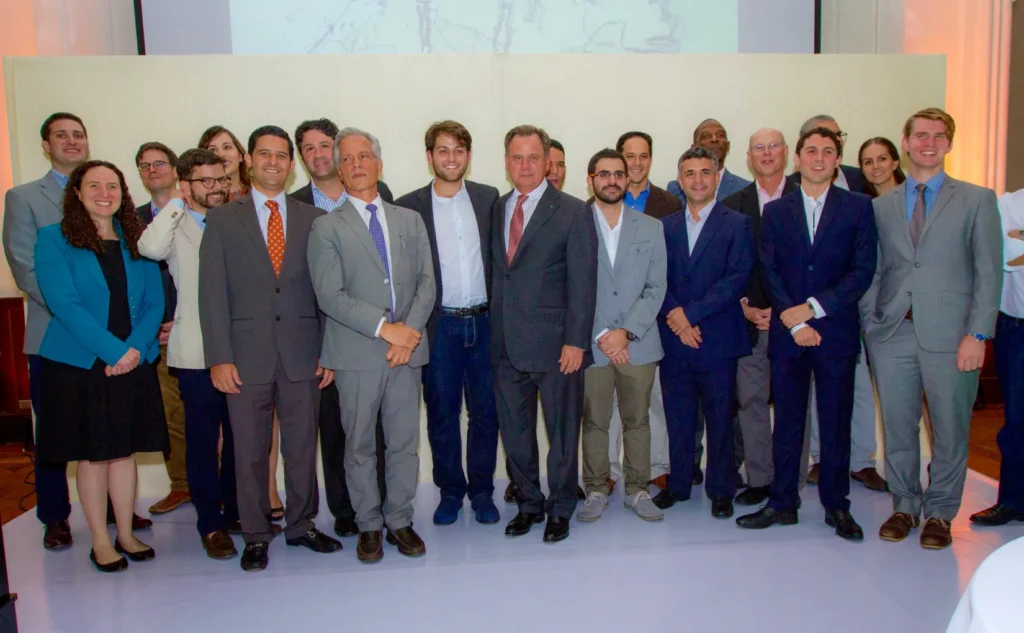
On August 11, 2015, the final presentation of the Porta Norte City Master Plan Charrette was held at the American Trade Hotel.
The event began with Henry Faarup Mauad, President of Grupo Colonias—the master developer of Porta Norte. It continued with Henry Faarup Humbert, General Manager of Grupo Colonias, and concluded with a presentation of Ciudad Porta Norte by Andrés Duany, leader and co-founder of the Congress for the New Urbanism (CNU).
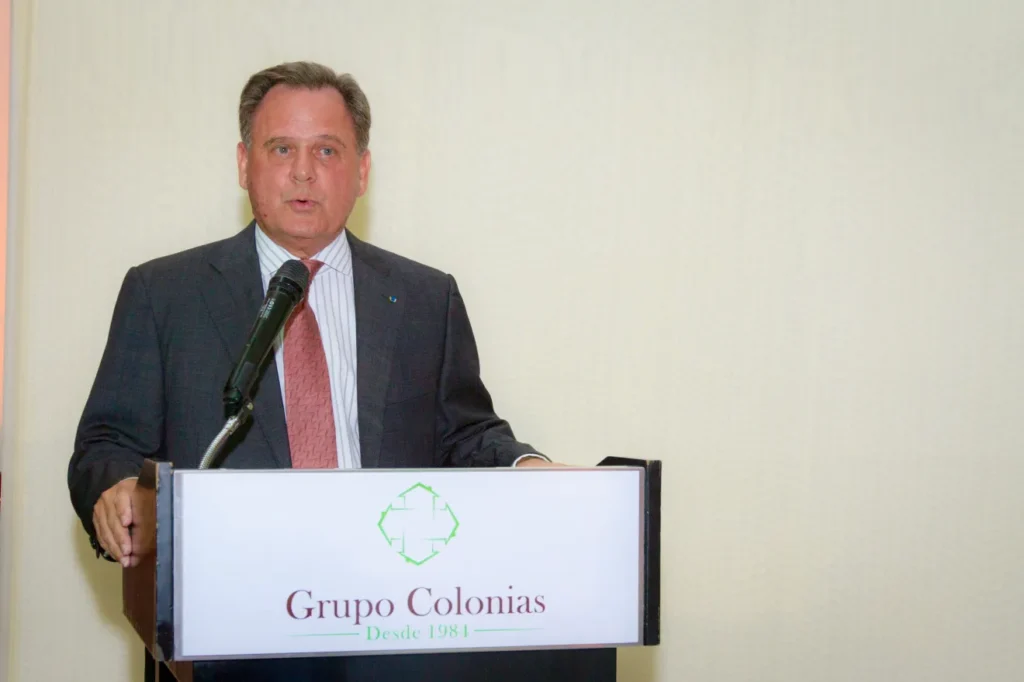
Henry Faarup Mauad, President of Grupo Colonias.
I founded Grupo Colonias in 1984, and since then we have developed more than 1,000 homes in Panama City. I lived in France from 2009 to 2014 as ambassador. I returned thinking about retiring and playing golf; however, I met up with my son, Henry James, who was full of energy, and we talked about new ideas. We got excited and decided to join forces to create our most ambitious project.
After much discussion about real estate development ideas, we met the Rojas Pardini family, who own a large tract of land on Vía Panamá Norte, near the Golf Club.
I would like to take this opportunity to thank the Rojas Pardini family for all the support they have given us and for the vision they had 30 years ago to acquire this beautiful land.
After getting to know them well, we negotiated and this megaproject called Ciudad Porta Norte was born.
As we set off, my son was talking to me about new urbanism. He told me we should do a charrette, and I was wondering: What is a charrette? I lived in France for five years, I can speak French, and I didn’t know that French word. I didn’t fully understand the concept. But after thinking it over and discussing it with the executive committee, they convinced me.
I have to admit that I’m impressed with the result. It’s about creating a walkable community inspired by the Casco Viejo.
A few years ago, our great friend Bobby Motta, may he rest in peace, referred to a family member as “the corrected and augmented.” In this family, “the corrected and augmented” is Henry James Faarup Humbert. Please welcome him.
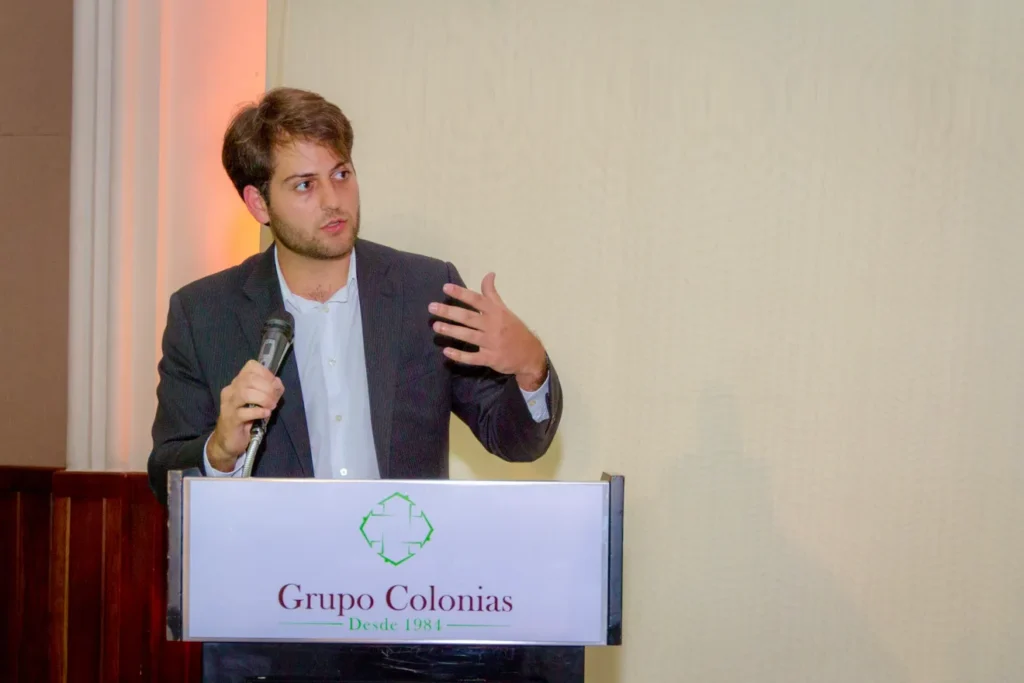
Henry Faarup Humbert, CEO of Grupo Colonias
Thank you for your words, Dad. Good evening and welcome.
From the very first meeting with the executive committee, we were discussing the experience we wanted to create. Little by little, we concluded that the experience was like walking thru the streets of Casco Viejo or Europe. We weren’t very clear on how to proceed, so we started researching online and sharing ideas with architects.
We had a special conversation with Jeff Speck, the speaker of the TED Talk “The Walkable City” and the author of the book “Walkable City.” Jeff showed us the optimal path for implementing New Urbanism and pointed out four urban planning firms for us to interview. Among them was Duany Plater-Zyberk (DPZ), and he told me that if Andrés Duany led the charrette, it would be the best option.
Following this direction, a few months ago representatives of the executive committee attended the Congress for the New Urbanism in Dallas, Texas. There, we attended courses, interviewed urban planners, and took the opportunity to engage in philosophical conversations about how to build the ideal city with the world’s best urban planners.
At the end of the conference, we chose DPZ and its founder, Andrés Duany, to design the Master Plan for Ciudad Porta Norte. Today, after working together, I can confirm that we made the right decision.
Now I’ll tell you a bit about Andrés.
Andrés is an architect and urban planner who has dedicated his professional life to designing walkable communities. Andrés Duany and his wife, architect Elizabeth Plater-Zyberk, founded the firm Duany Plater-Zyberk in 1980.
His first project was Seaside in Panama City, Florida, which became the epicenter of the New Urbanism movement.
Andrés has been recognized with various awards, including the Richard H. Driehaus Prize, the Thomas Jefferson Medal, and The Vincent Scully Prize. He is also the author of multiple books, including Suburban Nation, Smart Growth Manual, and Garden Cities.
Now I’ll turn it over to Andrés Duany, who will present the Master Plan for Ciudad Porta Norte. Please give him a warm round of applause.
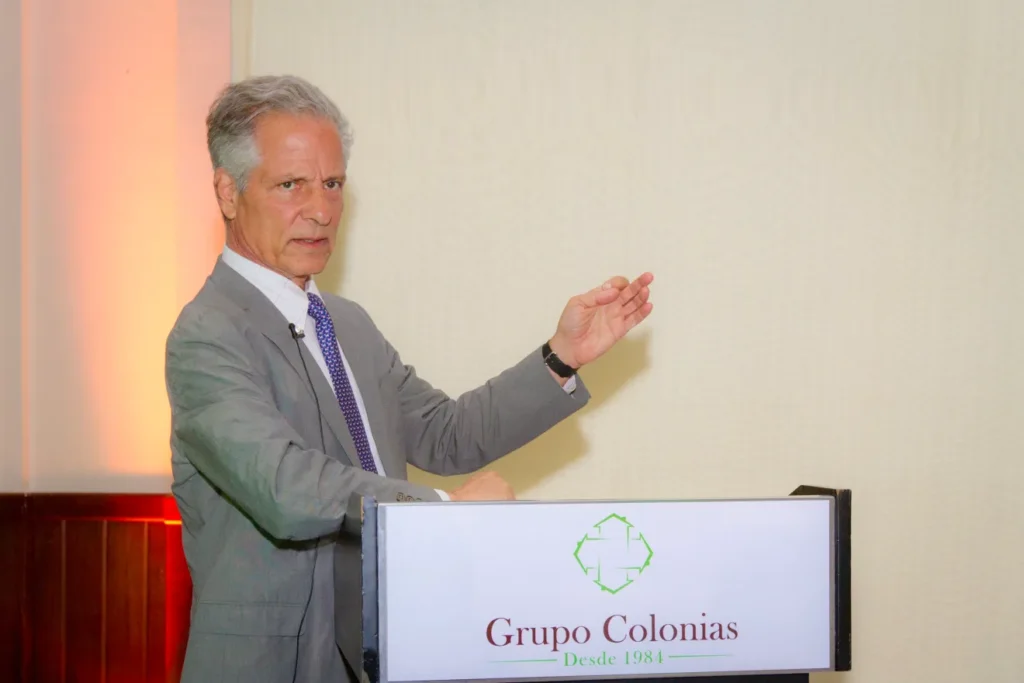
Andres Duany, Father of New Urbanism
Thank you very much to the Henrys. In my presentation, I will explain the following concepts:
What is a charrette?
What is New Urbanism?
What is Ciudad Porta Norte?
A charrette is a workshop where experts from various fields come together to develop a design.
In the case of Ciudad Porta Norte, we have 10 international experts working hand in hand with 10 Panamanian experts. Our firm is an expert in new urbanism, but not in Panama. The developers are experts in Panama, but not in New Urbanism. Together, we are experts in developing new urbanism in Panama.
The developers participated in the charrette for all eight working days, ensuring that the design was efficient and viable. The charrette also included participation from financiers, engineers, lawyers, brokers, government officials, prospective lot buyers, and residents, among others.
The result is a project that seems utopian for Panama; however, we have experience turning this kind of urbanism into reality.
New Urbanism is urban design focused on the pedestrian.
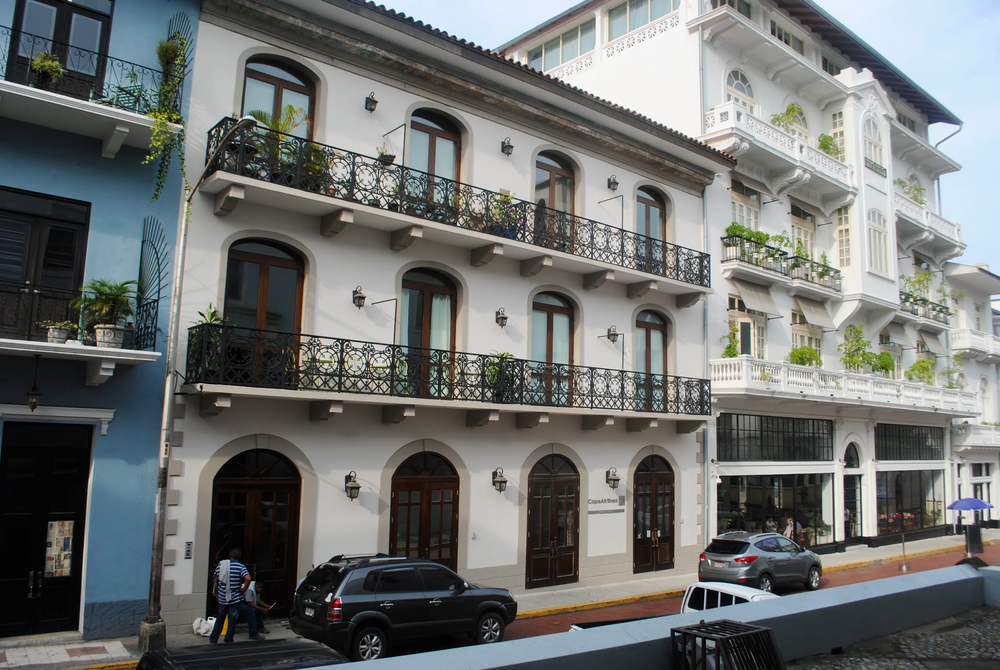
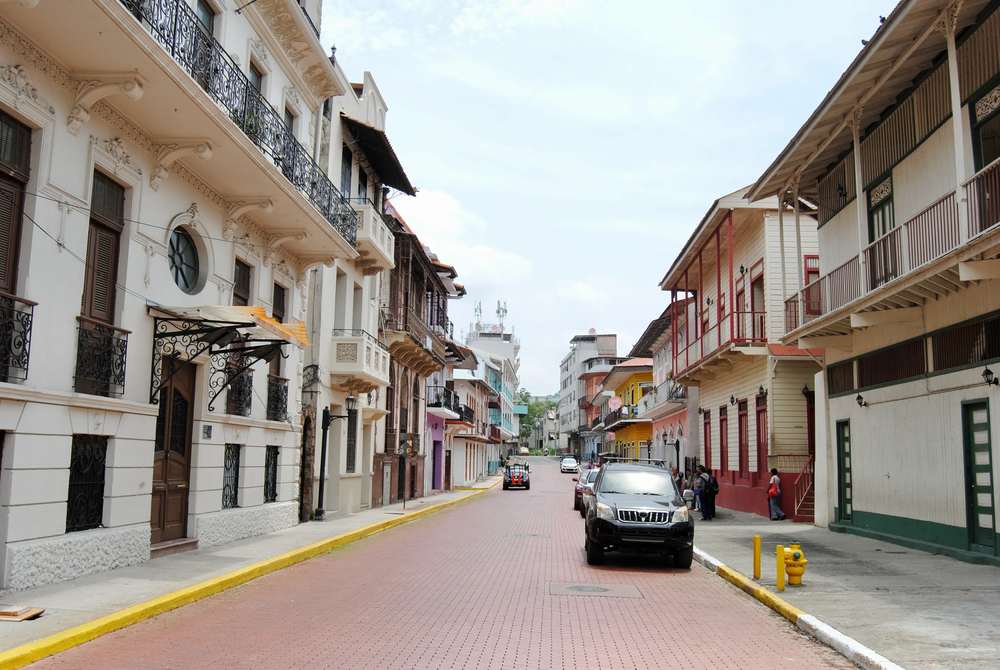
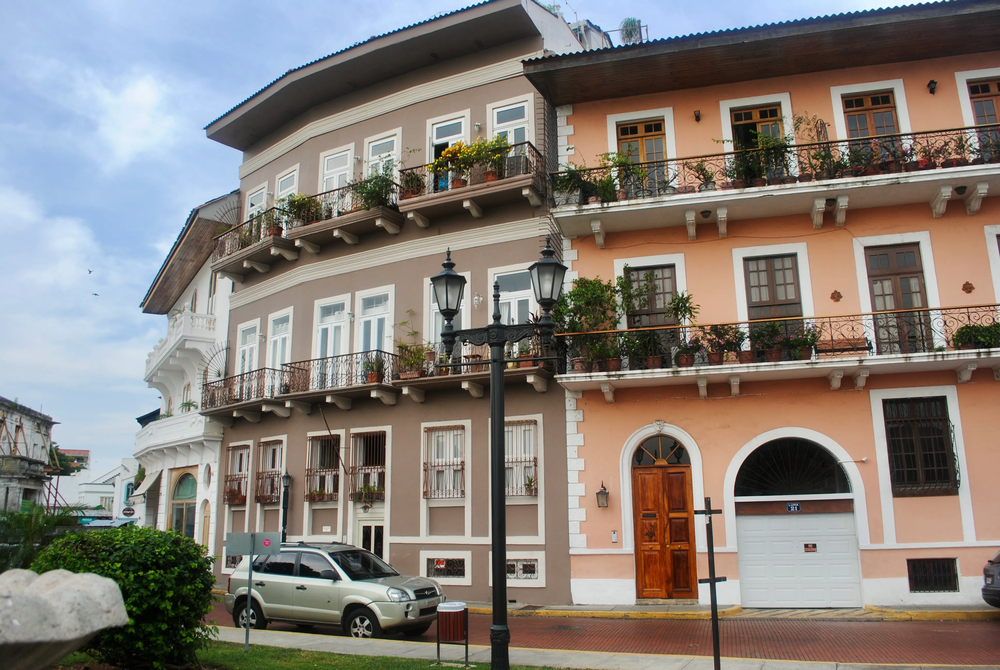
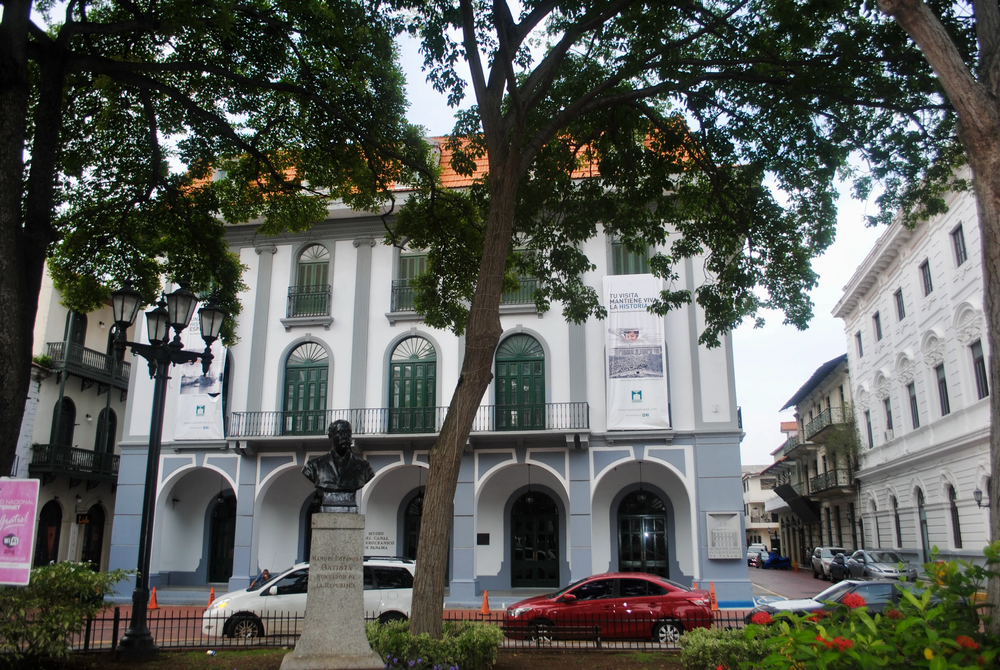
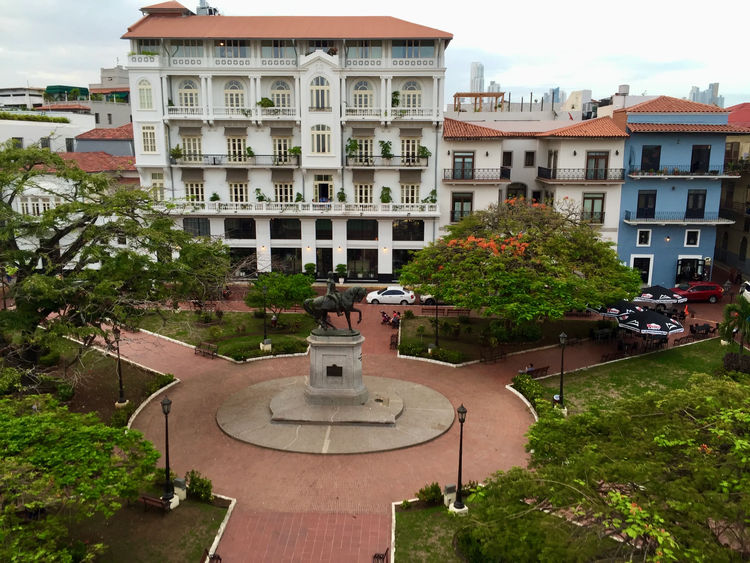
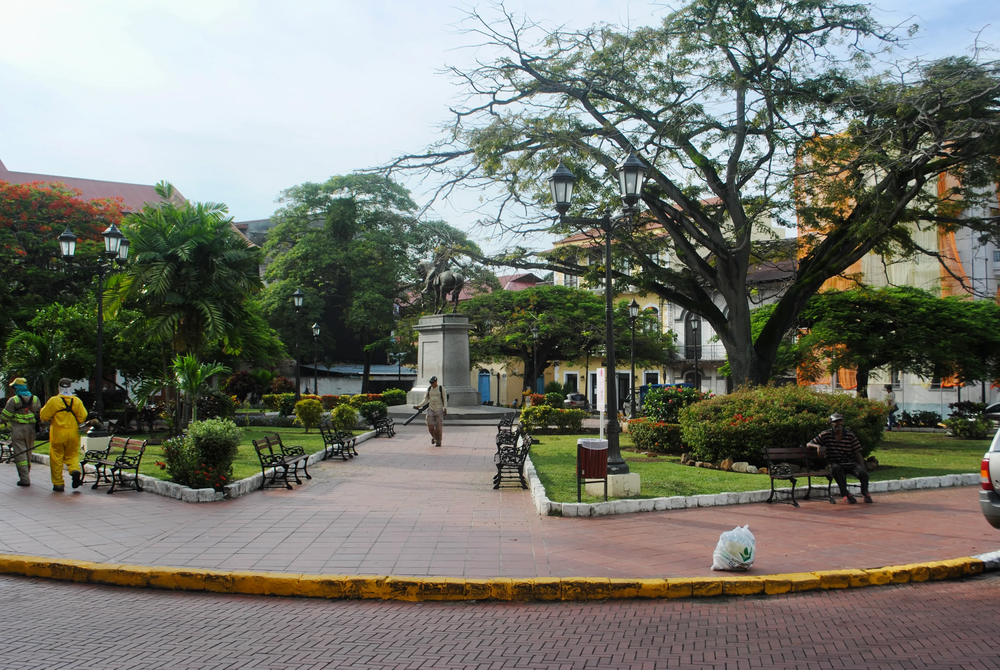
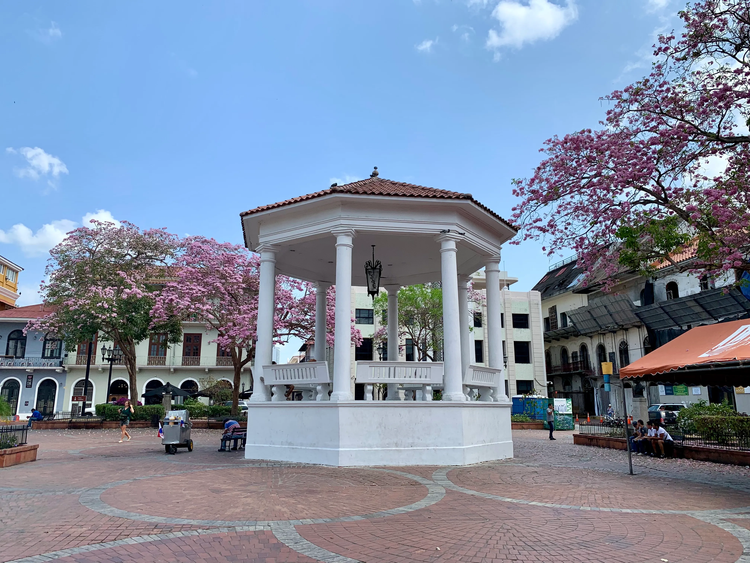
Let’s use the Casco Viejo as an example. Here you have the opportunity to walk to supermarkets, banks, restaurants, shops, or friends’ homes. This neighborhood, like many cities of its time, is the best place to live in Panama if you want to be a pedestrian. It has the best urban planning if you want public spaces to socialize, unlike the modern developments in Panama.
However, it must be acknowledged that Casco Viejo is not perfect, as it suffers from outdated infrastructure, a lack of parking, and some signs of neglect.
A new urban design adapts to local needs. In this case, we have designed a place similar to the Casco Viejo, but ensuring that its problems are addressed.
Porta Norte is a place where you can walk or use a bicycle to meet your daily needs. But also, if you want, you have the option of getting around by car.
The shops in a tourist neighborhood like Casco Viejo grow organically and end up offering the same thing. Here in Casco Viejo, there are more than 16 identical shops selling identical little hats. There’s a lack of variety in shops and options.
The stores in a new neighborhood like Porta Norte are carefully selected. We invite various businesses that can benefit residents, turning it into a place rich in options. In new urbanism, we combine the experience of an old neighborhood’s streets with a diverse range of services.
There are closed-minded people who oppose new urbanism. They tell us, “The problem is that you’re irresistible because you copy the good ideas.” I say, “Exactly!” As long as an idea is good and works, we have no problem copying it.
In Panama and Latin America, there are many people who like traditional architecture, such as that of Casco Viejo. There are also people who like modern architecture with more glass. The answer in new urbanism is to use both.
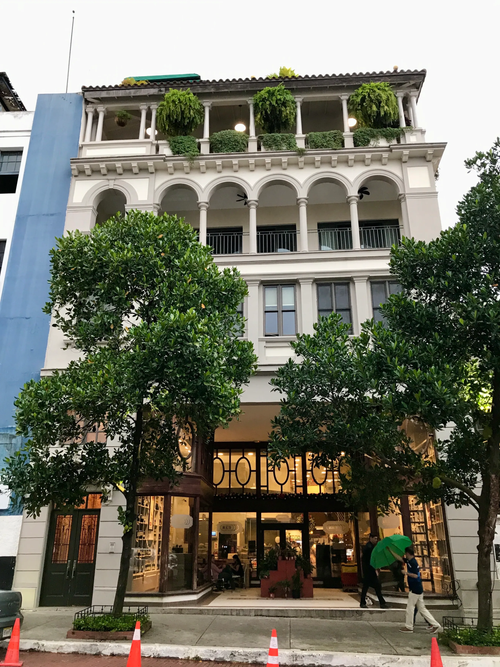
Someone can build a mixed-use building with a commercial ground floor featuring ample glass to enhance visibility, and the remaining floors in a traditional architectural style. There is room for institutional buildings to be modern and iconic. We don’t think one style is superior to the other.
One problem with conventional urban planning is the pedestrian experience. No one likes walking along a deserted sidewalk with blank walls at ground level. Because little attention is paid to it, this experience ends up with narrow sidewalks interrupted by posts or filled with cars.
In new urbanism, we focus on ensuring that pedestrians have an interesting, comfortable, and enjoyable experience. That’s why ground floors should have shops and residences with windows and doors. They should be accompanied by wide, tree-lined sidewalks.
To achieve this, we hide parking lots behind or beneath buildings. This improves the pedestrian experience. In this project, there are many cars, but they won’t be seen parked.
New urbanism adapts to the local context. Now I’ll show you in detail how we’re doing it with Ciudad Porta Norte.
Let’s take a look at the presentation of what we’ve designed. This design will be refined over time as better ideas emerge.
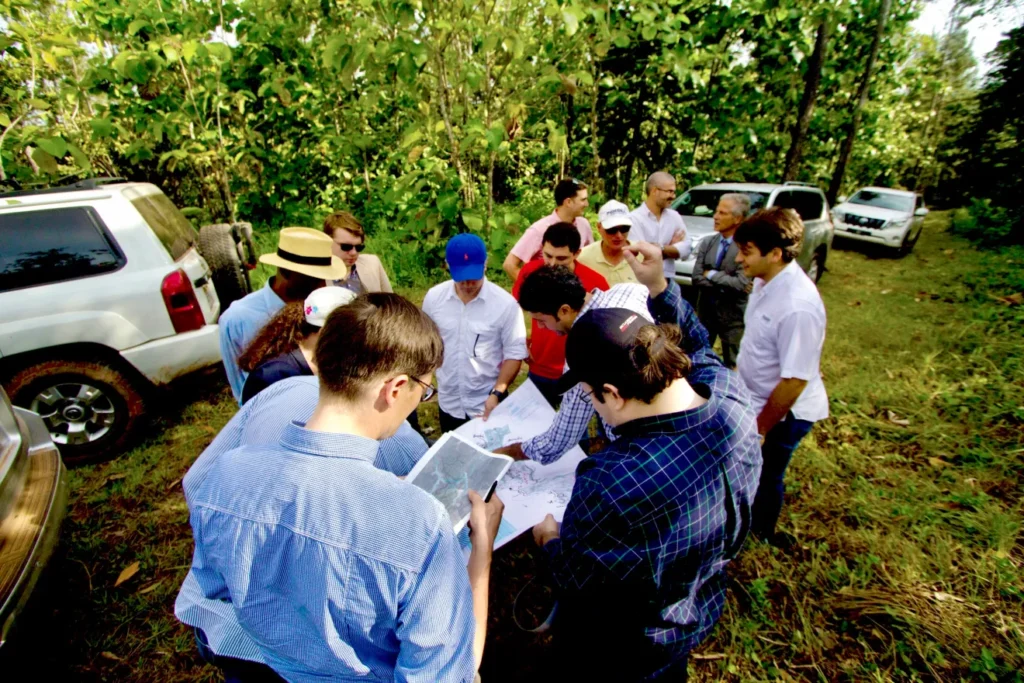
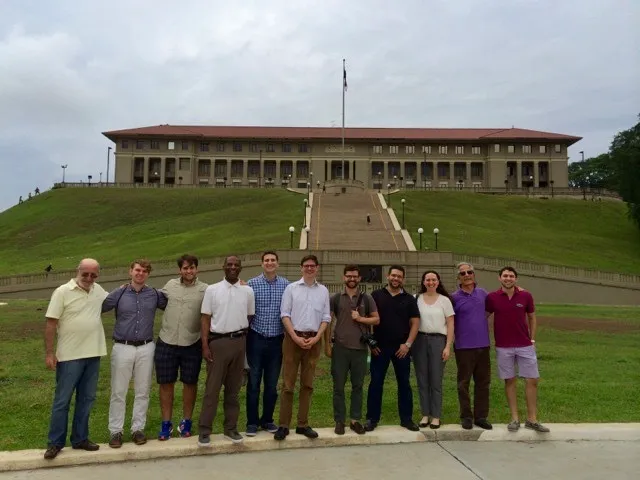
Grupo Colonias and DPZ team at Porta Norte
When we landed in Panama, we visited the site first. It’s very important to know the site well. There I found lands full of character that lifted my spirits. It’s an extensive terrain with hills, rivers, streams, and ancient trees.
Porta Norte is located on the new Vía Panamá Norte. Its proximity to Corredor Norte provides excellent connectivity. The area is full of amenities.
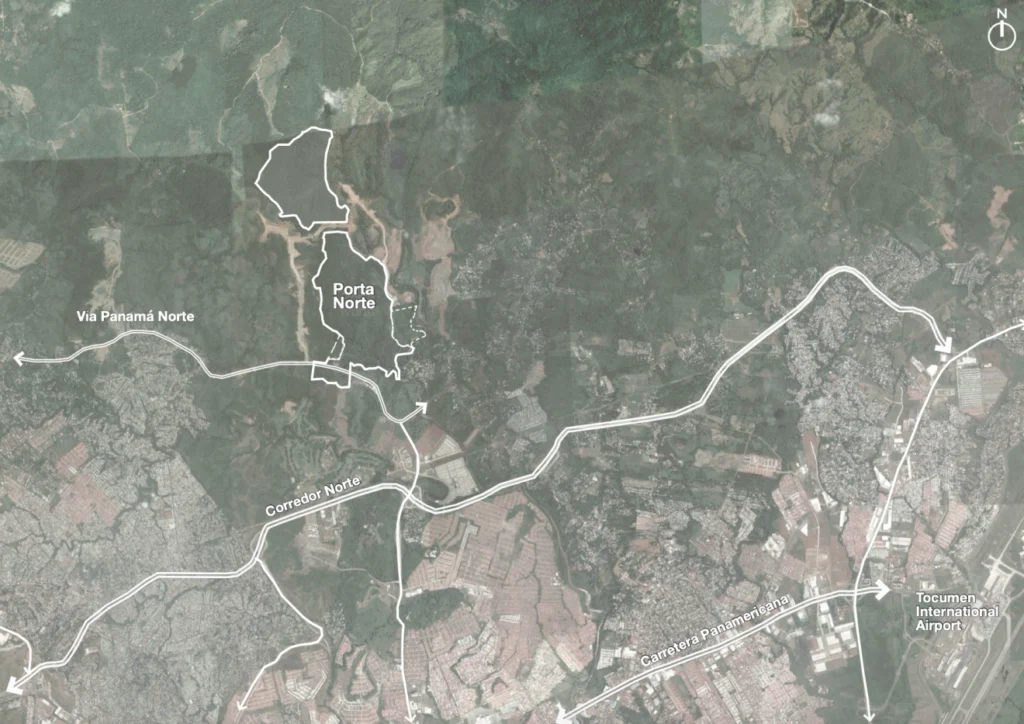
Location of Porta Norte in North Panama
Property is at the heart of the city’s growth. I saw a lot of activity in the area as neighbors were building streets. Our project is undoubtedly the right one to be at the center, as it will serve as the Old Town for our residents and all the neighbors.
The property has good access via the Vía Panamá Norte, where a vibrant town center can be built.
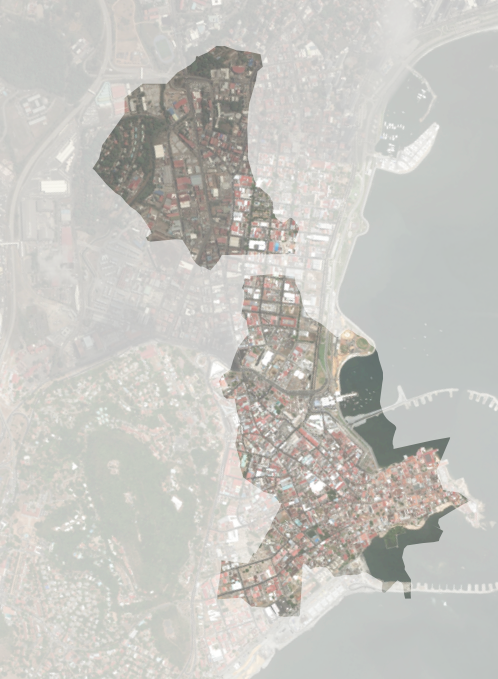
Silhouette of the Porta Norte Master Plan superimposed on Panama City.
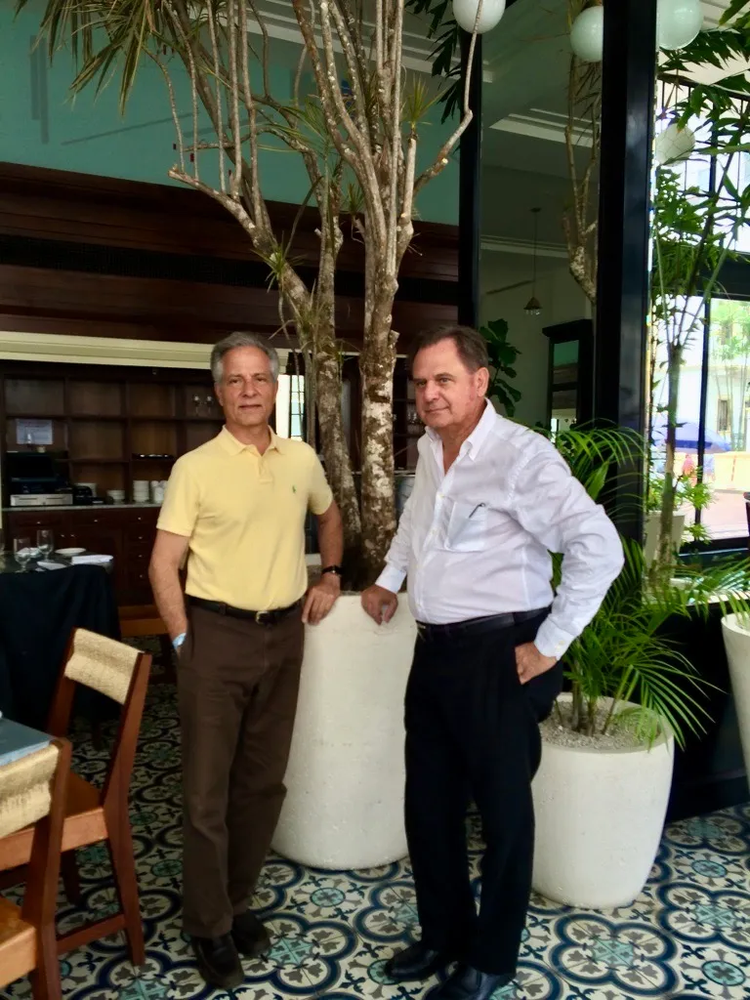
After visiting Porta Norte, we went to the American Trade Hotel, where we worked for the next eight days. We took advantage of every evening to stroll around and have dinner together, sharing the day’s ideas. It was a fantastic idea to work in this neighborhood because it has been a great source of inspiration.
The contrast between the Casco Viejo and the rest of the city is striking. Casco Viejo is the kind of place that the more you get to know it, the more you like it. The rest of the city has no street life, and the more people get to know it, the more bored they become.
The Master Plan for Ciudad Porta Norte has both traditional and modern styles. The first area to be developed is the South Parcel, which is a traditional small town. Last to be developed will be the North Parcel, where tall buildings line a central park. We don’t want to lose the people who like high-rise views. It’s a viable market in Porta Norte.
The Casco Viejo neighborhood is different and somewhat mysterious to most urban planners because this type of urbanism is no longer taught in universities. We have 35 years of experience designing walkable urban environments, and we know how to achieve this experience.
For us, it’s no mystery why we have new urbanism for breakfast, lunch, and dinner. We can guaranty that it will be similar to the Casco Viejo, but better. In this design, we respect essential aspects of the Casco Viejo, such as the balconies, architecture, plazas, and building heights.
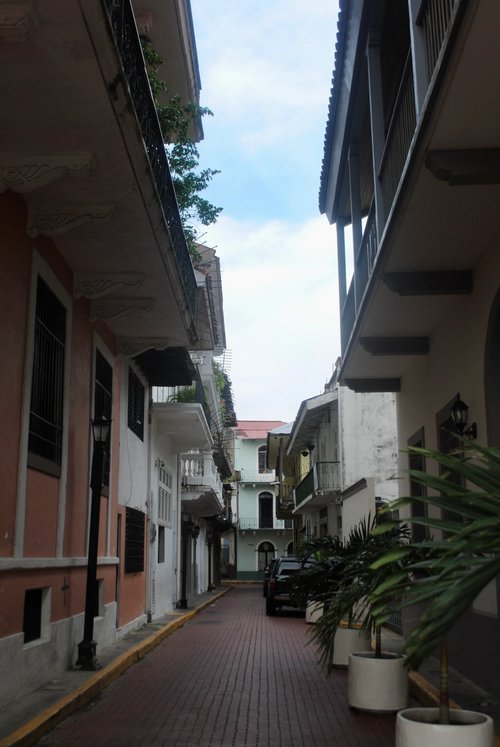
Here you don’t feel threatened by cars, unlike in the newer part of the city. To achieve this, we included design elements that reduce vehicle speeds so pedestrians feel comfortable walking, such as cobblestones, narrow lanes, raised pedestrian intersections, and trees.
Narrow, shady streets are the best. These types of streets are sometimes illegal in other parts of the world. We have spoken with public officials, who are present here, and we have found ways to achieve this while complying with the regulations.
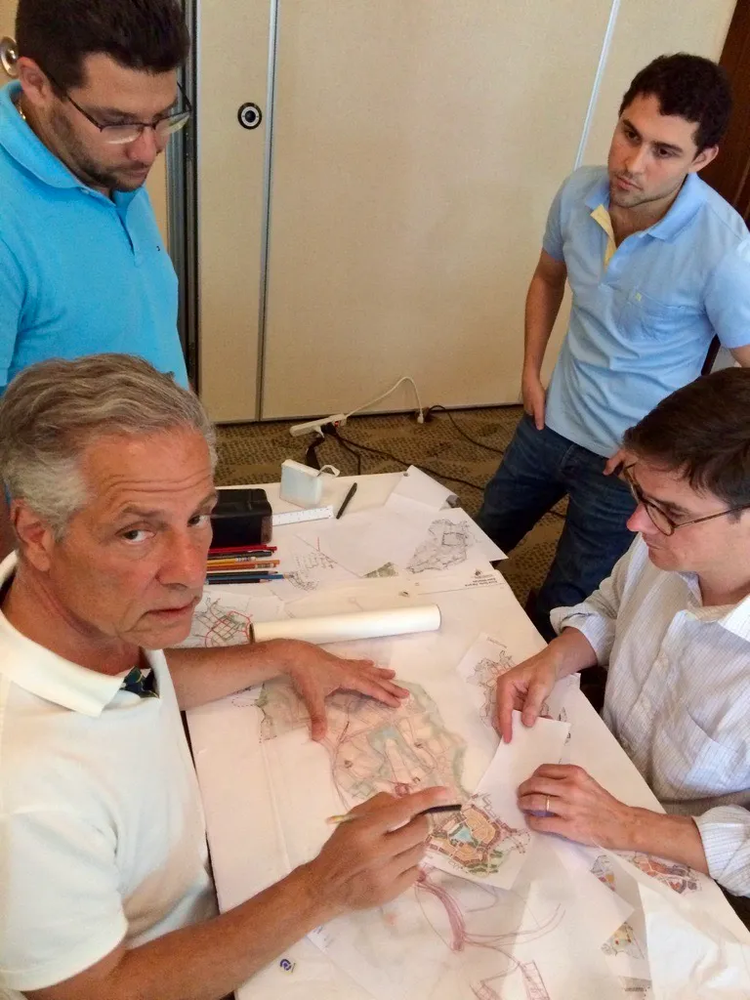
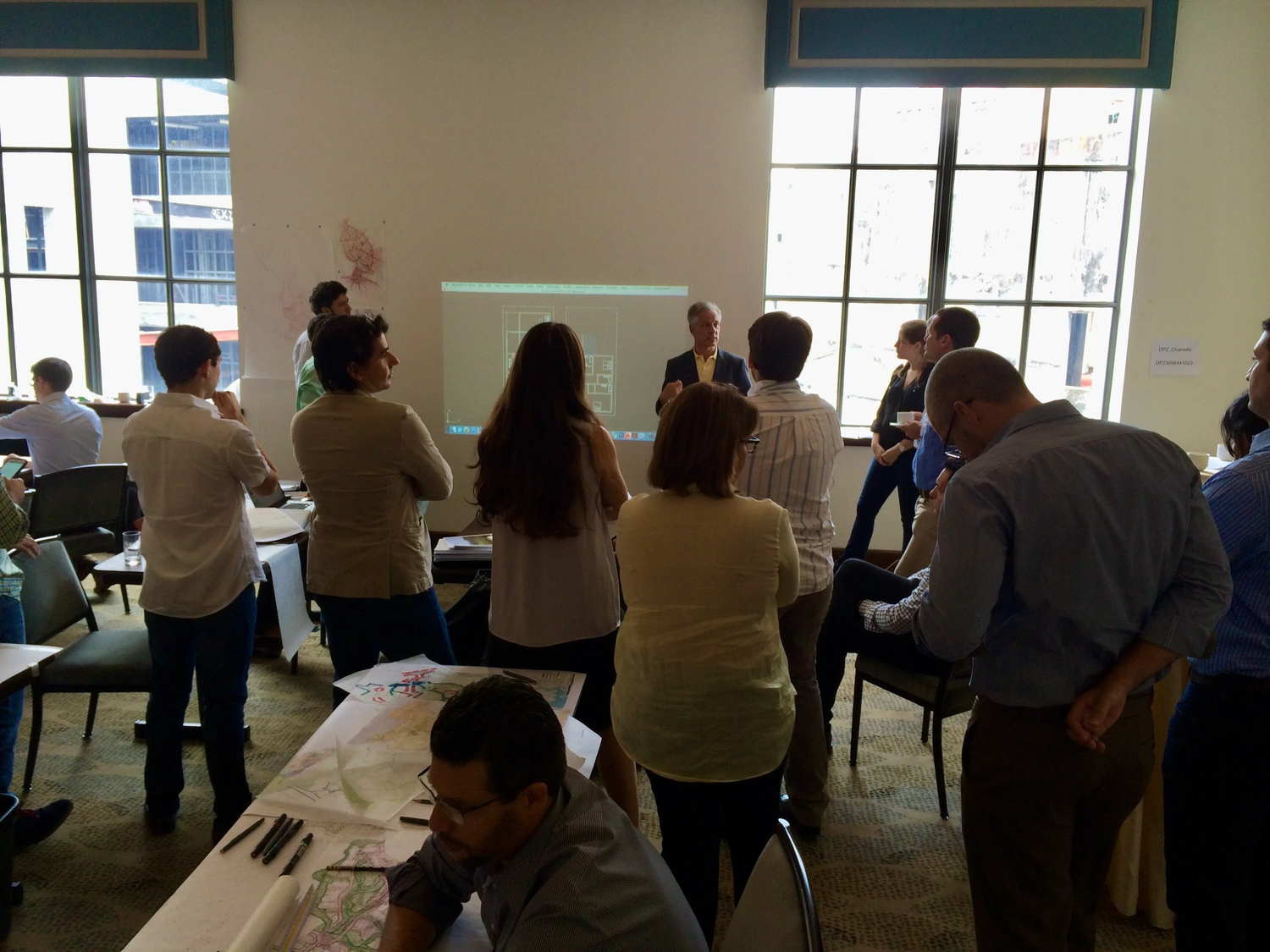
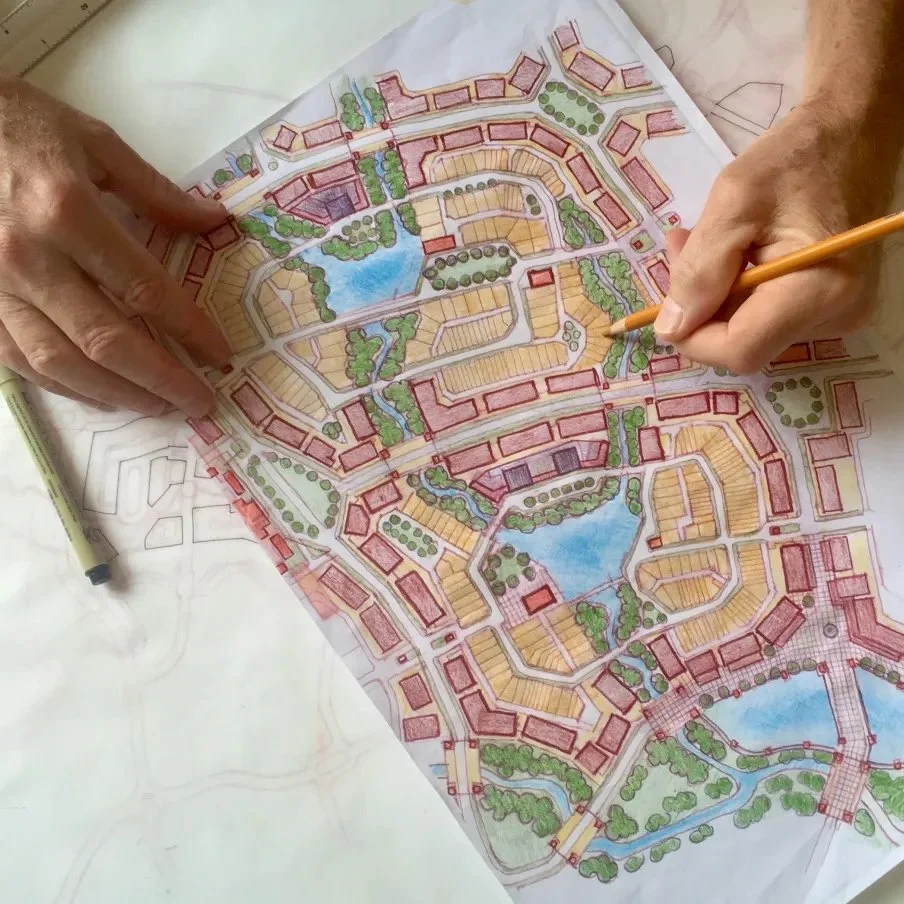
It was a charrette full of energy. Everyone wanted to share their opinions and grabbed paper and pencil to sketch out their concepts. Everyone was an expert on Panama. It was a bit exhausting; however, the active involvement of locals is necessary to contextualize the design.
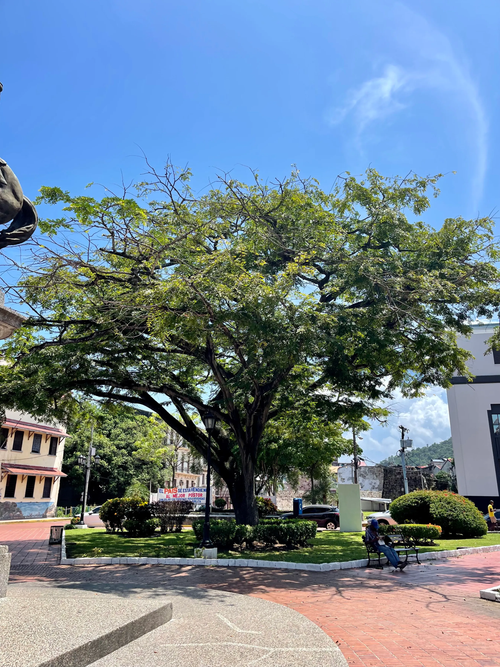
This afternoon I spoke with César, who is an expert on the nature of Porta Norte since he has cared for the estate for much of his life. I was explaining the characteristics of the tree we want—a vase-shaped tree with branches that grow upward so they don’t hit the buildings, and roots that grow symmetrically downward so they don’t break the sidewalks or the pavement. César was very clear about the tree we wanted, the one that grows in Porta Norte. It was fantastic. Those kinds of conversations are necessary to contextualize the design.
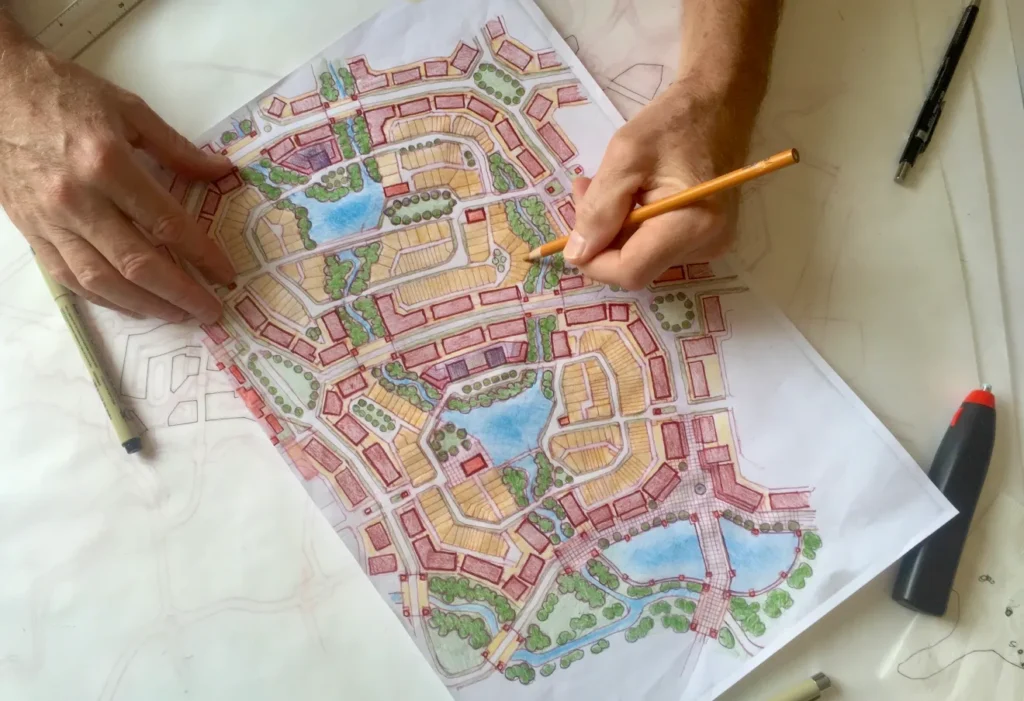
To arrive at the Master Plan, we began by forming three isolated working teams. One team’s result was a master plan made up of superblocks, which we called Concept #1. The other two teams developed very similar master plans consisting of regular city blocks that we combined and called Concept #2. The participants liked both concepts, so we developed them in detail.
Concept #1 consists of main streets, similar to those in Casco Viejo, that run along the perimeter of four or five blocks, forming a super-block. Next to the plaza with the fountain are three- to five-story buildings that together border the superblocks. After the plaza, at the first intersection, turn left and enter the superblock. Inside, you’ll find a residential area filled with single-family homes, trees, parks, and a lake that can be crossed via pedestrian bridges. In the same place, you can live in an urban area on the outside and a suburban one on the inside.
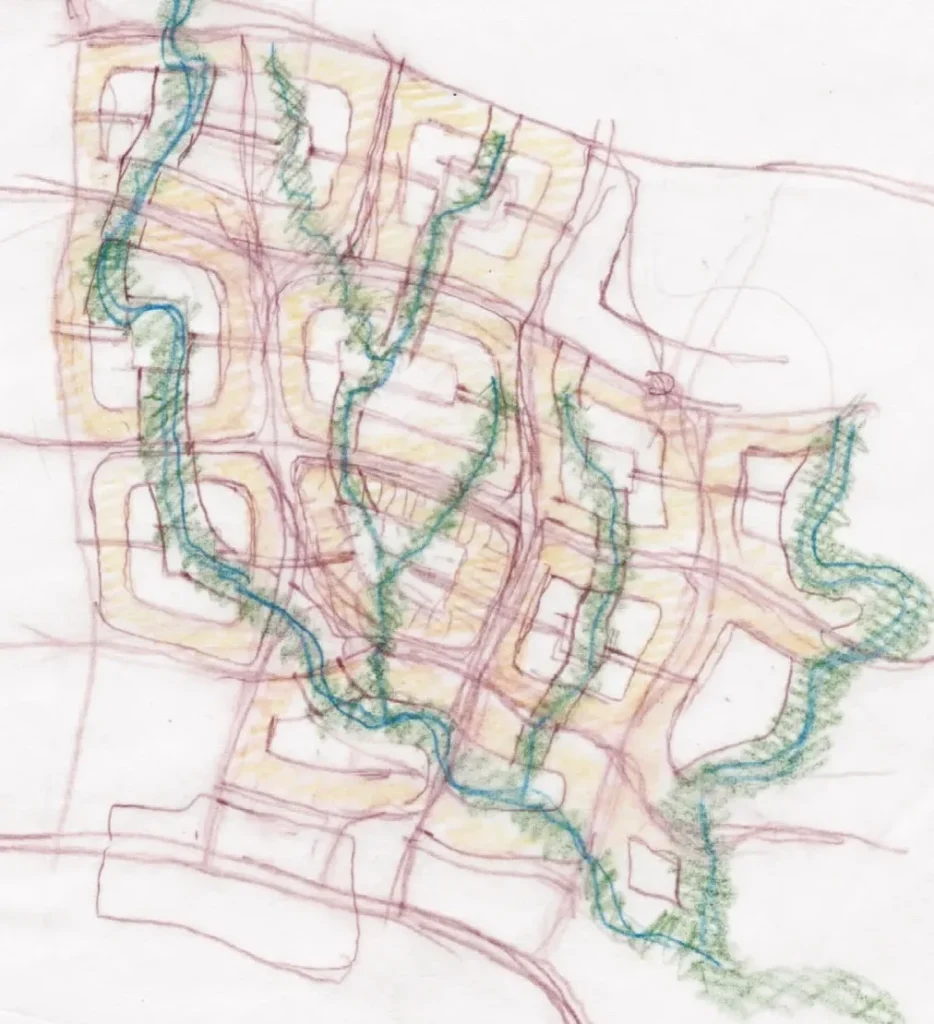
Superblock Master Plan Draft #1
Superblock Master Plan Draft #2
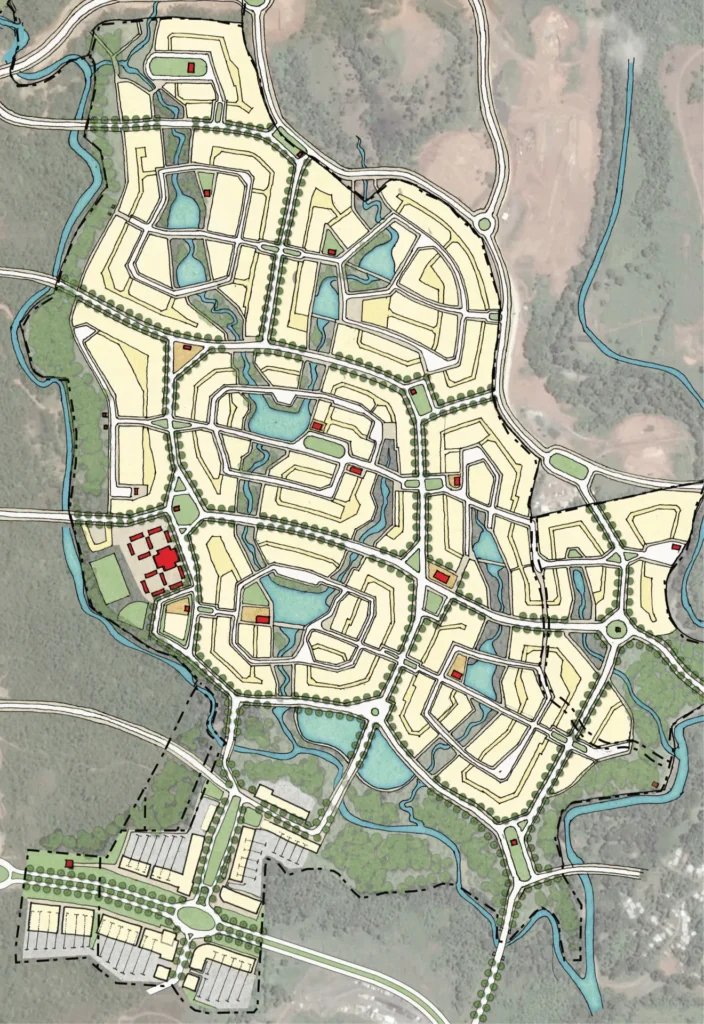
Superblock Master Plan Draft #3
Superblock Master Plan Draft #4
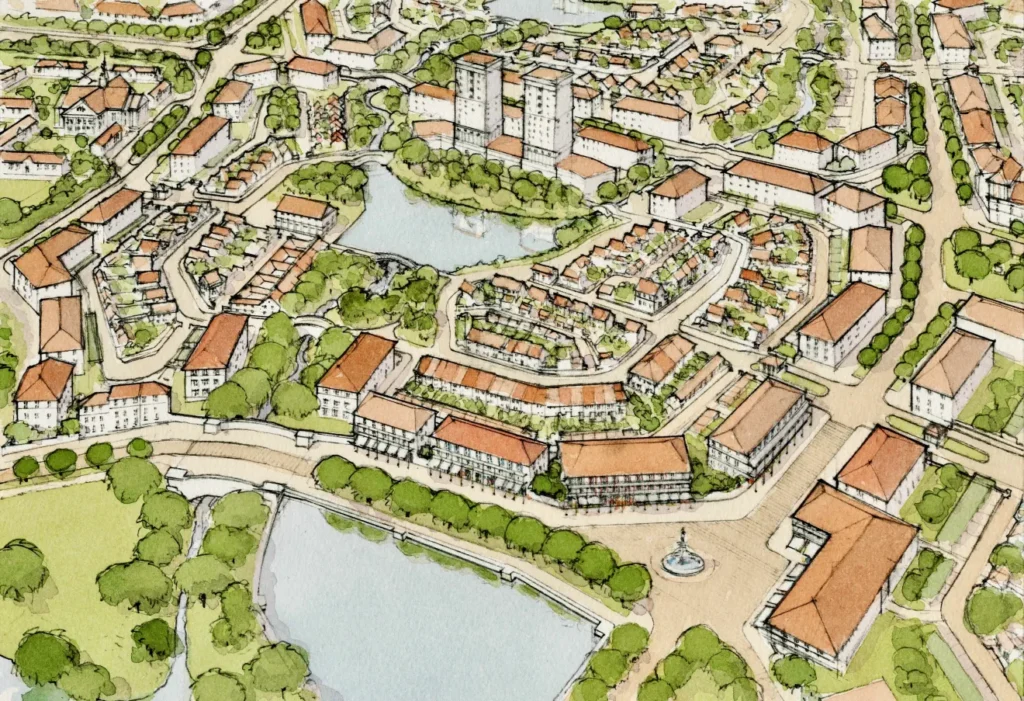
3D superblocks
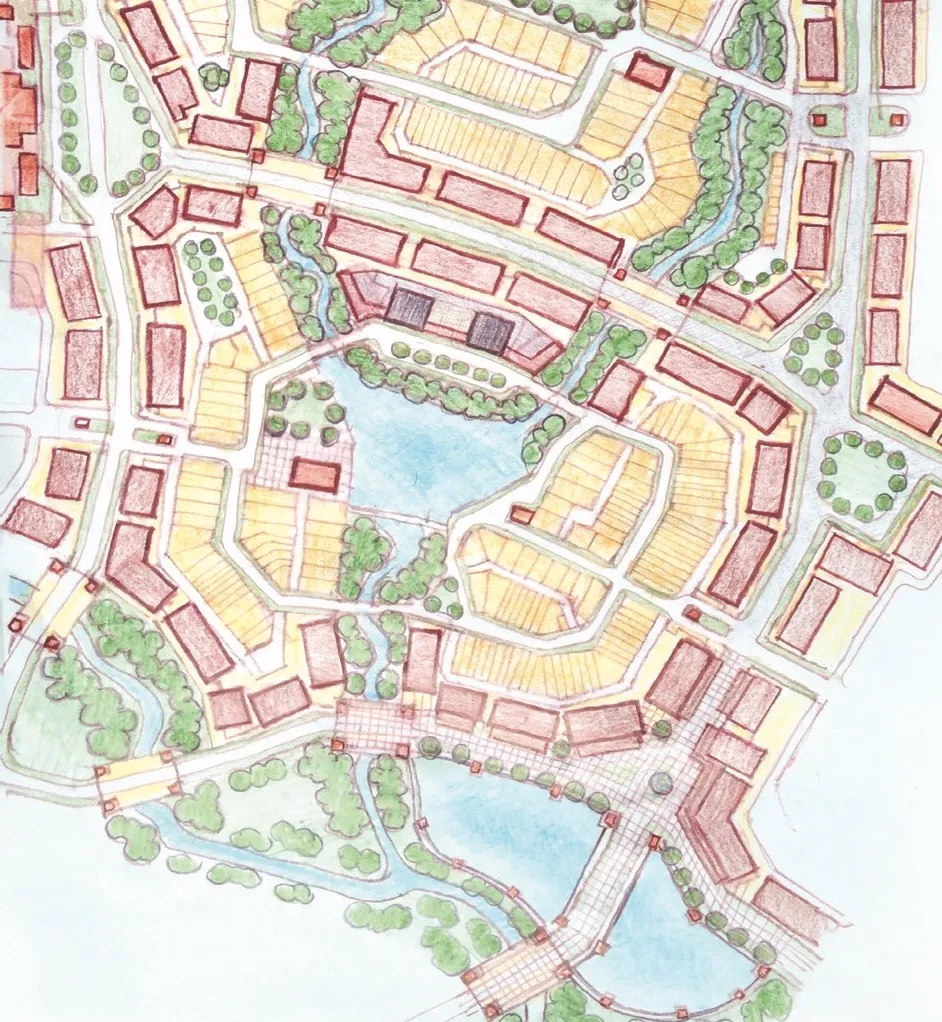
After debating the merits of each master plan, we chose to continue the process with Concept #2 for the blocks because it was more walkable and flexible. Small blocks create a grid network of streets that gives pedestrians more walking options.
Concept #2 is much more similar to Casco Viejo It is made up of small blocks, each about one hectare in size. Each block has interchangeable uses. A single block can have houses, residential buildings, or commercial buildings with four, six, or even ten stories. This flexibility allows for a faster response to the market.
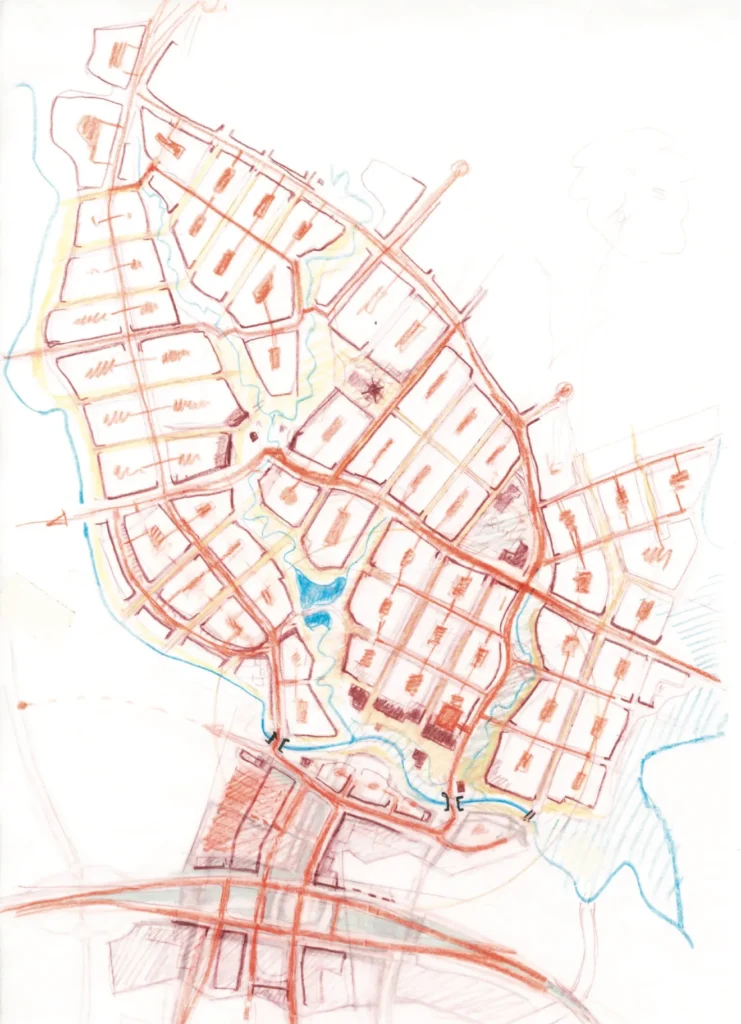
Master Plan for City Blocks Draft #1
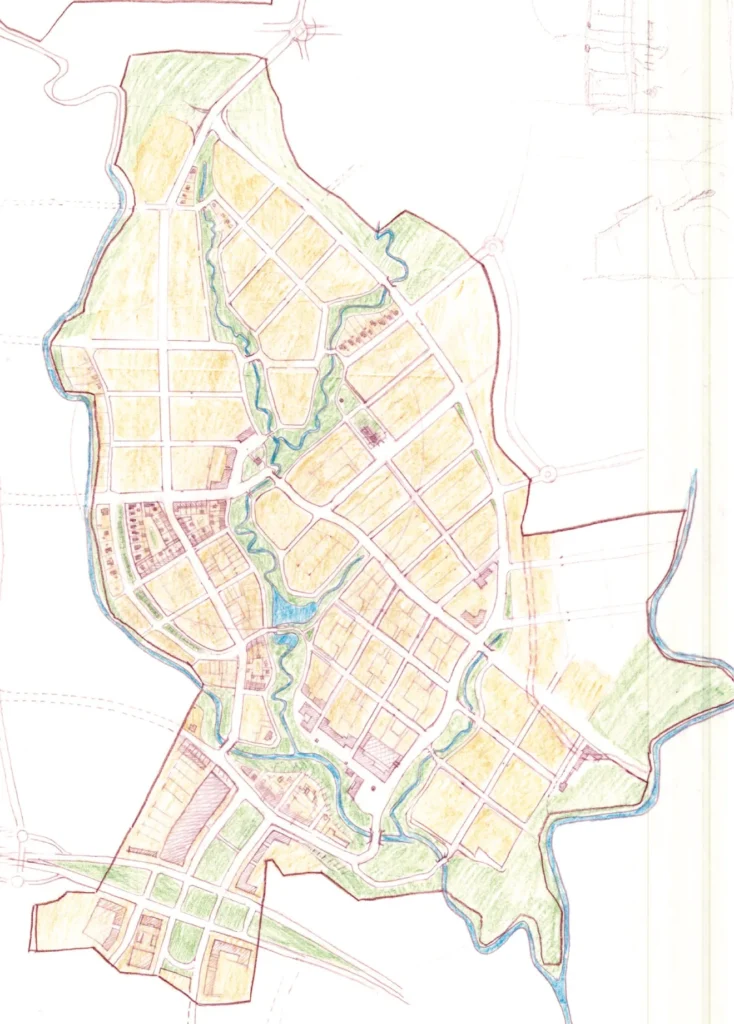
Master Plan for City Blocks Draft #2
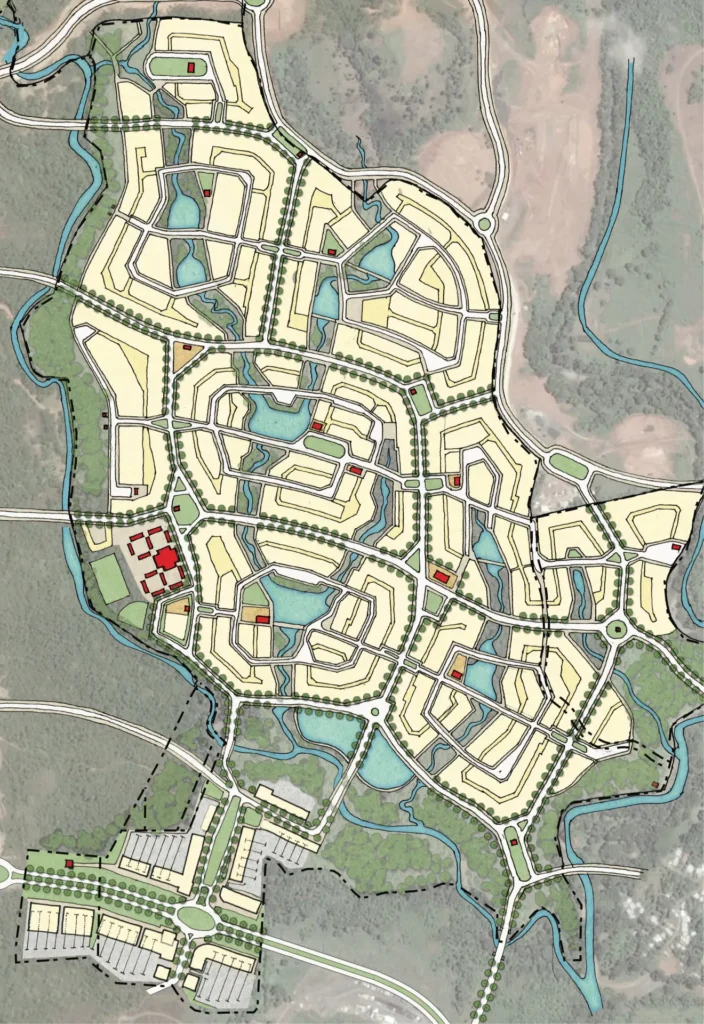
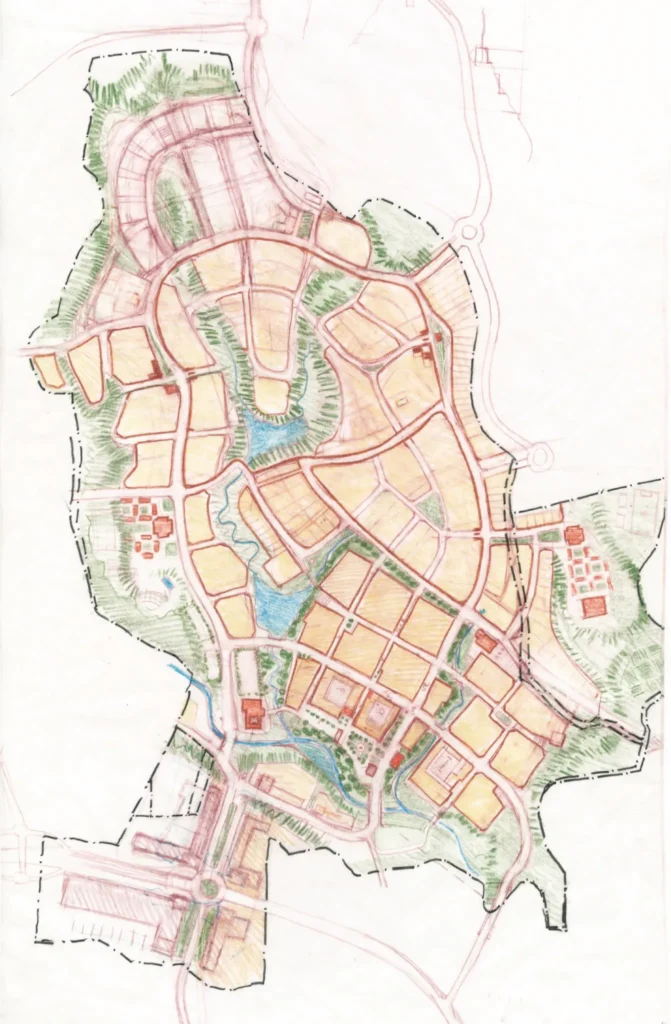
Master Plan for City Blocks Draft #5
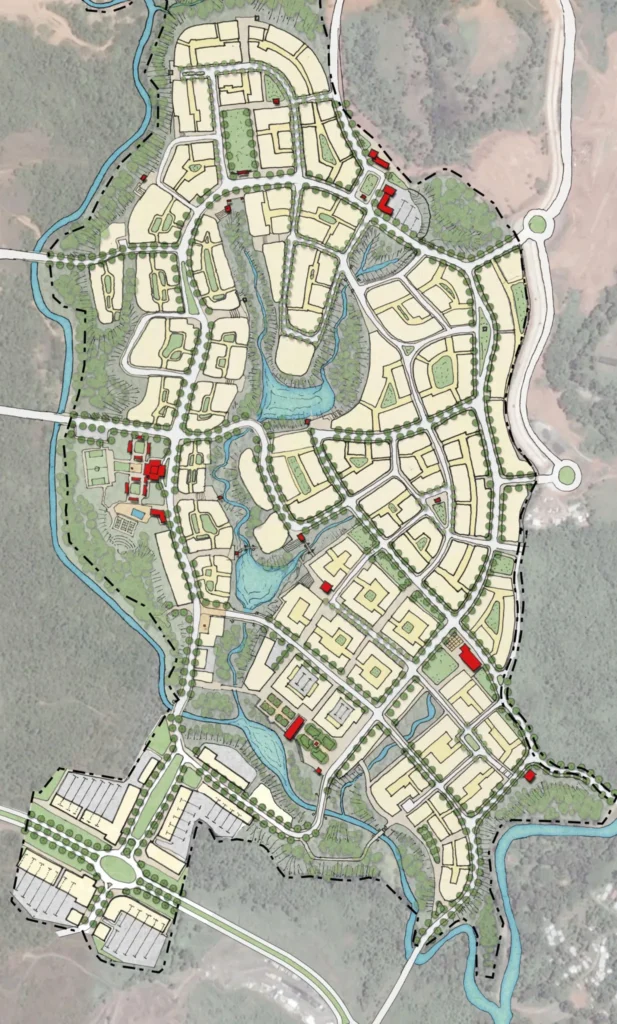
Master Plan for City Blocks Draft #6
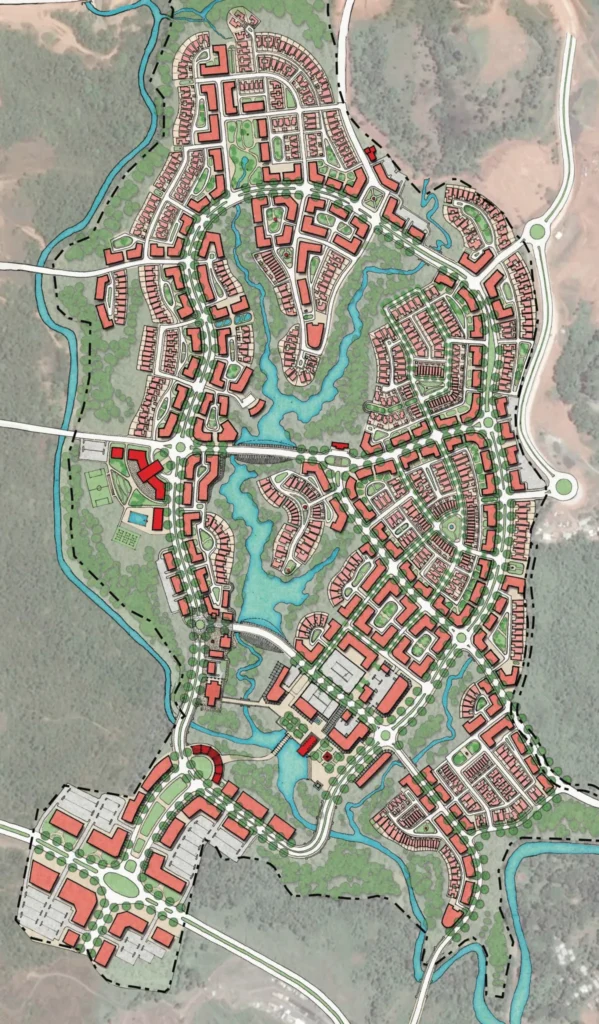
Master Plan for City Blocks Draft #7
In the following image, you can see the entrance to North Port City. Right as you enter, there’s a walkable town center. The parking lots are hidden in the back. It’s not like a shopping mall where the parking lot is out front, because that would be inconvenient for pedestrians.
In this drawing of the entrance, you can see three-story buildings with retail on the ground floor and offices or residences on the upper two floors. At the top, on the other side of the river, you can see a civic building—it could be a church or the town hall—which houses the project’s administration.
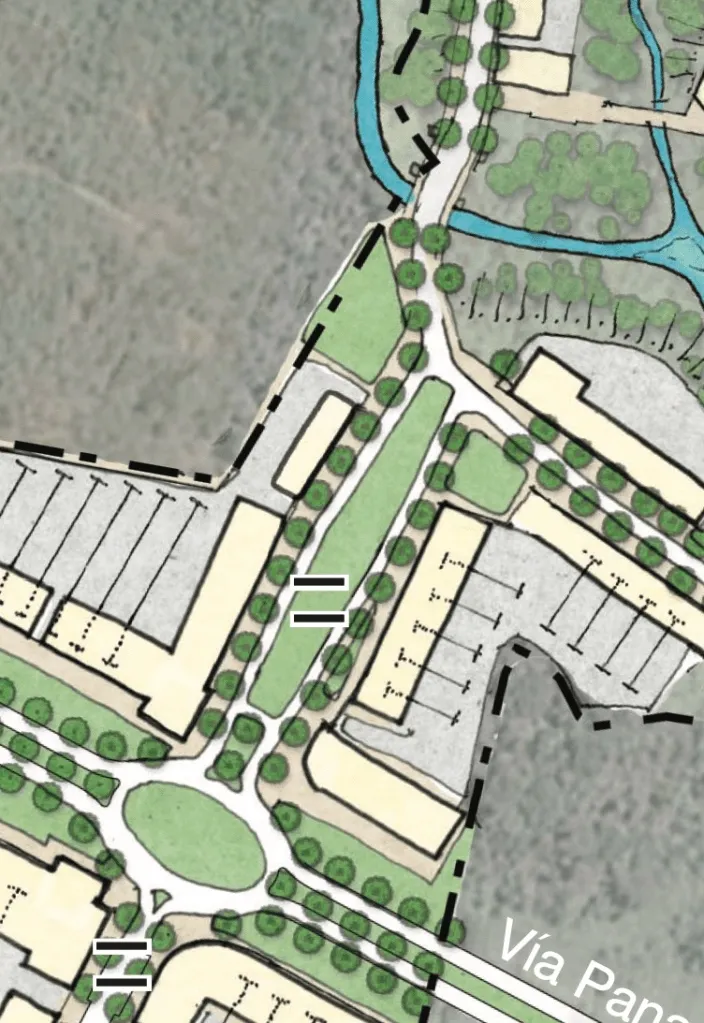
2D input
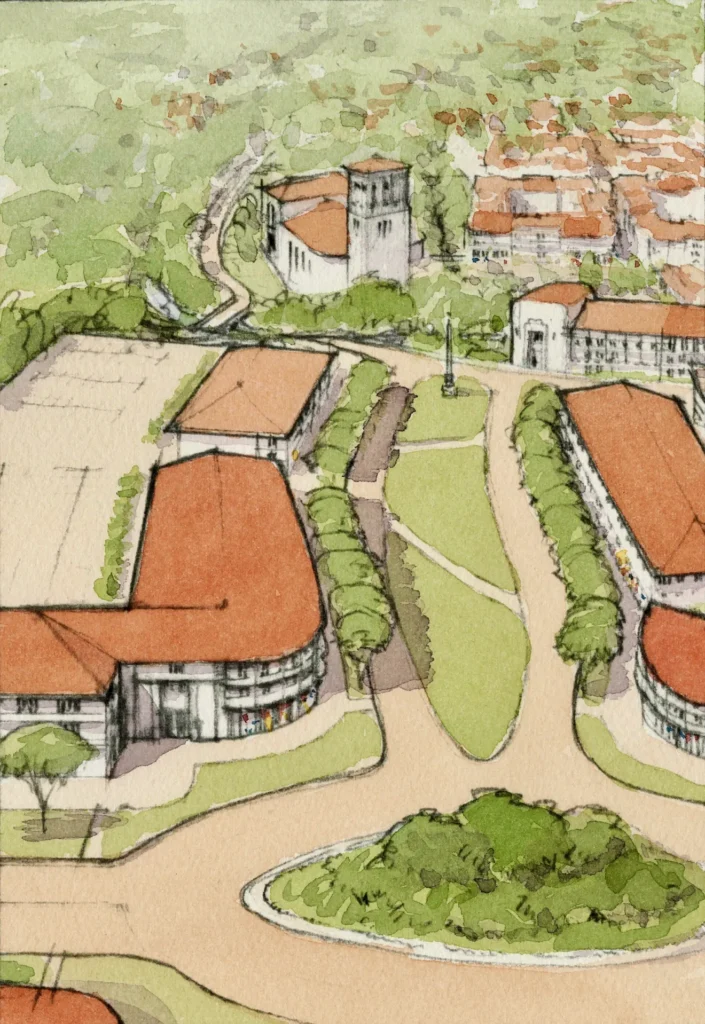
3D input
After entering, turn right and you’ll find a bridge that crosses the María Prieta River to reach the first plaza.
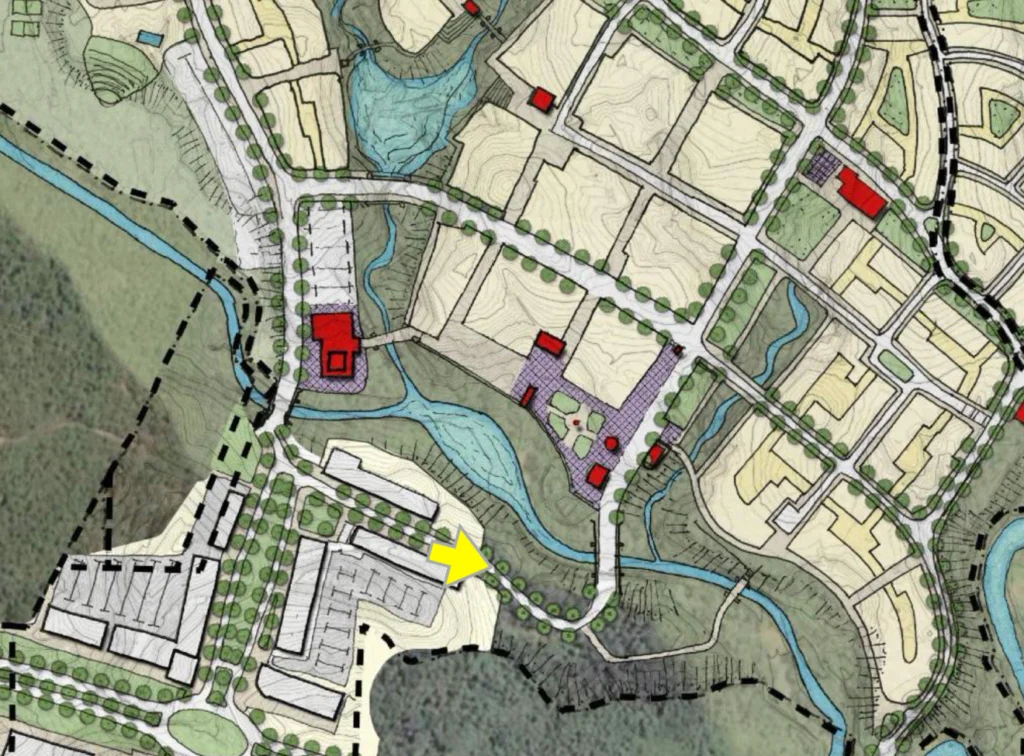
2D bird’s-eye view of the María Prieta River
On the left side of the drawing, you can see blocks like those in Casco Viejo, but with parking spaces in the middle. In the center of the drawing, you can see the María Prieta River and how the plaza opens up and invites people to the river. This is a perfect example of how Porta Norte’s urban design integrates with nature.
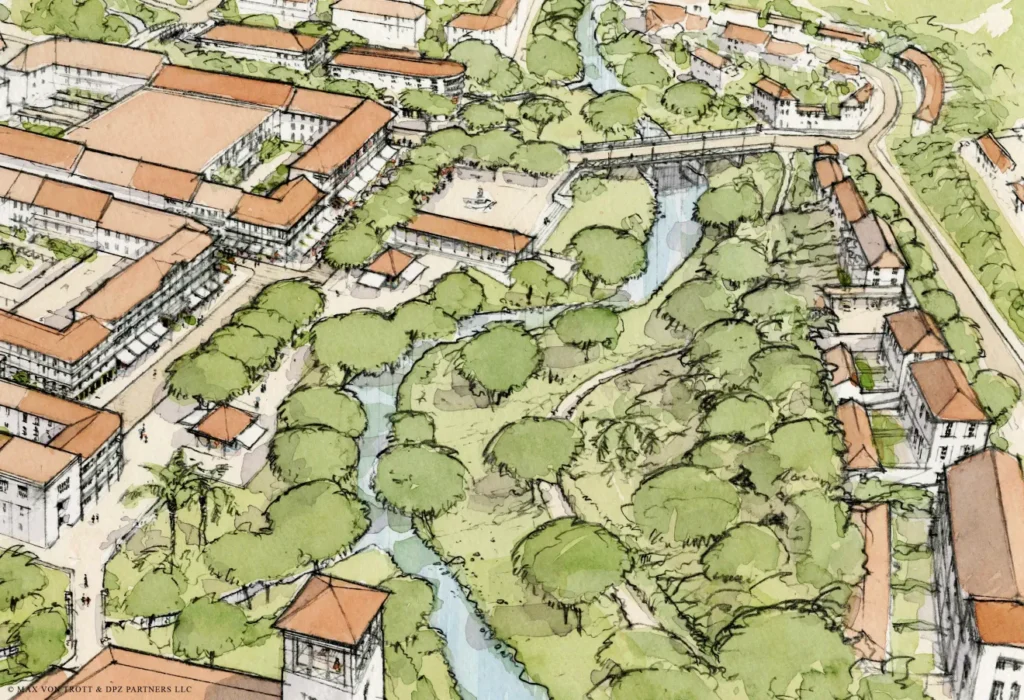
María Prieta River in 3D
As you descend the hill, you can see the buildings with Canal Zone architecture. Then you come across the iconic bridge, which can be seen in profile. In the upper right, there are residential blocks ranging from single-family homes to four-story buildings.
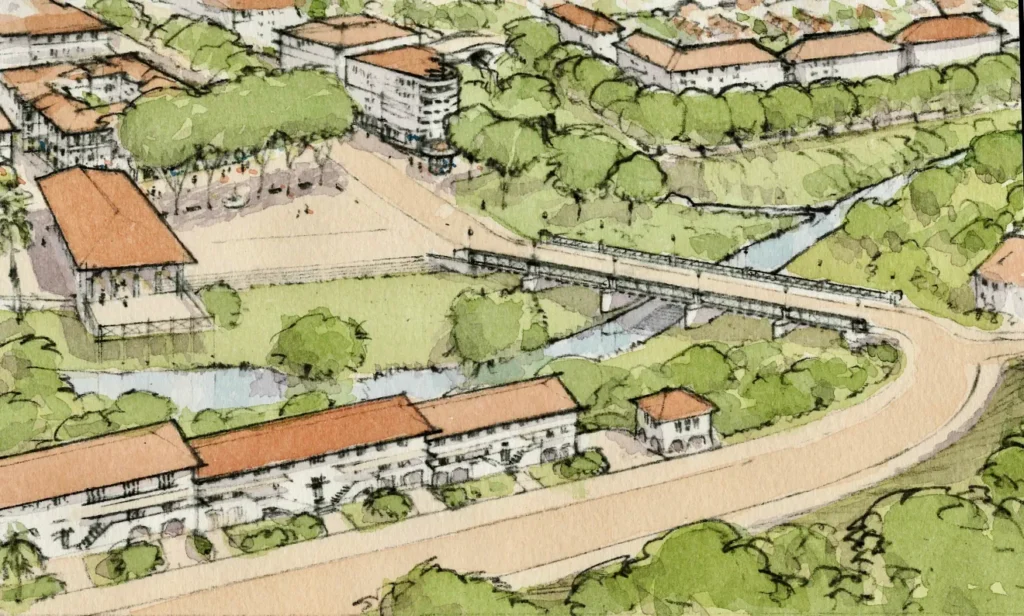
3D bridge
In this image, you can see the plaza after the bridge, which is geared toward residents. It has direct access to the river and features an open-air market, lush trees, a simple fountain, and a kiosk.
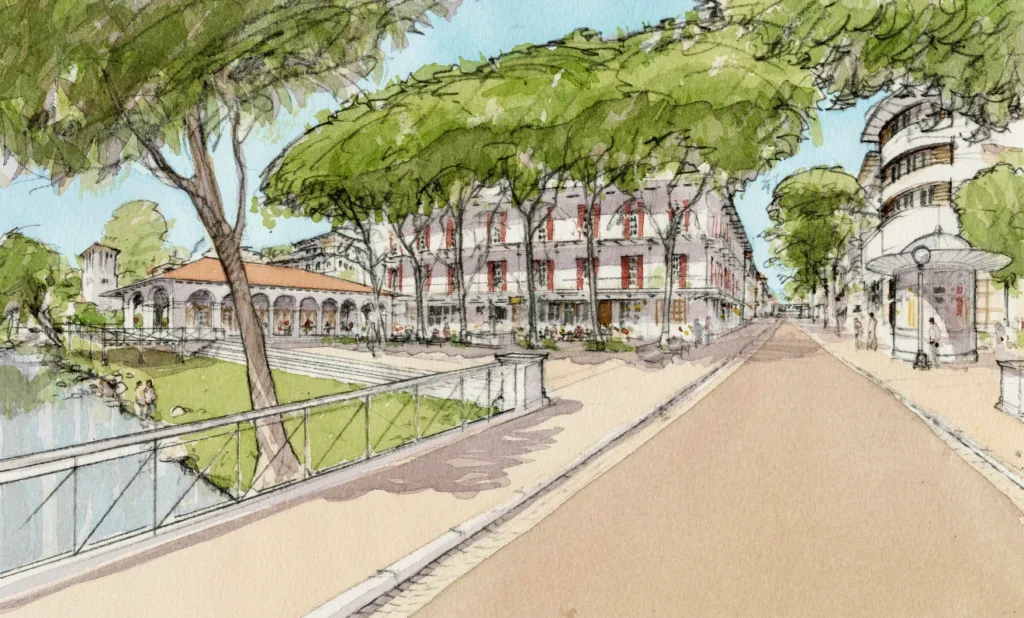
3D plaza
We are urban planners, but not local architects. That’s why we’ve invited several local architects to participate. The following design is by Ricardo Arosemena. It was based on the plaza near the river. You can see the parking lots behind, the open-air market next to the plaza, and the shops and town hall on the left. This gives us a good idea of what it could be like.
Town Center Section
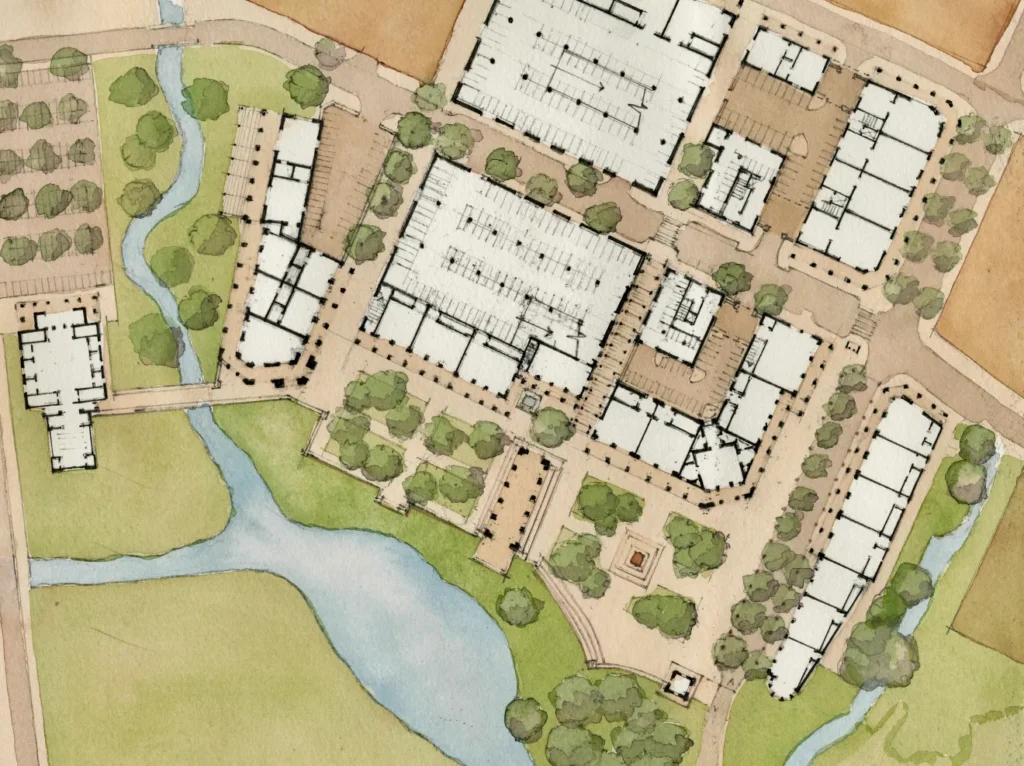
Town Center designed by Ricardo Arosemena
It’s normal to reach this level of detail a year later. With this exercise, we were able to verify that what we designed works, and Ricardo confirmed it. This is a building that functions with its elevators, stairs, circulation, parking, commercial area, etc.
Something curious I learned in Panama is the obsession some participants have with minimizing the effects of the rain and maximizing the breeze to combat the heat. They pushed their way thru narrow streets to find shade, shelter from the rain, and to make the breeze feel stronger.
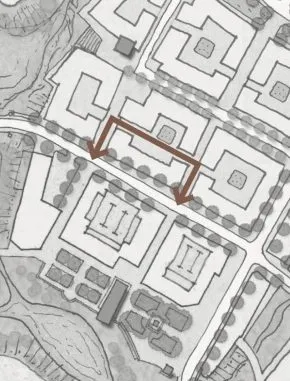
In this diagram, you can see the narrow streets, the tall buildings with private interior courtyards filled with trees for children to play in. You can also see the parking garages beneath the buildings. This is a new, unprecedented invention in Panama. This design allows for incredible views and cross-ventilation, responding to the local context.
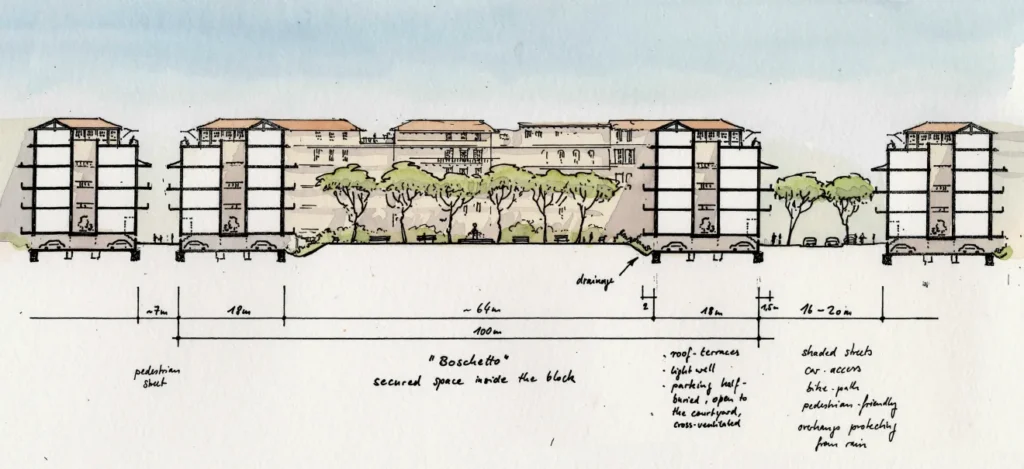
Typical city block cross-section
This week we also talked about schools. There will be one or two private schools in Porta Norte. Instead of having those schools you build—which, with all due respect, look like factories or prisons—they’re schools with a nature-filled campus where the buildings are separated by internal courtyards for the children to play in. To achieve this design, we invited potential clients who own schools, and they approved it with great enthusiasm.
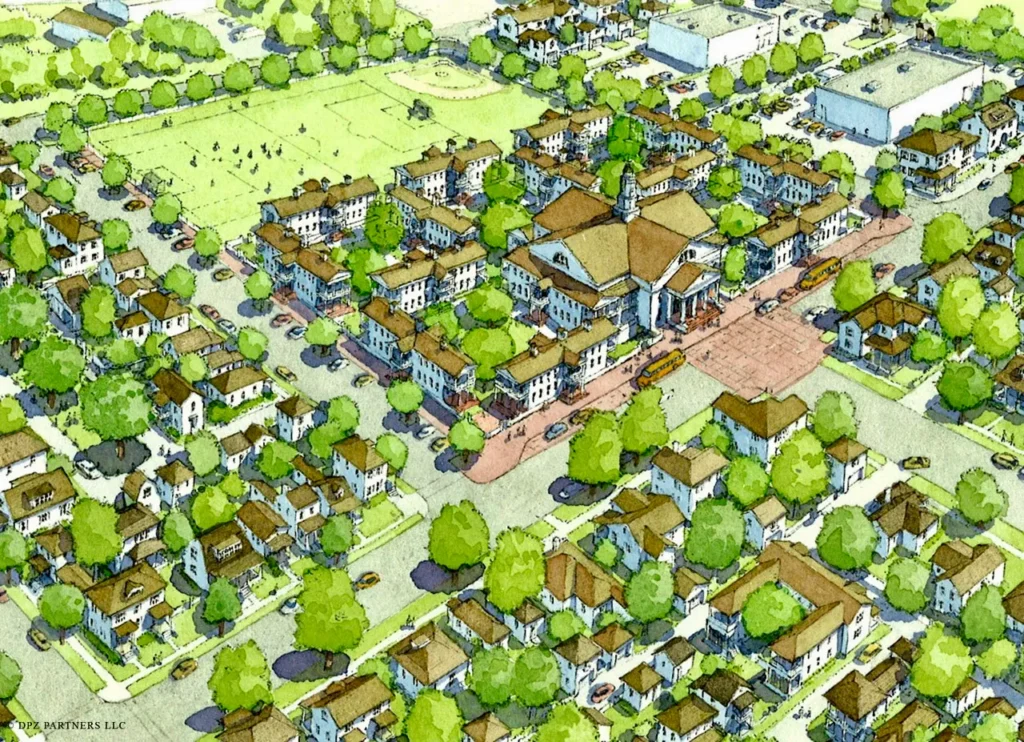
3D school
Porta Norte isn’t just a project; it will be a town that governs itself in 20 years. We are building a community that will need its own administration and municipality. This is a concept for the municipal building, which will house the administration and the Visitors Center. It has a tower you can climb to enjoy views of the town under construction.
Those interested in living in North Port City can review the model and information on residences for sale or rent.
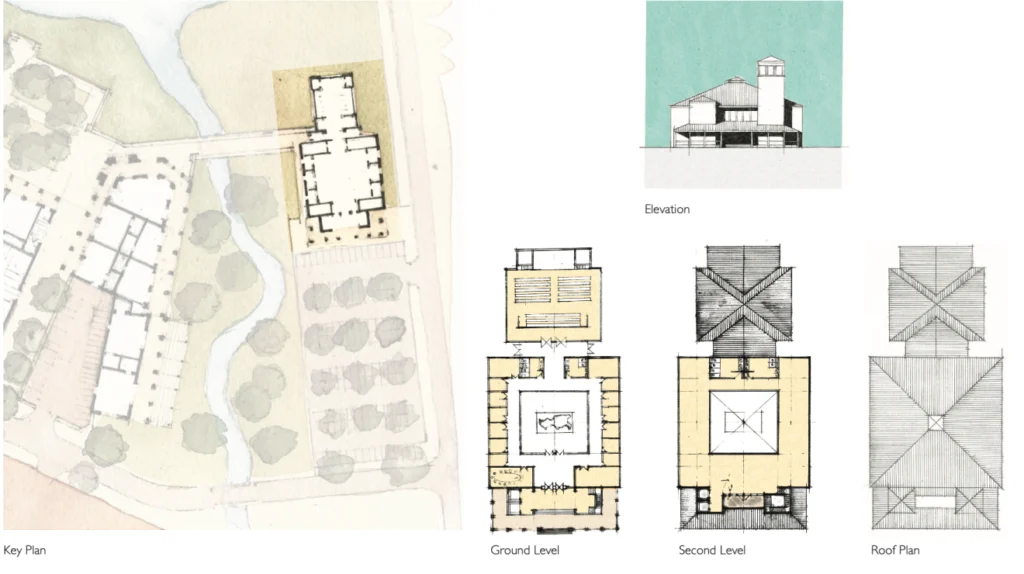
Visitor Center Sections
The North Parcel is 150 meters above sea level. Therefore, we must take advantage of the panoramic views of the sea and the city. This height also comes with cooler weather.
In this concept, we have tall, slender buildings surrounding a lake and a large park like New York’s Central Park. This park can include a school, shops, clubs, etc. This area is sunken in the center, forming an amphitheater-shaped valley that opens toward the city center.
These buildings won’t be like the ones in Panama, which are poorly coordinated and block each other’s views. These will be like the ones in Vancouver, where the buildings are very far apart. They have two to four apartments per floor to maximize natural light and panoramic views.
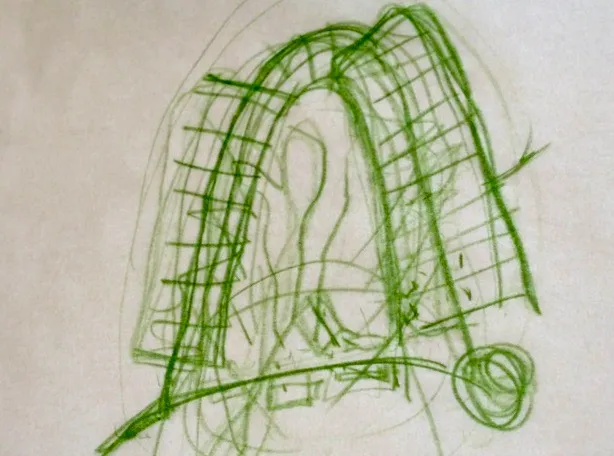
First ideas for urban layout on the North Parcel
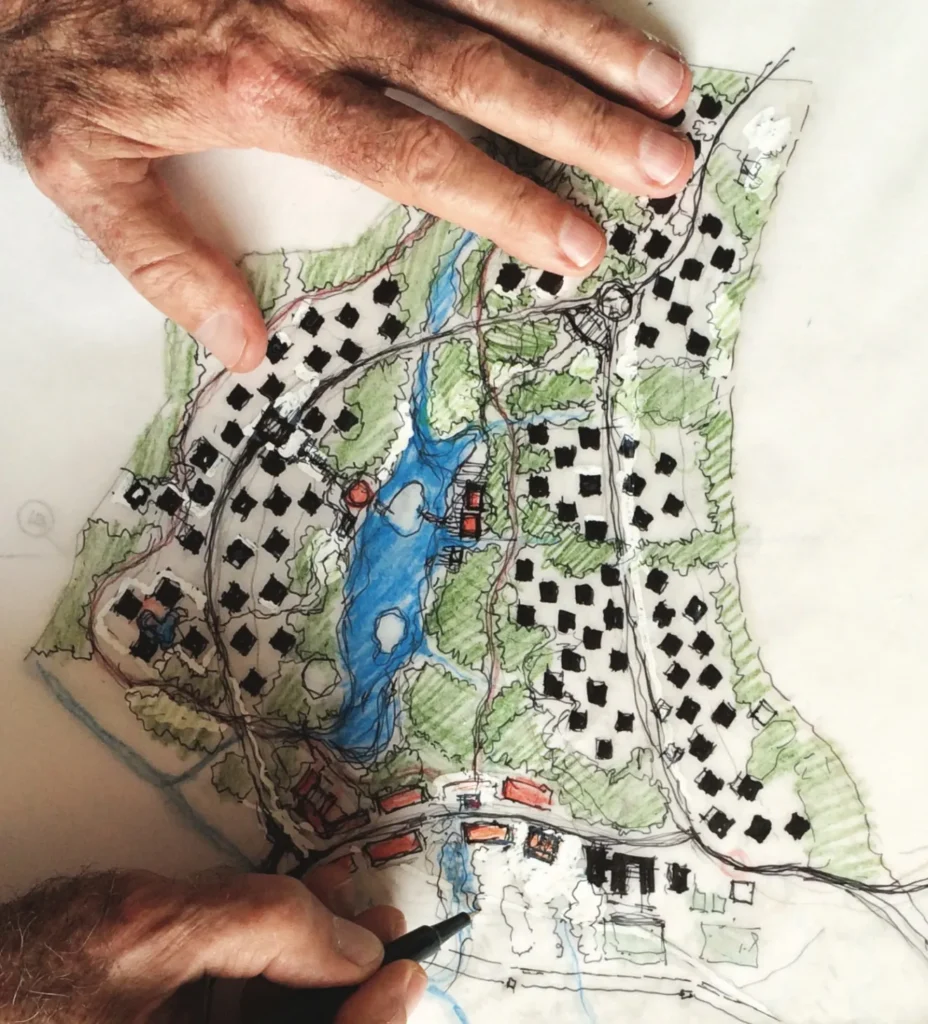
Creating North Parcel draft
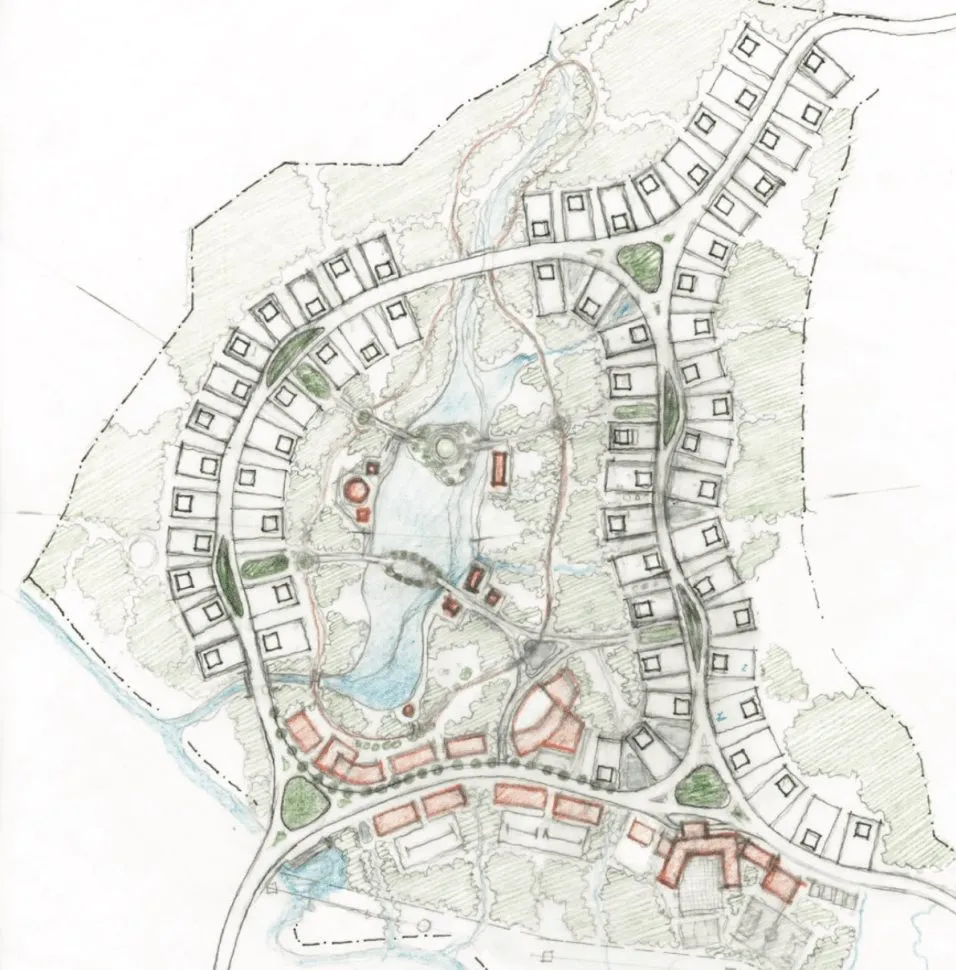
North Parcel draft with 10- to 20-story buildings
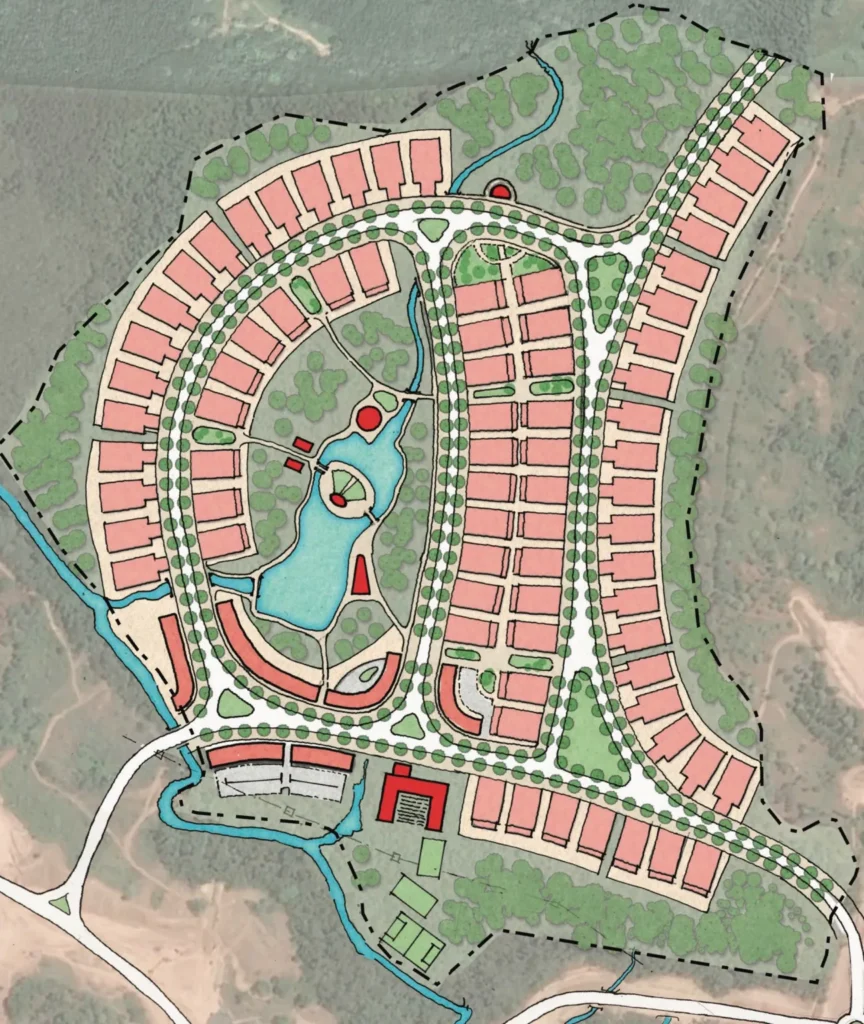
North Parcel Master Plan
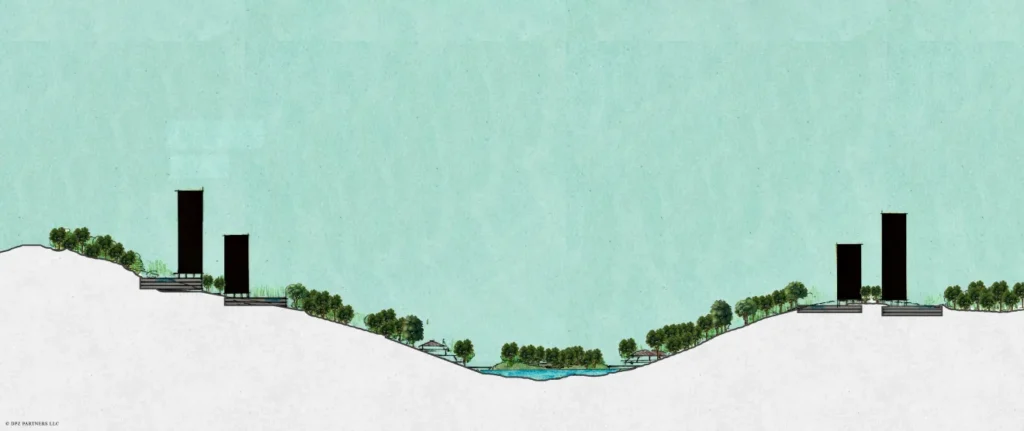
North Plot Section
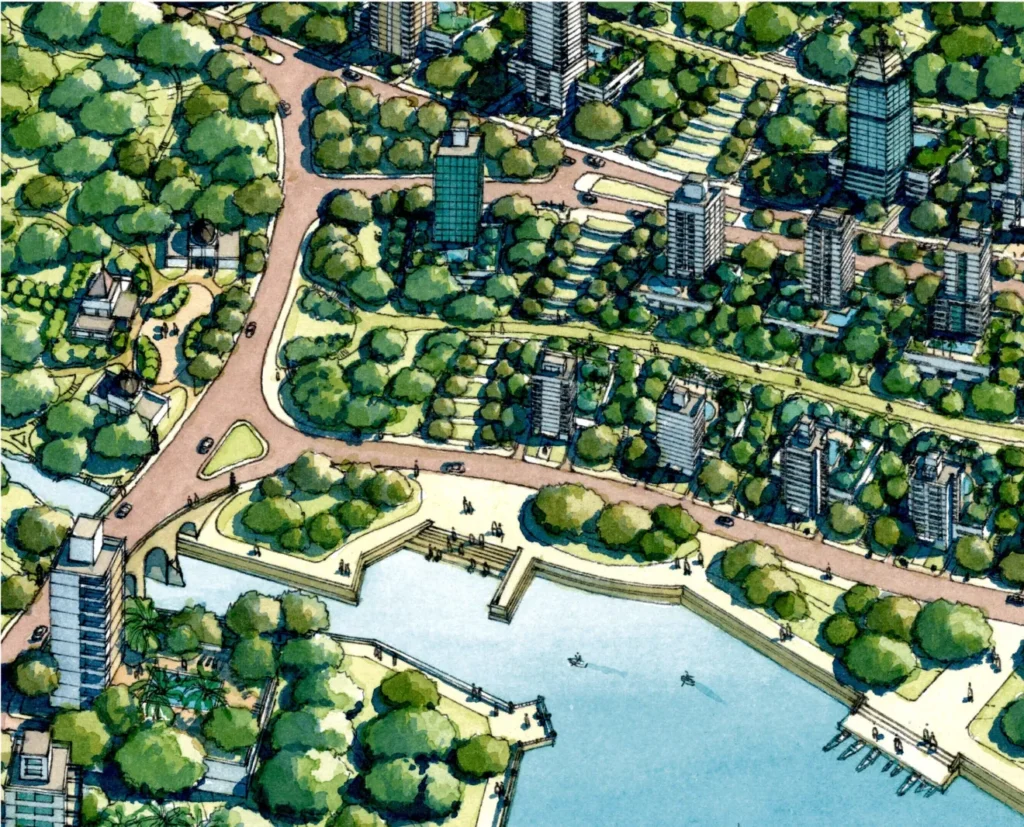
North Plot in 3D
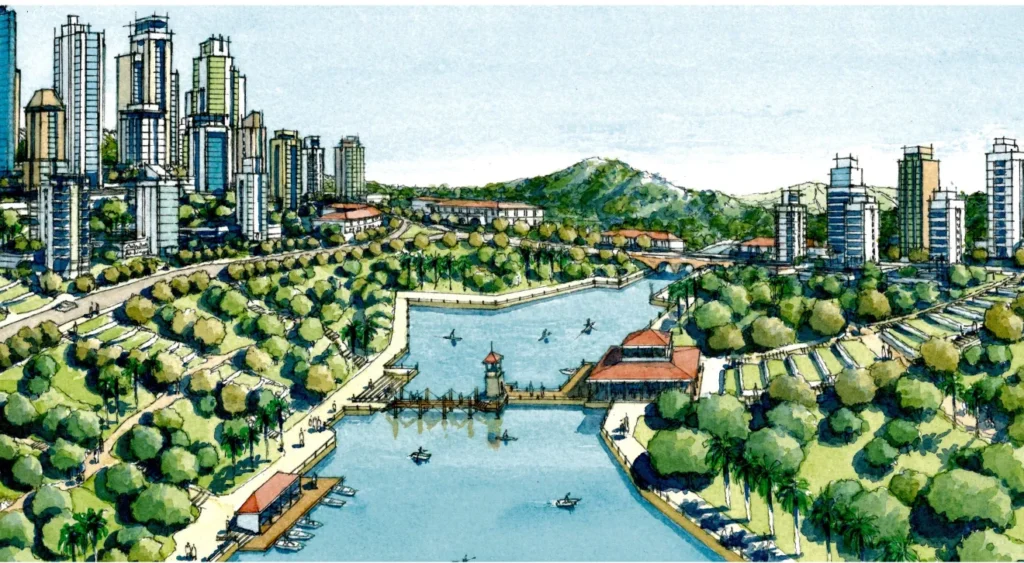
North Plot in 3D
One way to verify the plans is by creating diagrams. These help you analyze the most important features of the Master Plan from another perspective.
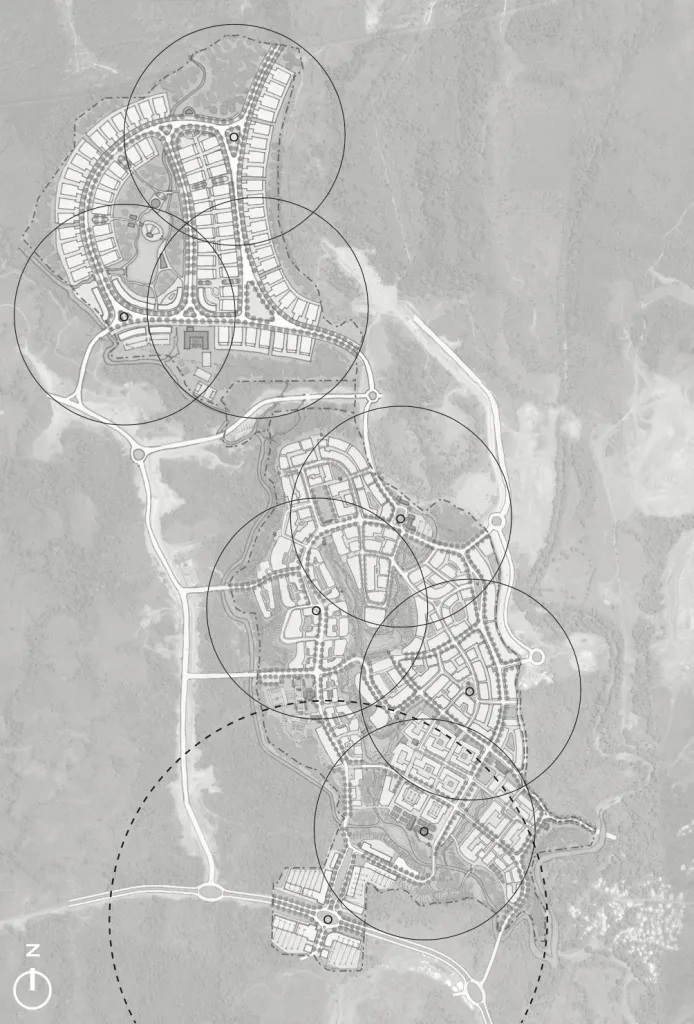
Neighborhood Diagram. The small circles represent the center of the neighborhood. From these points, a pedestrian can walk to any point within the circle in less than five minutes.
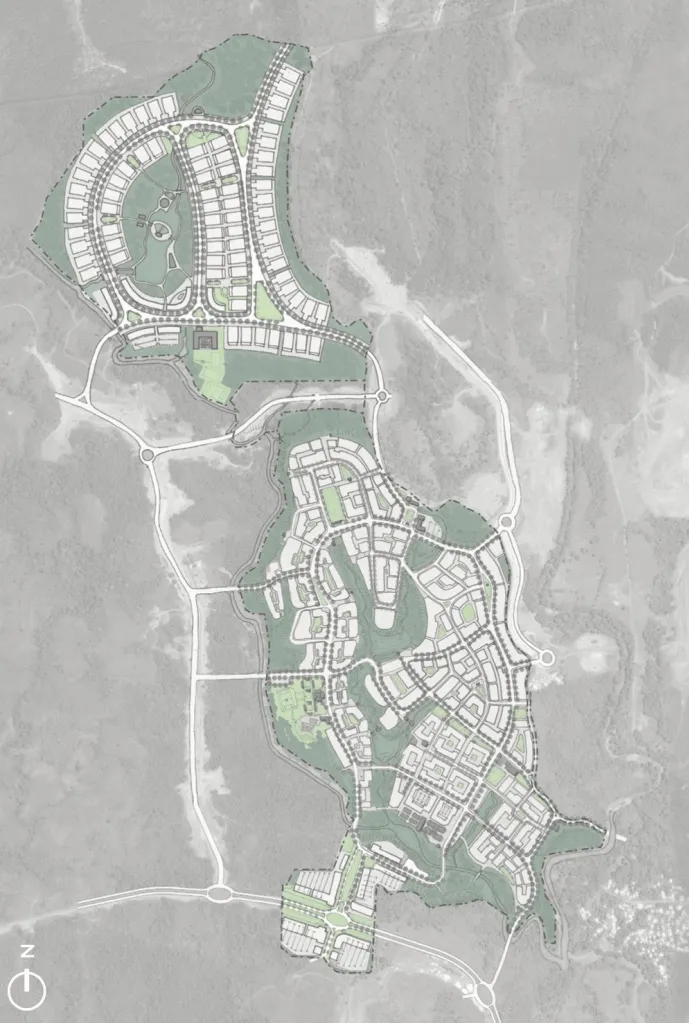
Diagram of Public Spaces. In dark green are the rivers and streams bordered by extensive, wooded green areas equipped with trails, benches, tables, and barbecues. Everything is built with natural materials. In light green there are gardens, sports areas, plazas, parks, and internal courtyards. Green areas account for about 40%. That’s extremely high.
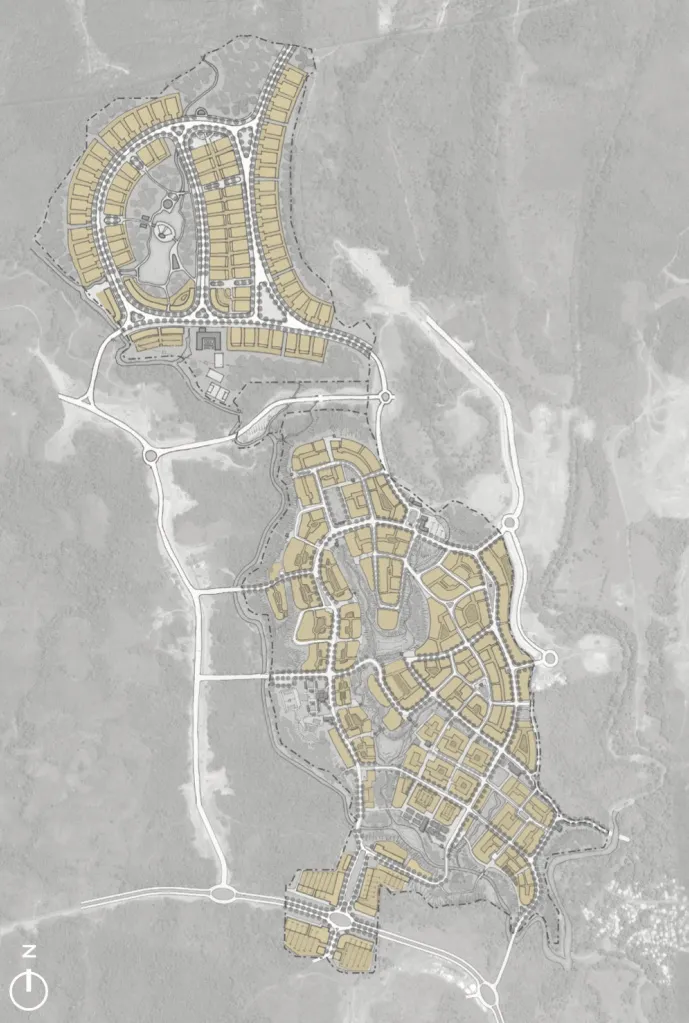
Developable Area Diagram (yellow).
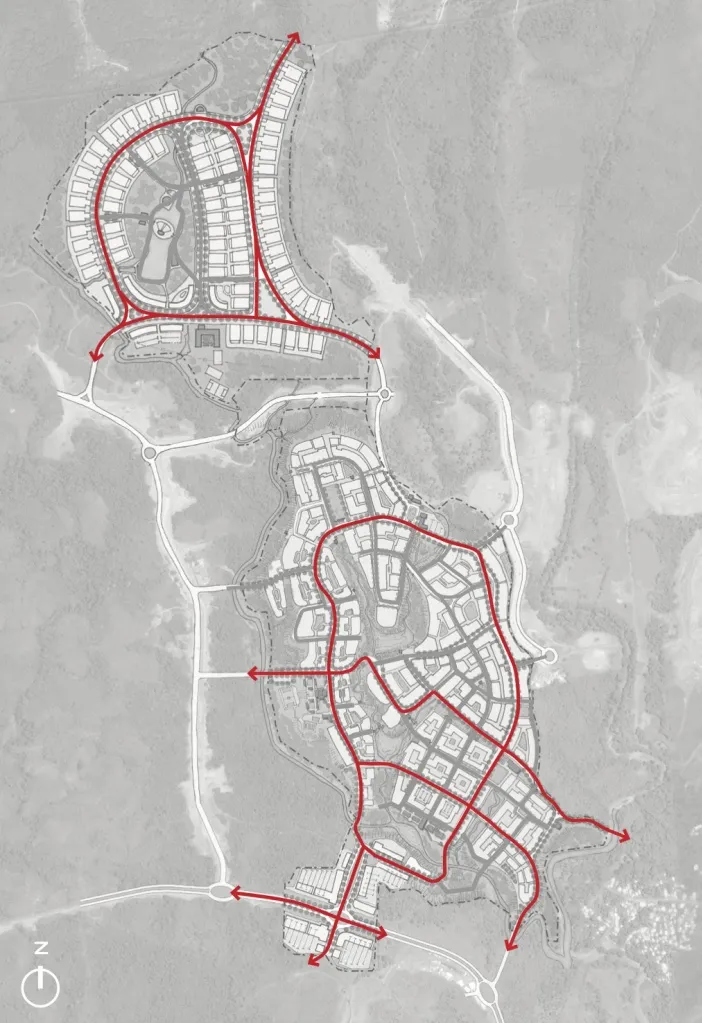
Diagram of Boulevards and Avenues
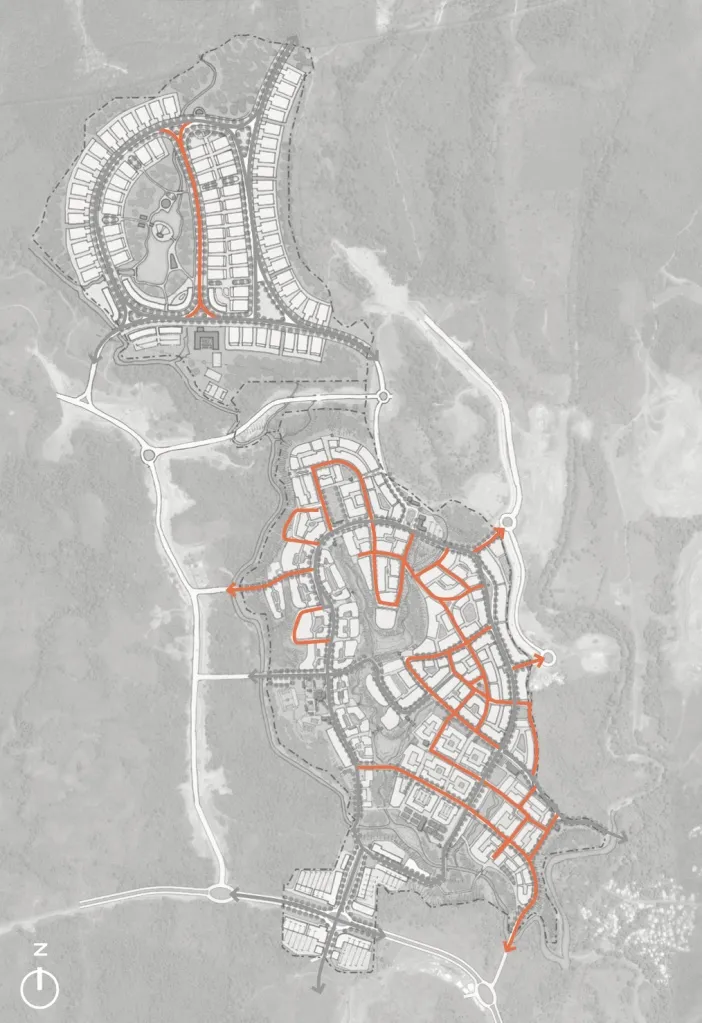
Secondary Streets Diagram
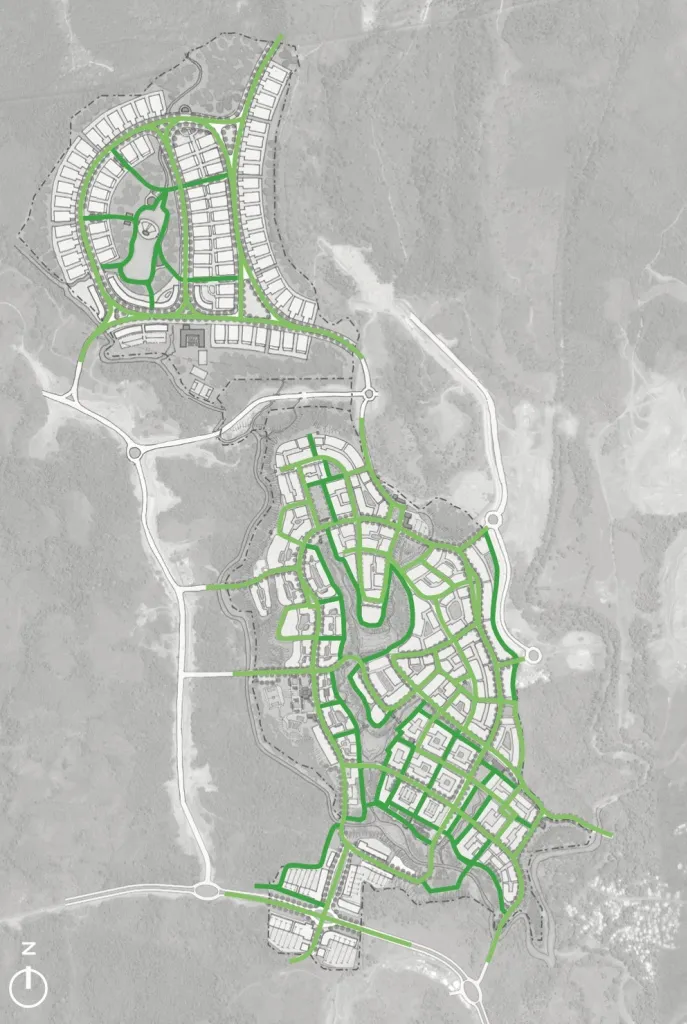
Street diagram for pedestrians (light green) and nature trails (dark green). The project features many pedestrian streets that lead to natural waterways, inviting people to connect with nature.
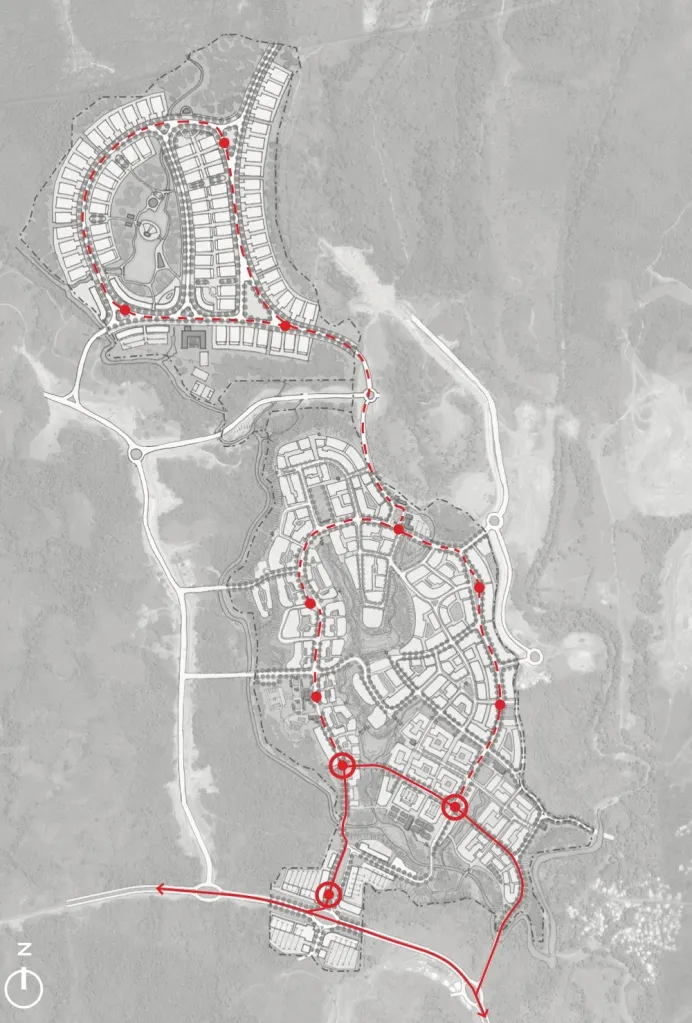
Bus Diagram. In red, you can see the bus route along the Boulevard. The red dots are the bus stops. Each stop serves a different neighborhood center, allowing residents to get around easily. This helps people who don’t want to or can’t walk, such as adults with children, seniors, and people with reduced mobility. At Porta Norte, you can have a car, but you won’t need it every day.
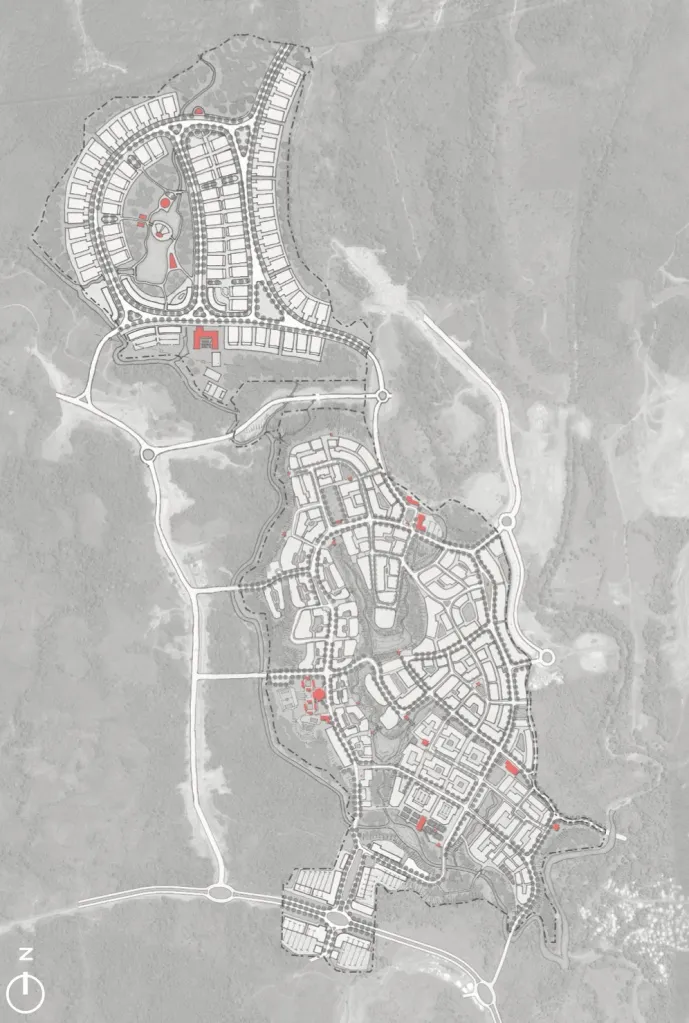
Diagram of Civic Spaces. Ciudad Porta Norte is a large place where between 25,000 and 30,000 people will live. These people need their temples, clubs, and all the civic amenities we’re familiar with that don’t exist in conventional developments. At Porta Norte, we’ve reserved civic lots so that future residents can build them.
Street design is very important because the street is a public space. The city streets are very hostile to pedestrians. In contrast, the streets of the Old Town are pleasant, which is why we’re recreating them.
We have created a comprehensive catalog with all street sections. The wider the streets, the taller the buildings need to be to provide shade for pedestrians and keep neighbors at a distance.
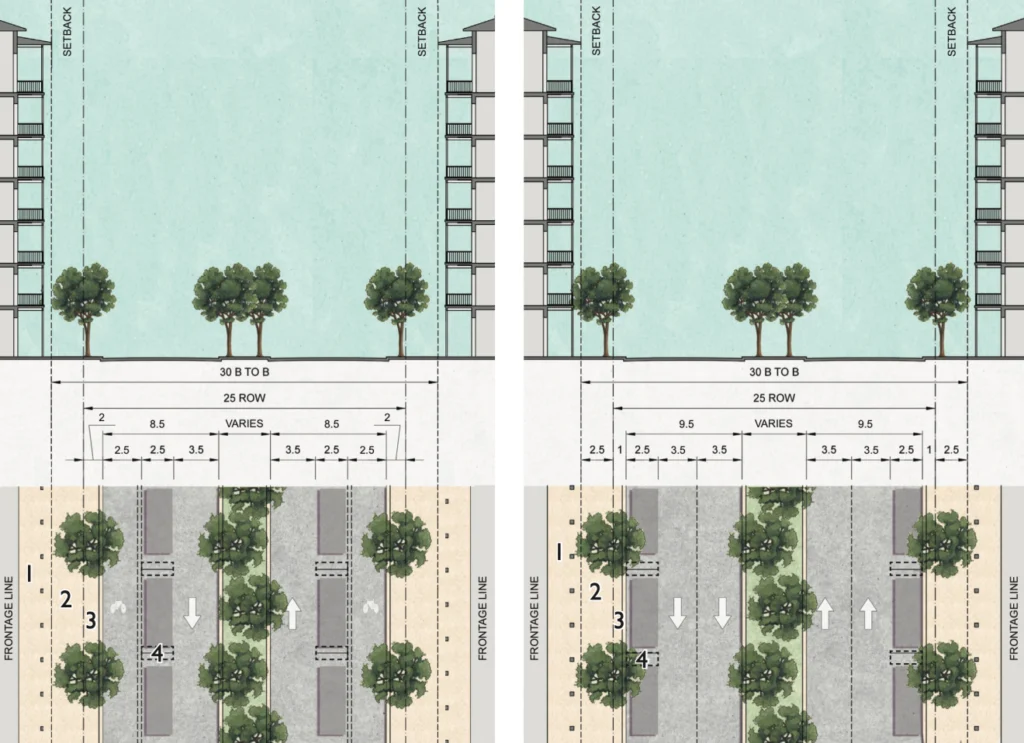
Porta Norte Boulevard
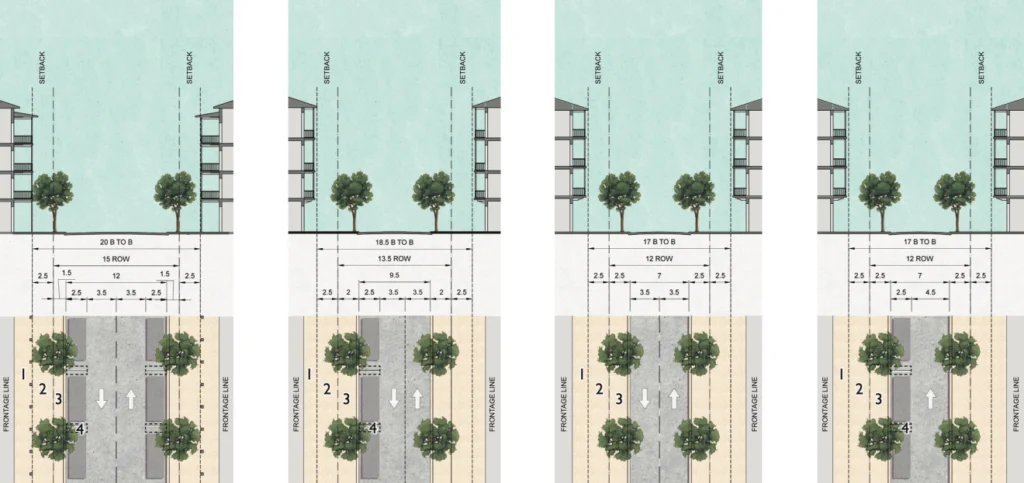
Side streets
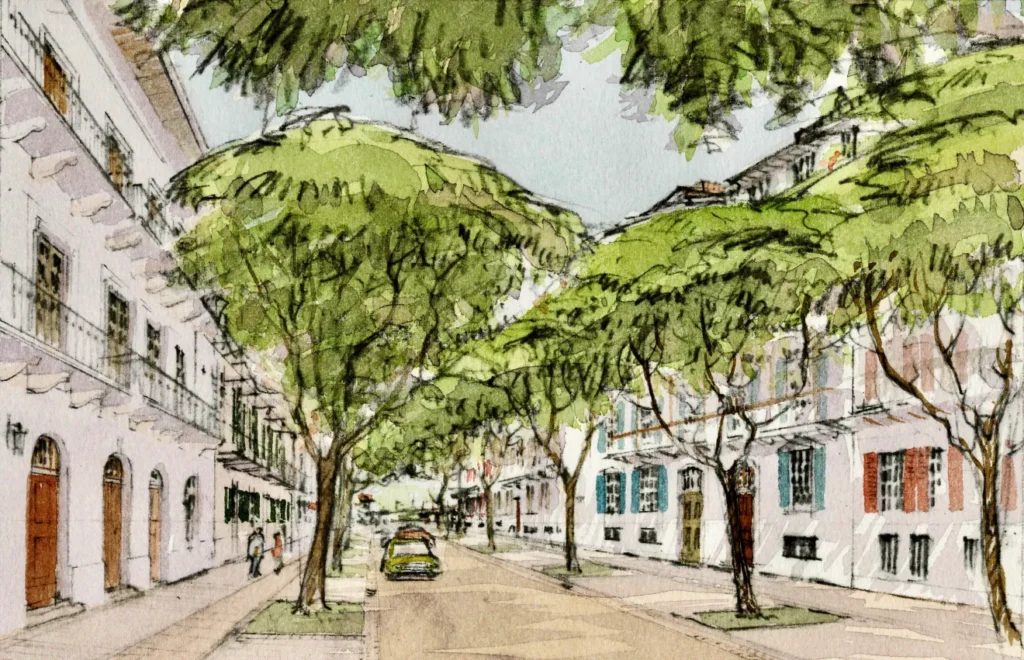
3D Secondary Street
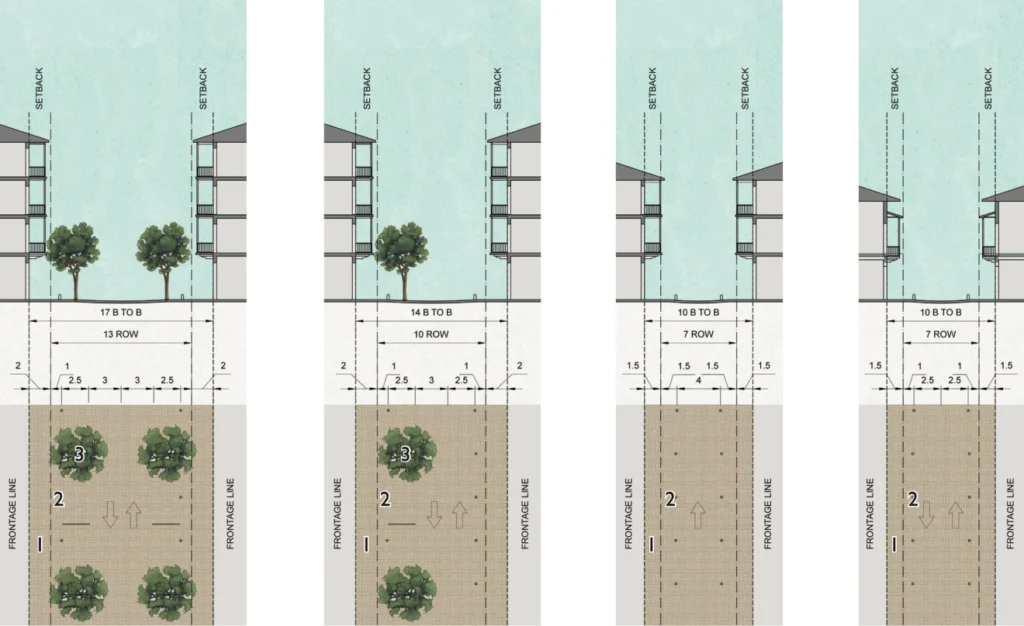
Pedestrian / Vehicular Streets
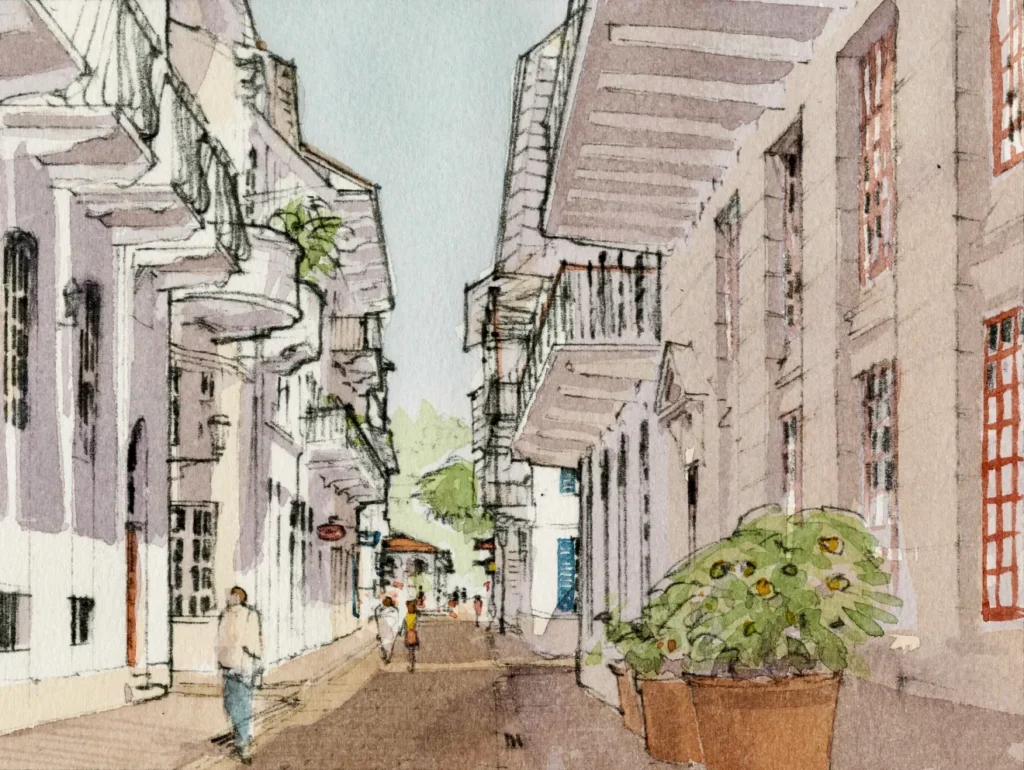
3D Pedestrian Street
The architecture of Porta Norte is traditional, inspired by Seville, Cartagena de Indias, and the Casco Viejo of Panama. We created a catalog of architectural typologies for houses and buildings. The typologies provide for a minimum of two parking spaces per dwelling and four parking spaces per 100 square meters of commercial space.
What’s interesting about the catalog of typologies is that each block can be offices or low-, medium-, or high-density residential. It all depends on the market. The uses of city blocks can be interchanged. What they all have in common is that they help create pedestrian-friendly urbanism.
Porta Norte will be built by developers who will build vertically. Below is a draft of the Porta Norte Code that developers will be required to follow.
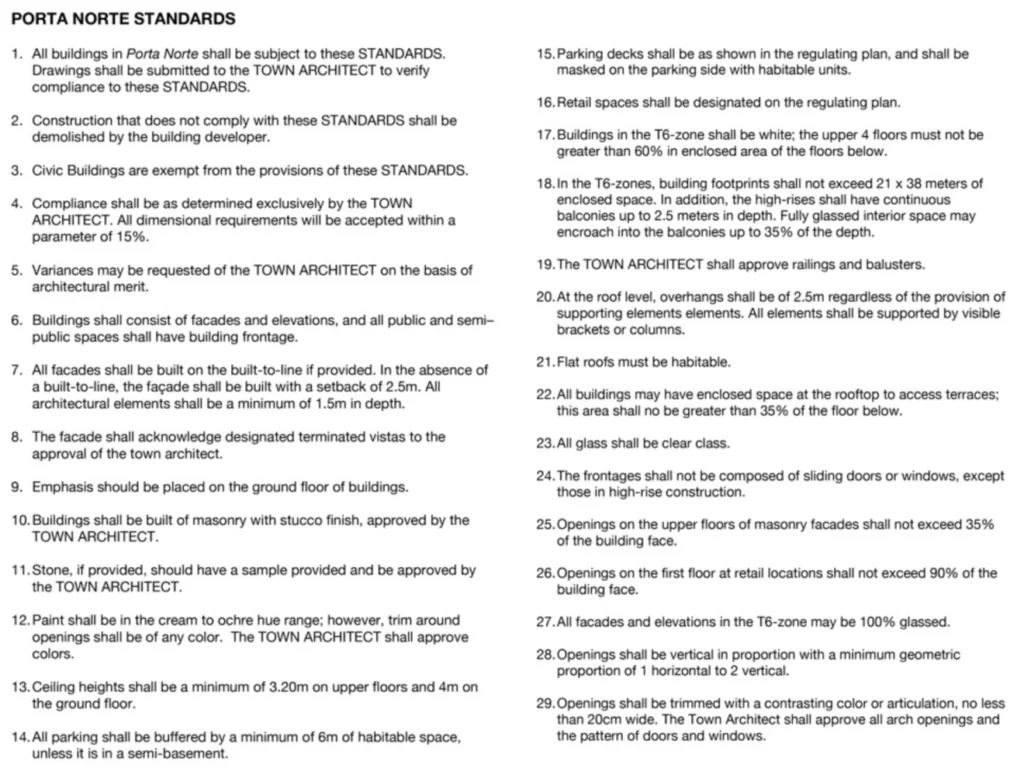
Draft Architecture Code
There will be an enormous variety of architects, which will result in the town’s architectural diversity. They will use a code with simple yet precise rules, which will result in a harmonious ensemble of buildings.
If you visit our website, www.dpz.com, you’ll see at least three or four dozen towns we’ve designed that have grown in harmony. Some have been designed by as many as 70 architects, but the designs are coherently unified by the codes.
At Porta Norte, we’re reviving the Hispanic inner courtyards, a lost art in Panama City. When you step into an inner courtyard with plants, stones, flowing water, and the sky as your ceiling, it’s a magical experience. Moreover, this architecture is private and secure.
We have created a catalog of courtyard houses in various sizes to promote their construction.
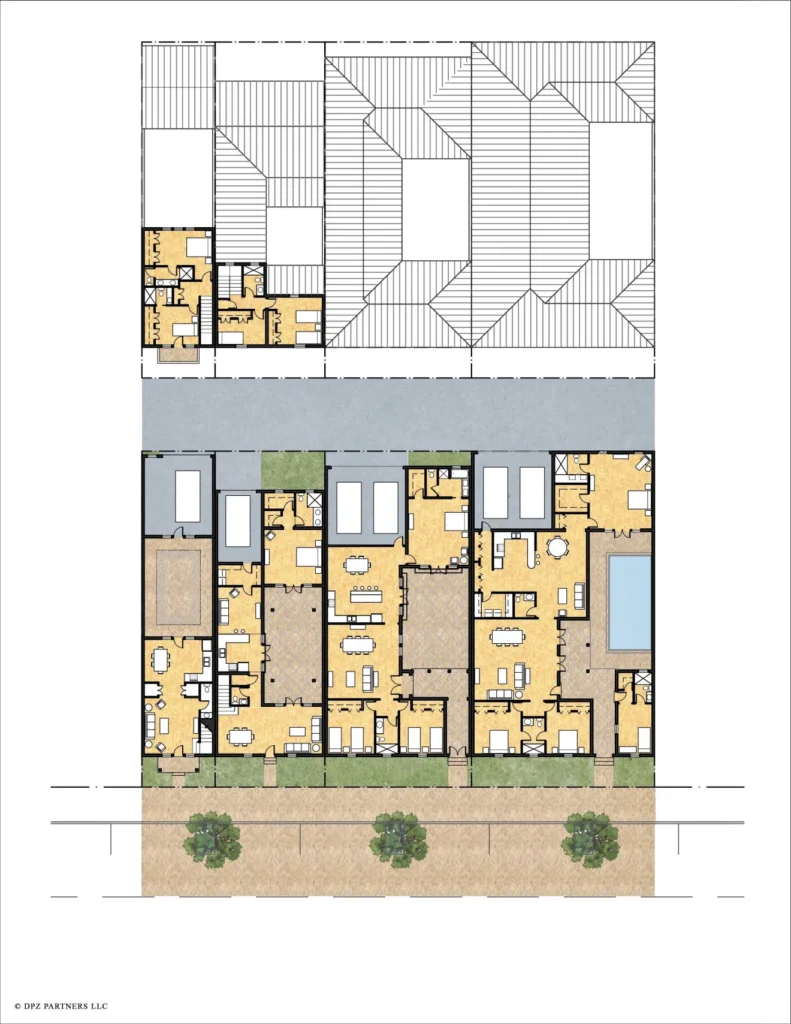
Porta Norte Courtyard Housing
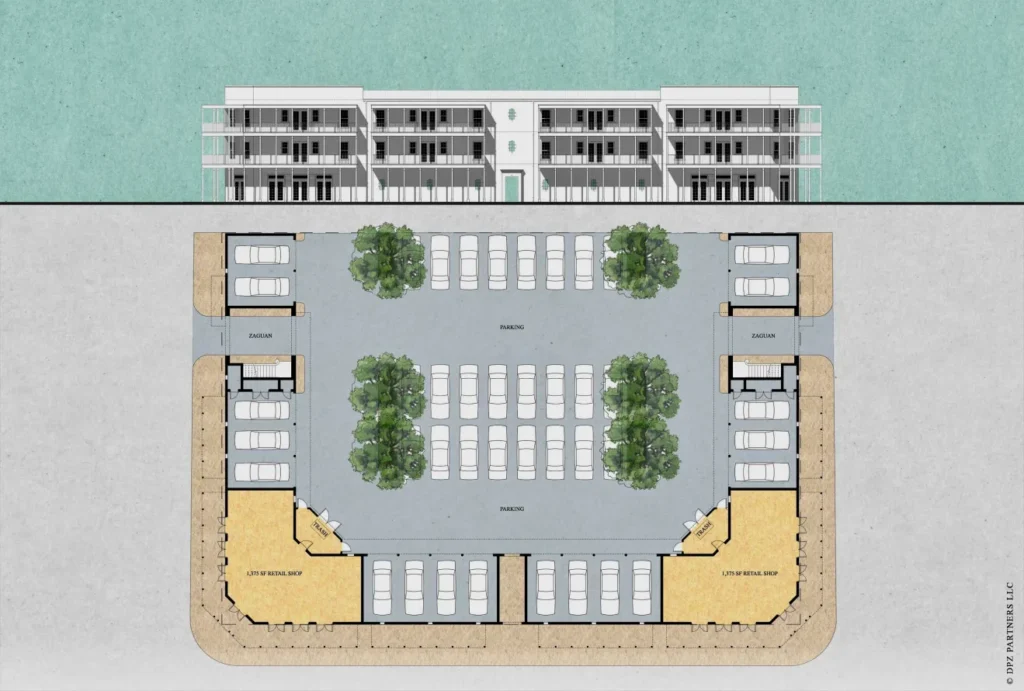
Mid-rise Typology #1
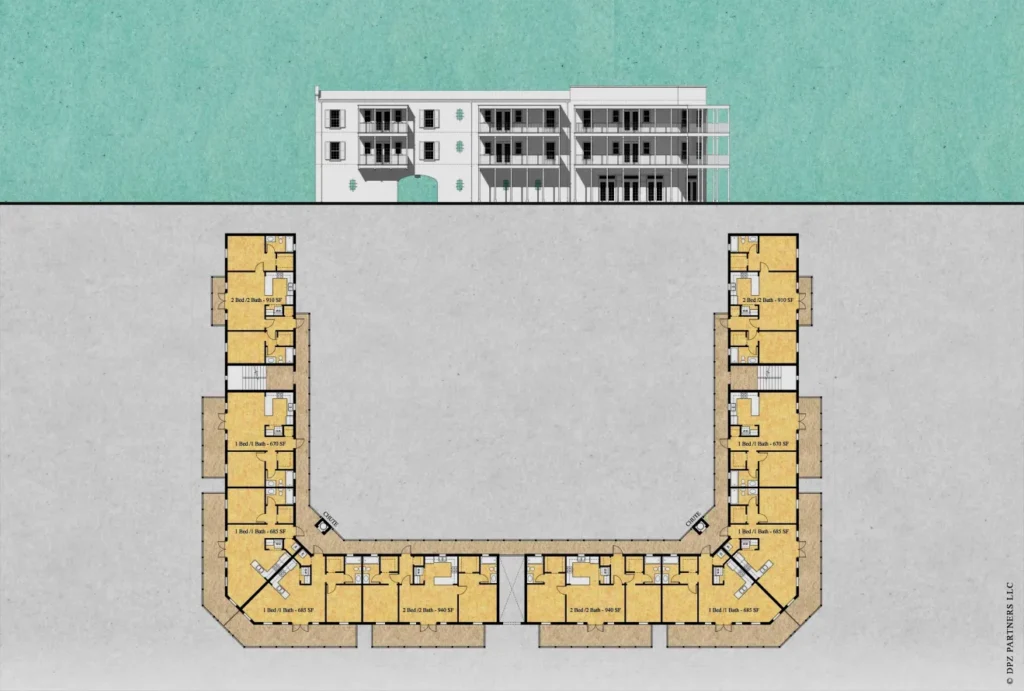
Mid-rise Typology #2
We also created a catalog of architectural elements inspired by the Casco Viejo to include in the code. You can build an efficient, economical box-shaped building while still having the option of 15 or 20 different facades.
We know that these elements work and are very popular because residents enjoy the balconies, and pedestrians like them too since they provide shelter from the rain and create shade, fostering street life.
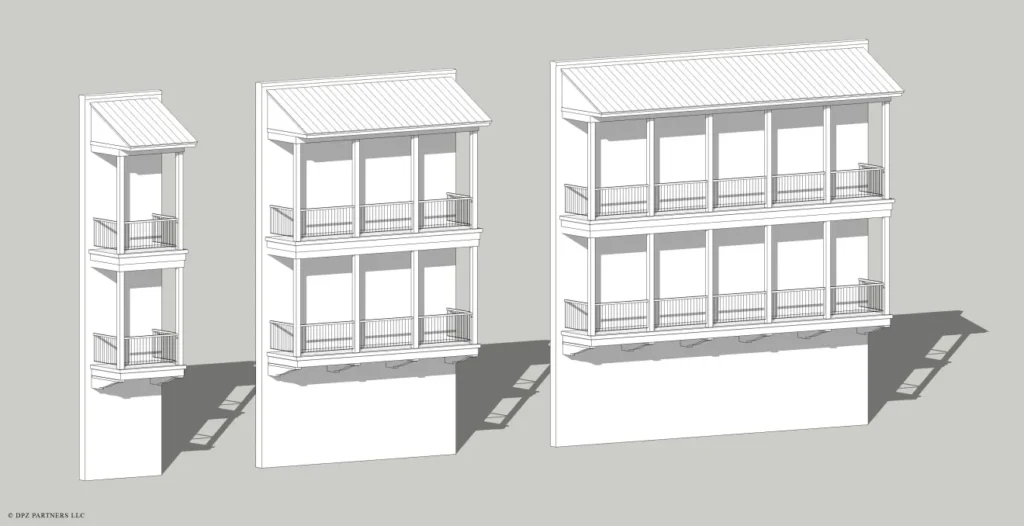
Architectural elements for facades
To execute this vision, we need developers and users. Developers build the hardware, which includes the infrastructure, streets, plazas, etc. Pioneering residents and businesses develop the software that is shaped by the neighborhood’s culture.
One good thing about Porta Norte’s leadership is that they’re young. They are a new generation of developers who passionately embrace a new lifestyle. These are the people responsible for executing Porta Norte. This could take between 15 and 20 years.
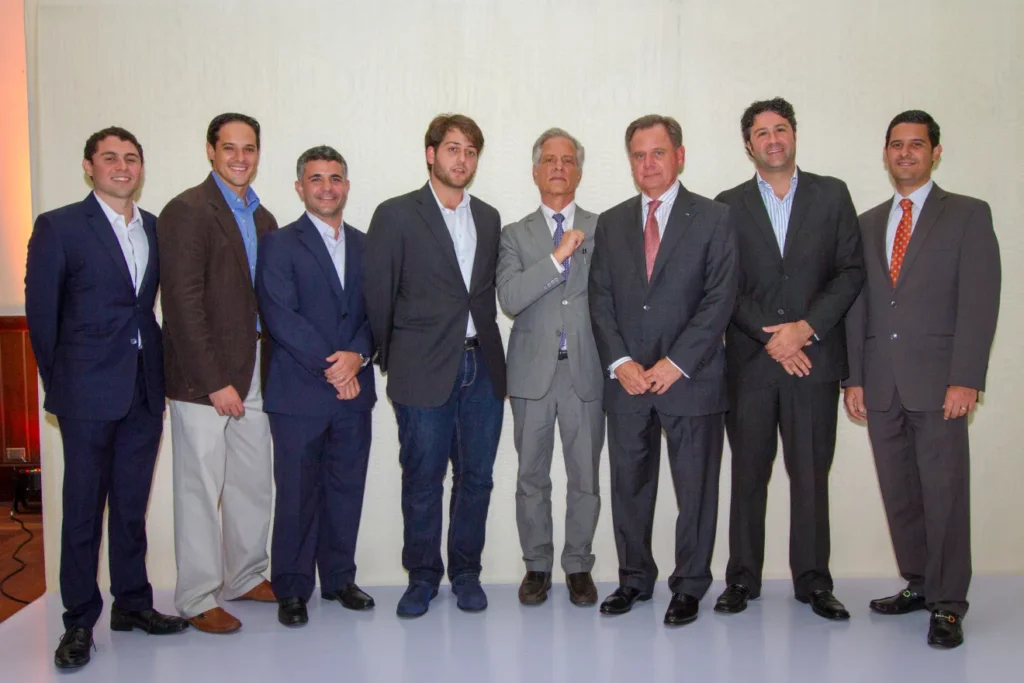
Porta Norte Executive Committee in 2015
I want to emphasize that we’re not proposing anything radical, nor are we reinventing the wheel. This isn’t an experiment; it’s something we know works because we’ve witnessed the evolution of the projects we’ve designed. We are confident that in the future Ciudad Porta Norte will be the new model for development in Panama.
Today we are proposing a new way of living with new ideas, and this requires the mindset of a new generation. From now on, this is your project, not mine, so get ready for what the new generation has in store for you.
I invite you all to join us in building this new way of living in Panama City.