

Smart City: Porta Norte leads real estate innovation in Panama

An adult woman smiles at the camera while holding her cell phone with both hands; in the background is the Porta Norte smart city.

Smart City: Porta Norte leads real estate innovation in Panama

Imagine living in a city where traffic flows smoothly, streetlights adjust automatically, and public services respond instantly to your needs — where you no longer have to adapt to the city, but the city adapts to you.
That’s the main concept behind a smart city. This type of community uses technology as an ally to transform urban living, making cities more efficient and human-centered. In a smart city, people come first.

In this article, we’ll explain what a smart city is, how Latin America is progressing toward this model, and why Porta Norte stands out as a benchmark for intelligent urban development in Panama.

What Is a Smart City?

A smart city is much more than sensors and data — in fact, it’s not just about technology.
According to the Inter-American Development Bank, a smart city places people at the heart of urban development, using ICT (Information and Communication Technologies) to manage resources and data efficiently. It also provides sustainable solutions to common urban challenges such as mobility, safety, energy, waste management, and citizen participation.

The ultimate goal of a smart city is to improve the quality of life of its residents, turning cities into more innovative, resilient, and competitive spaces.

Key Characteristics of a Smart City

Smart cities stand out from conventional ones because they share these essential features:

  • Urban efficiency: optimize resources for faster, more sustainable management.
  • Open data and interconnectivity: gather and share real-time information for better decision-making aligned with citizens’ needs.
  • Technology and innovation: adopt tools such as artificial intelligence, automation, and machine learning to modernize public services.
  • Environmental sustainability: reduce carbon footprints through clean energy, electric mobility, and green infrastructure.
  • Security: implement technology and cybersecurity systems to protect citizens.
  • Collaborative governance: encourage citizens to actively participate in urban planning.

Core Technologies of a Smart City

While technological development continues to bring new tools, these are considered the foundational technologies of a smart city:

  • ICT: essential for connecting citizens, government, and public services.
  • Internet of Things (IoT): connected devices that collect data in real time — from traffic lights to rainwater sensors.
  • Artificial intelligence: analyzes vast amounts of information, enabling data-driven decision-making.
  • Automation: enhances service delivery, from traffic management to waste collection.
  • Smart transportation: optimizes routes to reduce congestion, incorporating electric vehicles.
  • Smart energy: uses renewable energy and intelligent grids to optimize consumption.

Latin America and its Smart Cities

Latin America has been slower to adopt smart city models compared to other regions, but the past decade has brought significant progress.
Cities like Santiago de Chile, Mexico City, Bogotá, Buenos Aires, and Medellín are leading the way, implementing efficient transportation, open data networks, and sustainable urban spaces.

Challenges remain, such as poor urban planning and inefficient land use. Yet, many cities have proven that it’s possible to move toward a smarter, citizen-centered urban model.

Is Panama City a Smart City?

Panama has made important strides toward becoming a smart city, with projects focused on automation, digitalization, and sustainable mobility. Notable advances include:

  • The Citizen Security Operations Center (COSC), which monitors the capital with more than 200 surveillance cameras.
  • Pilot projects for electric mobility, including electric buses.
  • The launch of digital government platforms that simplify public services.

These efforts show that Panama City is actively moving toward becoming a true smart city — but there’s still more to come.

Porta Norte: the development of a truly Smart City in Panama

Within this landscape, Porta Norte emerges as a pioneering urban project in Panama, embracing the vision of a smart city.
More than a real estate development, Porta Norte represents a new way of understanding urban living — integrating the core principles of intelligent cities.

Among its main features:

  • Walkable, tree-lined streets: designed to encourage a healthy lifestyle, reduce carbon emissions, and strengthen community connections.
  • Multimodal mobility: pedestrians come first, with strong support for cycling and public transportation within the development.
  • Public spaces for community engagement: plazas designed to foster active participation and a sense of belonging.
  • Total connectivity: Porta Norte will feature a dedicated fiber-optic network, ensuring residents enjoy the best internet experience.
  • Environmental sustainability: Porta Norte prioritizes respect for nature, green spaces, the effective use of resources, and a design that allows coexistence with the environment.

You too can live in a smart city; Porta Norte is your opportunity.

Porta Norte is a combination of modern urban planning with smart technologies and a focus on community well-being. For all these reasons, it is an example of smart city development in Panama. This residential development demonstrates that smart cities are not a dream of the future, but an urgent necessity.

We invite you to discover how Porta Norte is growing. I’m one of the first people to live in Panama’s smart city model.

Share

Newsletter

Sign up to receive news, events, and exclusive presales.

You might also be interested

Joven estudiante morena de colegio de panama norte con mochila morada y uniforme

Your complete guide to the best schools in North Panama City.

Discover the best schools in North Panama City and find the perfect fit for your family’s education.
El nuevo casco viejo en Panamá Norte

The New Casco Viejo in North Panama: Everything You Need to Know Before Investing

Casco Viejo, also known as Casco Antiguo, is one of the most iconic historic districts in Panama City. Declared a World Heritage Site...
Luis Alfaro, the landscaper at Porta Norte, poses for the camera.

The impact of Luis Alfaro on the landscaping of Porta Norte

Discover how Panamanian landscape architect Luis Alfaro is driving sustainable, pedestrian-centered urbanism. Porta Norte is an example of his urban vision.
The first tree

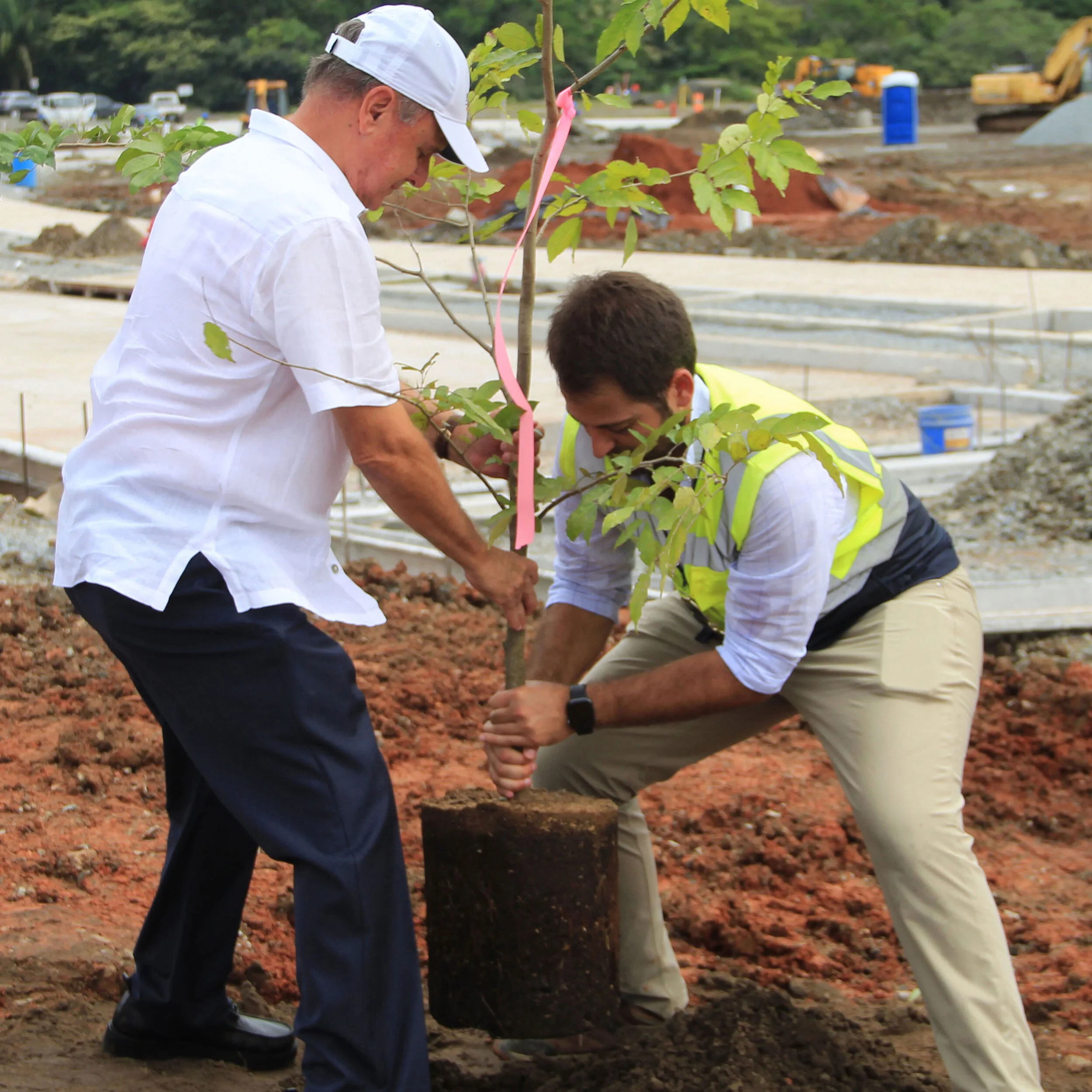
The First Tree

At Porta Norte, we are committed to integrating walkable urban design with nature. That’s why we have pedestrian streets, trees lining every sidewalk, and we connect urban development with natural waterways.

Comments

Your email address will not be published. Required fields are marked *

MÁS INFORMACIÓN