
This article responds to Balaji’s post titled “Miami Tech Week: The Start of Startup Cities.” The Start of Startup Cities. They selected Porta Norte CEO Henry Faarup’s response as the winner of the contest.
Panama was born as a startup with the construction of the Panama Canal. Since its founding, Panama has experimented with the concept of Startup Cities. In this article, I will expand on trends such as the increase in remote workers, how cities should position themselves to attract them, the definitions of Startup Cities, Panama’s success as a Startup City, and Porta Norte, the Startup City I am building.
Henry Faarup, CEO and Co-founder of #ElNuevoCascoViejo, envisions what a family man’s day will be like enjoying nature and physical activity in Porta Norte’s eco-friendly urban development:
The Covid-19 pandemic dramatically accelerated the adoption of global digital infrastructure. Quarantines forced remote work at most companies. Now, when we reach herd immunity, companies have the option to be fully in-person, fully remote, or something in between. As we all know, there are now many more remote companies than before the pandemic.
Remote companies have new options, such as hiring international talent and reducing costs associated with working in person. Employes of remote companies can avoid commuting to their offices and choose to work from wherever they please.
The number of remote workers has skyrocketed worldwide and will never be the same; it will be somewhere in between. As digital infrastructure improves, the number of remote workers will increase.
Remote workers can stop worrying about their company’s location and move to places that offer them a better quality of life. They can, for example, earn income in the United States and spend it in Latin America, which is more affordable. New remote workers are comparing locations with the following questions:
Is it safe?
Is the food good?
Is it close to my family?
Can I adapt to the culture?
Can I develop my hobbies?
Can I connect with nature?
Are they friendly to foreigners?
Are there good schools and universities?
Can I find people who think like me?
Can I get a resident visa quickly?
Can I get a direct flight to my hometown?
Which city gives me the best value for my money?
Nowadays, remote workers use websites that rank countries to make informed decisions, such as Nomad List and Teleport. Then they choose which one to visit and sometimes end up moving there. It’s a process similar to choosing a vacation or a university.
Remote workers are essential to cities because they are highly educated, bring technical expertise, or are tech-savvy, among other reasons. Talent immigration leads to higher per capita productivity, increased tax revenue, and a virtuous cycle—excellent citizens attract excellent citizens.
Talent is necessary to build a great organization. A good company is made up of talented people and led by a talented General Manager; in a large city live talented citizens who are led by talented leaders. To improve any organization, you must improve the individual and recruit more talent.
Lee Kuan Yew, the founder of Singapore, focused on nurturing talent to lift Singapore from poverty to prosperity. He often spoke about the importance of education, reproduction among intelligent people, and attracting foreign talent.
Singaporeans, if I may choose an analogy, we are the hard drive of a computer; foreign talent are the megabytes that increase its storage capacity and allow the computer to run faster.
– Lee Kuan Yew
Attracting talent is more relevant than ever. It is an effective strategy for increasing local talent. Cities should align incentives with remote workers. They must be pro-technology, pro-immigration, pro-capitalism, pro-diversity, and proactive.
If a city achieves a concentration of remote workers, this will lead to a greater number of startups being founded, creating a startup ecosystem that results in a Startup City.
Here I’m going to expand on Balaji’s definition:
A city with many startups is one where there is a thriving startup ecosystem, such as San Francisco and New York. During the pandemic, Austin and Miami have positioned themselves as the next place where talent wants to go.
A city that operates like a startup, with a clear vision and a competent government. A great example is Miami, where Mayor Francis Suárez serves as the City Manager. For him, Miami is the product that improves. He listens to feedback from startup founders, promotes Bitcoin adoption, attracts talent via Twitter, etc. A City Manager delivers results and positions their city as a great place to invest and live.
Urban developments with a startup spirit are projects with a defined territory focused on generating economic growth or a better way of life thru an innovative vision. They are public or private companies, public-private partnerships, for-profit or nonprofit organizations, or a combination. Some examples:
Neighborhood Improvement. Some examples include Panama’s Casco Viejo, which was developed by improving infrastructure and offering tax incentives; Wynwood, thru art; and Times Square, by eliminating car traffic. Normally, the government improves the infrastructure and property owners invest in the buildings.
Planned Community. Mixed-use neighborhoods with a wide range of amenities. They typically have sports centers, lakes, parks, public spaces, kindergartens, swimming pools, shops, restaurants, businesses, schools, universities, cultural centers, medical centers, etc. They are new developments built on undeveloped land. To be a startup city, they must have a strong vision, such as being designed without cars, being an eco-friendly town, or being energy self-sufficient. Examples: Cayalá, Celebration, Culdesac, Kalu Yala, Las Catalinas, Porta Norte, Punta Mona, etc. The typical pattern among these places is active public spaces and walkability, which, unfortunately, is rare.
Zonas Económicas Especiales. Lugares geográficamente limitados con incentivos regulatorios o fiscales, y leyes comerciales que difieren del resto del país para fomentar la prosperidad económica y/o cultural. Ejemplos: Prospera y Shenzhen.
Seasteading. Living on floating islands with some degree of political autonomy. The term derives from homesteading, which means making a home for oneself in uninhabited places. It generally has associations with self-sufficiency.
Micronations or microstates. Small sovereign countries or colonies. Examples: Liechtenstein, Monaco, and Vatican City.
Panama is a country of immigrants with a long history of experimenting with Startup Cities. Many companies choose to set up here because:
It’s safe.
The currency is the dollar.
He has a good quality of life.
It has a robust financial sector.
It has been a politically stable country.
It has inclusive immigration laws.
It has a great relationship with the United States.
It’s a tax haven with many tax benefits.
It’s a tax haven with many tax benefits.
Below, I will detail some examples of Startup Cities in Panama in chronological order:
The Panama Canal Zone was a U.S. territory surrounding the Panama Canal. The United States facilitated Panama’s independence from Colombia in 1903 to build the Panama Canal. They kept some land and established a microstate that influenced Panamanian culture.
The Colón Free Zone is the largest free trade zone in the Americas and the second largest in the world. It began operations in 1948 and covers 242 hectares. It is a Special Economic Zone with tax benefits for imports and exports.
In 2017, the government expanded some of the benefits of the Colón Free Zone to the city of Colón. It is a Special Economic Zone and a neighborhood improvement project called Colón Puerto Libre.
Ciudad del Saber was born from the idea of converting a former U.S. military base in the former Panama Canal Zone into a knowledge-exchange center. It is a Special Economic Zone and A 120-hectare planned community. full of academic organizations, technology companies, and non-governmental organizations managed by a nonprofit foundation.
Panama Pacific is a former United States Air Force base in the Panama Canal Zone. The government created a Special Economic Zone and a Planned Community as a public-private partnership covering 1,400 hectares. Many multinational corporations have established operations in Panama Pacific (such as Samsung, Dell, FedEx, PepsiCo, 3M, and Caterpillar), taking advantage of tax, labor, and legal incentives.
Panama’s Casco Viejo is a Spanish colonial city where the elite lived. In the 2000s, it was a rundown, unsafe neighborhood full of abandoned buildings. The government decided to carry out a neighborhood improvement project by repairing the infrastructure and granting tax incentives for development within the Casco Viejo. It’s one of the most visited places in Panama and has the highest price per square meter in the country. I lived there for six years.
Kalu Yala is an eco-village aimed at digital nomads and students taking university courses. They are building a planned community based on the principles of New Urbanism.
Selina is a company that has built a network of hostels/hotels focused on digital nomads. It was founded in Panama and quickly grew around the world to more than 60 destinations. They recently joined forces with Kalu Yala, and now you can book your stay at Selina Kalu Yala.
Ocean Builders is a company experimenting with seasteading, based at Linton Bay Marina, a planned community in Colón. They are promoting the Seapod, residential capsules at sea, in collaboration with the Seasteading Institute.
The following are essential laws that enhance Panama’s position as a Startup City:
Law on Headquarters of Multinational Enterprises (SEM). It grants regulatory benefits, including residence visas for its employes and their dependents. Since 2007, it has helped attract more than 175 multinational corporations along with highly skilled employes. In 2020, the government added more tax incentives for multinational corporations engaged in manufacturing.
Free Zones Law. It lays the groundwork for establishing additional Special Economic Zones and continuing the experimentation with Startup Cities within Panama’s territory. There are 10 active free zones and another 10 under development.
Laws for obtaining residency and a visa in Panama with simplified requirements:
Remote Worker Visa: A remote worker who earns a minimum monthly salary of $3,000 outside of Panama can receive an 18-month visa. The government approved this law in May 2021.
Visa for friendly countries: Grants permanent residency to citizens of more than 50 friendly nations. To obtain it, you must be employed in Panama by a legal corporation under an employment contract and have a work permit. Another way is to invest $200,000 in real estate that can be financed.
Economic solvency visa: Another option is to invest $300,000 in real estate and/or obtain a “Certificate of Deposit” from a bank in Panama.
Business investor visa: Invest $160,000 in the Panama Stock Exchange.
Reforestation Investor Visa: Invest $80,000 to purchase at least five hectares of land in a government-certified reforestation project.
Visa for the retirees or pensioners program: Permanent visa for those with pensions of over $1,000.
Marrying a Panamanian citizen.
I was born and raised in Panama. Since 2014, I have been continuing Panama’s tradition of experimenting with Startup Cities by leading Porta Norte.
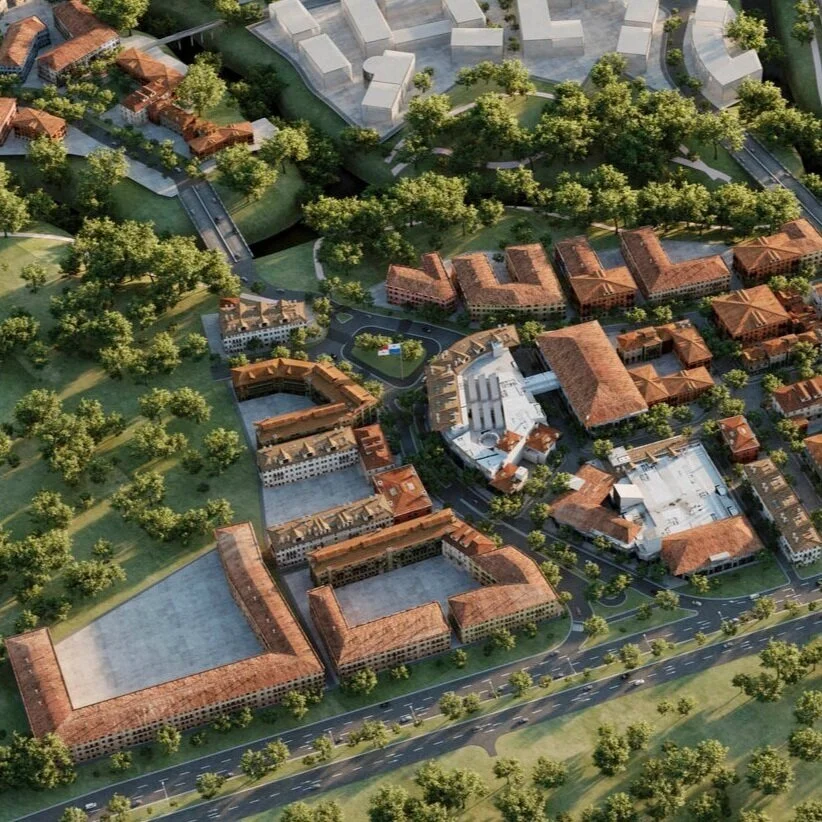
I am the CEO and founder of Porta Norte, a 262-hectare new urbanist and solarpunk planned community. Porta Norte is located on the northern outskirts of the city, just 15 minutes from the airport. Andrés Duany, the founding father of New Urbanism, designed the Master Plan.
Porta Norte features human-scale urban planning integrated with lush greenery and is adapted for micromobility. It has a network of open public spaces for anyone who wants to visit. We believe that social interactions in public spaces are essential for combating the loneliness that remote workers often experience. You can get a clearer picture by reading A Day in Porta Norte.
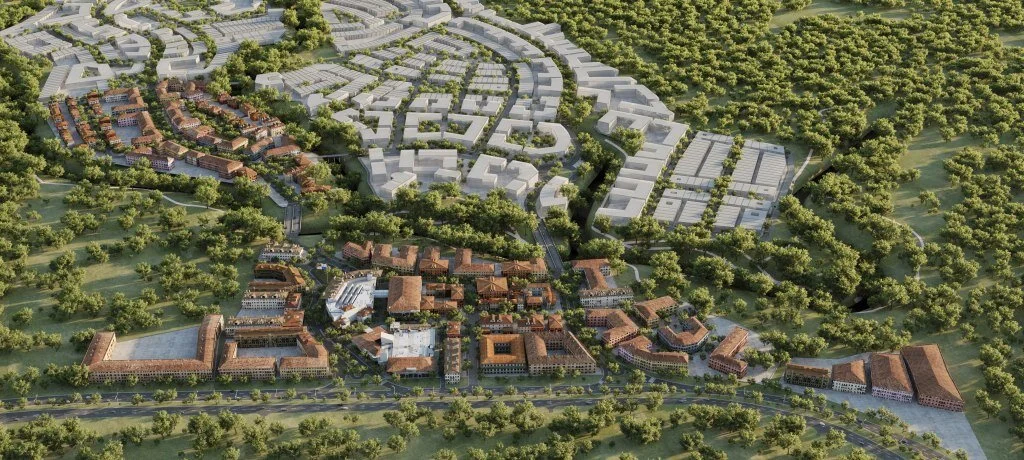
Porta Norte has a unique vision, unlike anything that has been built in Panama before. We are incorporating Silicon Valley’s best practices. For over a decade, my hobby has been watching interviews and reading blogs by Paul Graham, Elon Musk, Naval Ravikant, Balaji, Sam Altman, and the founders of Y-Combinator.
One example of how to apply what I’ve learned is the importance of constantly improving the product. To increase fidelity and feedback loops, we have an architect at the company whose job is to put our construction documents into virtual reality. Then we collect feedback from engineers, architects, clients, etc., to do another iteration. The following video is our latest iteration:
We build world-class infrastructure with underground utilities, fiber optic internet in public areas, bike lanes, wide sidewalks, tree-lined streets, parks, pedestrian plazas, and much more. It is adapted for people with disabilities and pets. Right now, we’re finishing the streets for the first phase.
My priority is to create a virtuous ecosystem of prosperity by attracting residents, businesses, and institutions. We incentivize them with an excellent urban product and private subsidies for anchor institutions such as universities, schools, sports centers, hospitals, etc.
After writing this post, I commit to studying which laws we can use to our benefit as Startup City and to promoting the idea of making Porta Norte a Special Economic Zone. This is another step toward organizing the economy around remote work.
In Panama, we need to pay attention to our Startup City history and continue experimenting toward an optimistic and well-defined future. We must respond to global trends such as remote work and cryptocurrencies to position Panama as the next destination.
Please let me know how to do a better job of attracting remote workers, companies, and large institutions to Panama and Porta Norte. How can I help?
Read more about the other nine contest winners at 1729.com/miami: